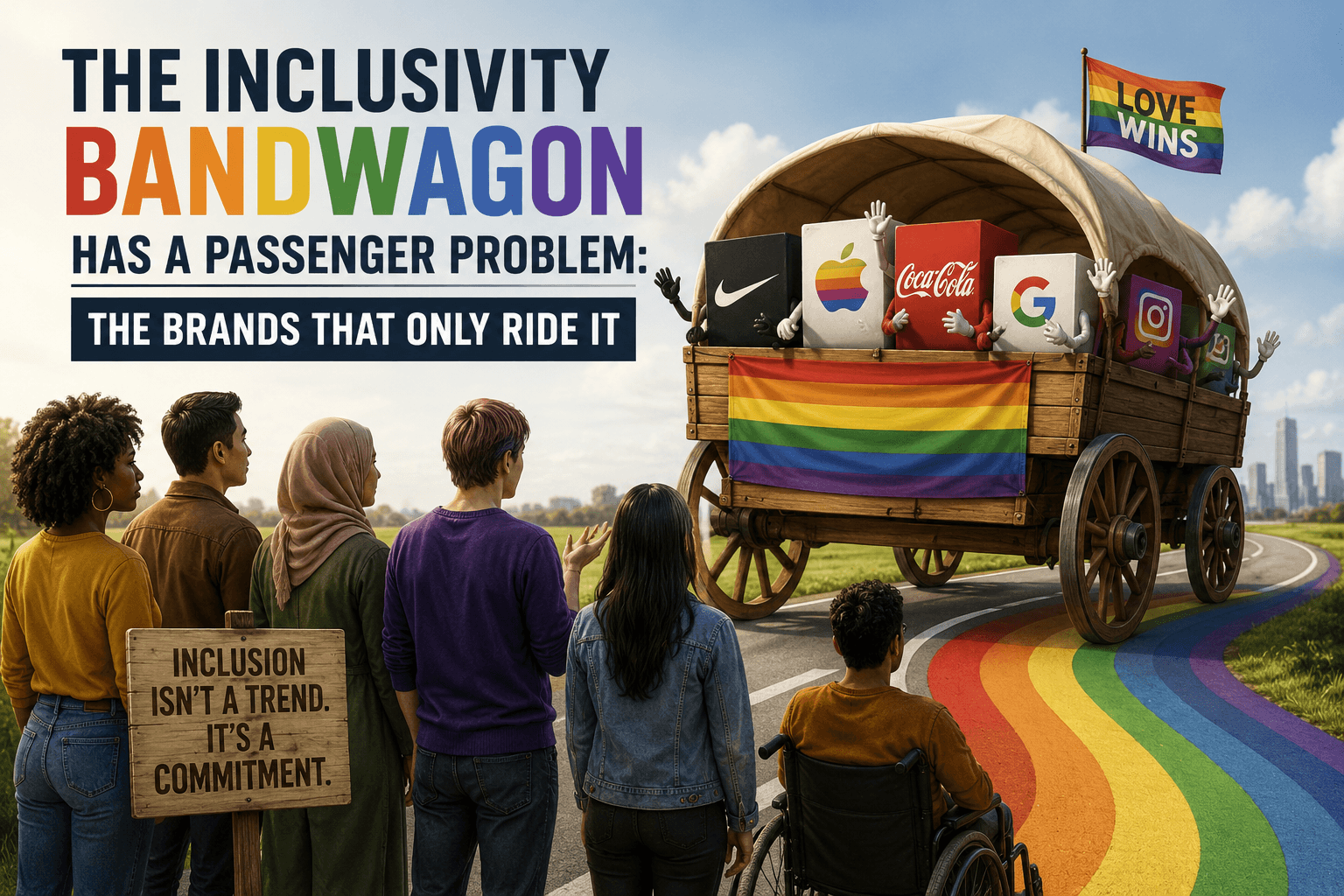
Watch what happens to a fashion trend when the season turns. The campaign comes down, the hashtags go dormant, and the rails return to whatever they were always going to be. For most trends, that’s fine. Nobody mourns the passing of the ballet flat.
But for the past few years, inclusion itself has been treated like a trend. Bigger brands discovered body diversity the way they discover a colour palette. They ran the campaigns, cast a wider range of models, collected the goodwill. And now, with the cultural weather shifting, plenty of them are treating it the way they treat any trend that’s had its moment. They’re moving on.
You can see the retreat if you look at the numbers rather than the adverts. Runway size representation has been sliding backwards for several seasons, and extended ranges have been trimmed or dropped by high street names that once made a great deal of noise about them. “Obviously, there has been a decline,” says model Paloma Elsesser, one of the few plus-size figures to reach the top of the industry, describing it as part of a wider “zeitgeist shift toward a sanitizing of humanity.”
That word, decline, should sting. A brand that genuinely believed in dressing more bodies wouldn’t stop believing it because the mood changed.
The retreat tells you what the commitment was made of in the first place.
Built From Need, Not Borrowed for a Campaign
Here’s the thing about small mission-driven brands: most of them exist because somebody needed something that didn’t exist. Not as a strategy. As a fact of daily life. The founder is usually the customer the mainstream forgot, and the product is the answer to a problem they lived with for years before they solved it. That origin story has become a marketing cliché, which is a shame, because in its genuine form it’s the single best predictor of whether a brand will still be serving you in five years.
“For a long time, the message to people like me was that your needs do not matter,” says Robyn Electra from Bond and Binder, a body-inclusive underwear brand. “You made do. You improvised with whatever was in the drawer. When you finally build the thing properly, you build it from lived experience, because you know exactly what it costs to go without.”
That’s a different starting point from a trend forecast, and it produces a different kind of company. A brand built from need can’t drop its mission when the algorithm cools on it, because the mission is the product. There’s no safer core customer to retreat to. The people the mainstream overlooked are the whole point, in a flat January as much as in campaign season.
Why Small Makers Can’t Fake It
A big brand can afford for inclusion to fail. It’s one campaign among forty, a test the marketing team ran, a line item that gets reviewed at the next quarterly meeting. If the extended range doesn’t perform to target, it goes, and the brand carries on exactly as before.
A small maker has no such exit. Every pattern, every fabric choice, every size on the rail is a decision the founder made with their own money and, very often, their own body. When the entire company exists to serve people the industry ignored, dropping those people isn’t a pivot. It’s closing the business.
That’s why the craft tends to be better where the stakes are personal. Designing for a wide range of real bodies is slow, technical, unglamorous work, and it happens at the cutting table rather than in the campaign brief. The brands that do it well are almost always the ones that had no choice but to learn.
Your Money Is the Most Honest Review You’ll Ever Write
Shoppers have noticed, which is why values-led buying keeps growing even while budgets tighten. It isn’t about paying more to feel virtuous. Often it’s the opposite: buying less, from makers whose reason for existing lines up with yours, and getting something that fits your life better than the trend-cycle version ever did.
There’s a simple test worth applying before you hand over your money. Would this brand still serve people like me if the marketing advantage disappeared tomorrow? For a small mission-driven maker, the question barely makes sense. Serving you is what they’re for. For a brand that adopted inclusion the way it adopts a seasonal colour, the honest answer is on the runways right now.
None of this means boycotting the high street or writing off every big name as cynical. Some large companies have done real structural work, and they deserve credit for it. The point is to stop taking the campaign as the evidence. “This is a movement, not a moment. And it involves all of us,” says writer and accessibility advocate Sinéad Burke, who has spent years pressing fashion on who’s missing from the room when decisions get made. Movements are measured in what a company does when nobody’s applauding.
The Brands Worth Backing Were Never on the Bandwagon
The next time a label announces that every body is beautiful, look past the announcement. Check whether the sizes exist, whether the fit was rethought or simply scaled up, whether the commitment survived the seasons when inclusion stopped trending.
Then look at the small makers who never made the announcement at all, because they were too busy doing the work. They were designing for overlooked bodies before it was a campaign theme, and they’ll still be doing it long after the industry has moved on to the next one.
The bandwagon will keep rolling through. It always does. The brands worth your money are the ones standing still, exactly where their customers have always been.