“Personal style” gets talked about like it’s a gift some people are born with. It isn’t. It’s a skill — a way of knowing what suits you and having the confidence to wear it — and it can be learned by anyone, at any budget, starting with the clothes already in your wardrobe. This is the practical, step-by-step guide to finding yours.
Why personal style beats trends
Trends tell you what to wear this month; personal style tells you what to wear for the rest of your life. Chasing trends is exhausting and expensive, and it rarely makes anyone look good — because clothes chosen to be current are seldom chosen to suit you. Personal style is the opposite: a stable, evolving sense of self that makes getting dressed easy and makes everything you own look intentional. It is also the foundation of a working capsule wardrobe.
Step 1 — Study what you already love
The fastest route to your style is the evidence already hanging in your wardrobe. Pull out the ten things you actually reach for and wear to death, and look for the pattern. What colours repeat? What shapes, fabrics, necklines, lengths? Those favourites are your taste, made visible. Your style isn’t something to invent from scratch — it’s something to notice and lean into.
Step 2 — Gather your references
Build a mood board — a folder on your phone, a physical pinboard, a saved collection. Add outfits, people, films, interiors, colours, anything that makes you think “yes.” Don’t overthink it. After thirty or forty images, patterns emerge: a recurring palette, a level of formality, a certain ease or sharpness. That pattern is your style direction.
Step 3 — Name it in three words
Distil your references into three adjectives — for example “relaxed, classic, warm” or “sharp, minimal, bold.” These three words become your filter. Every future purchase gets one question: does this fit my three words? If yes, it will earn its place and combine with everything else. If no, put it back. This single habit does more for a wardrobe than any shopping spree.
Step 4 — Find your colours and silhouettes
Notice which colours make you look well and which you actually reach for, and build a palette of a few neutrals plus one or two accents. Do the same with shape: work out which silhouettes feel like you — fitted or relaxed, structured or fluid — and where you like your proportions to sit. You don’t need formal “colour analysis”; your mirror and your favourites tell you most of it. For more on flattering proportion, see our guide to dressing for your shape.
Step 5 — Identify your uniform and signatures
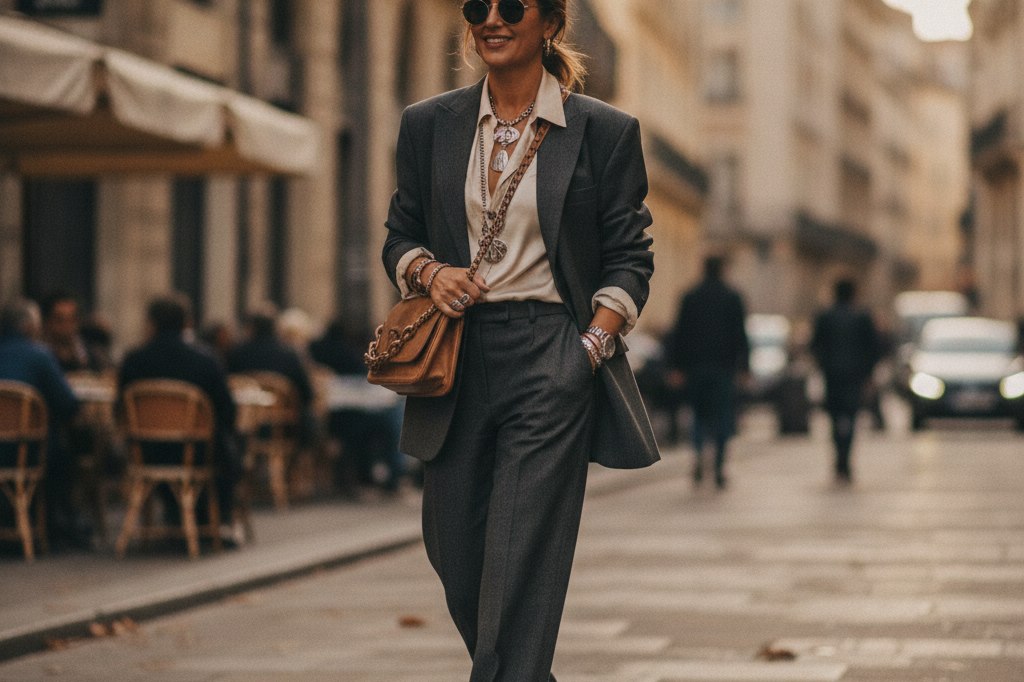
Most stylish people wear a version of the same thing most days — a personal “uniform” that just works: the jeans-and-blazer, the dress-and-boots, the knit-and-tailored-trouser. Find yours and lean into it; it is a feature, not a failure of imagination. Then add one or two signatures — a red lip, a stack of gold rings, a particular boot — small, repeatable details that make an outfit unmistakably yours.
Step 6 — Edit, then build with intention
Now edit. Let go of the pieces that don’t fit your three words, your palette or your life — they are just noise, making it harder to see what you love. Then fill the genuine gaps slowly and deliberately, prioritising fit and quality over quantity. A tailor will do more for your style than almost any purchase.
What gets in the way
- Comparison. Someone else’s style working on them tells you nothing about yours. Borrow ideas; don’t copy wholesale.
- Trend pressure. You are allowed to skip a trend entirely. The best-dressed people do, constantly.
- Waiting to be “ready.” Style isn’t a reward for a future body, budget or life. Dress for who and where you are now.
Frequently asked questions
How do I find my personal style?
You find it by studying what you already wear, not by shopping for a new identity. Start by pulling the ten pieces you actually reach for and wearing to death, then look for what repeats — a colour, a fabric, a silhouette, a length. Those repeats are your taste made visible. From there, build a mood board of outfits and images that make you think “yes,” and after thirty or so entries a pattern will emerge, whether that’s a palette, a level of formality, or a certain ease. Distil that pattern into three adjectives, such as “relaxed, classic, warm” or “sharp, minimal, bold.” Those three words become a filter: every future purchase either fits them or it doesn’t. Style discovered this way, through attention to what you already love, tends to stick — because it was never a guess in the first place.
What if I like lots of different styles?
Liking many styles at once is normal, and it doesn’t stop you having a coherent one — you just need to find the thread that connects them. Look across the outfits, colours and references you’re drawn to for a shared element: perhaps every look you love sits in the same muted palette, or shares a relaxed ease even when the pieces differ wildly. That shared thread becomes your core, and the styles themselves become “moods” you layer on top of it for different days or occasions. For example, someone whose core is “warm, relaxed, textured” might dress that up with tailoring one day and down with denim the next — both outfits still read as unmistakably theirs. The goal isn’t to pick one style and discard the rest; it’s to find what they have in common and let that hold everything together.
Does finding your style cost a lot of money?
No — finding your style costs very little, because the work is observation and editing, not shopping. You’re studying the wardrobe you already own, building a mood board from images you already have access to, and naming your three style words using clothes already in your possession. The only spend that helps is a tailor, since good fit does more for how clothes look on you than almost any new purchase. Once your three words are set, you actually spend less going forward, because you stop buying pieces that don’t fit your palette, silhouette or life and end up sitting unworn. The expensive version of style is the one built on trends — buying something new every month because it’s current. The version built on attention to what you already love is close to free, and it tends to last far longer.
How long does it take to develop personal style?
The core of it can click in a weekend of focused looking and editing — pulling your favourite pieces, building a mood board, and settling on your three style words. But personal style isn’t a one-time project with a finish line; it keeps evolving for life as your taste, body and circumstances change, so it’s better treated as an ongoing, low-effort practice than a task to complete. In practice that means revisiting your three words occasionally, refining your “uniform” — the repeatable outfit formula that works for you — and adding or dropping a signature detail, like a particular boot or a stack of rings, as your life shifts. Someone might settle their core style in a weekend, then spend years quietly adjusting it as their job, climate or confidence changes. That ongoing adjustment is normal, not a sign you got it wrong the first time.
Find your three words, wear your uniform with a signature or two, and buy only what fits. That’s the whole secret — and it’s available to anyone. Feel good, look great.