
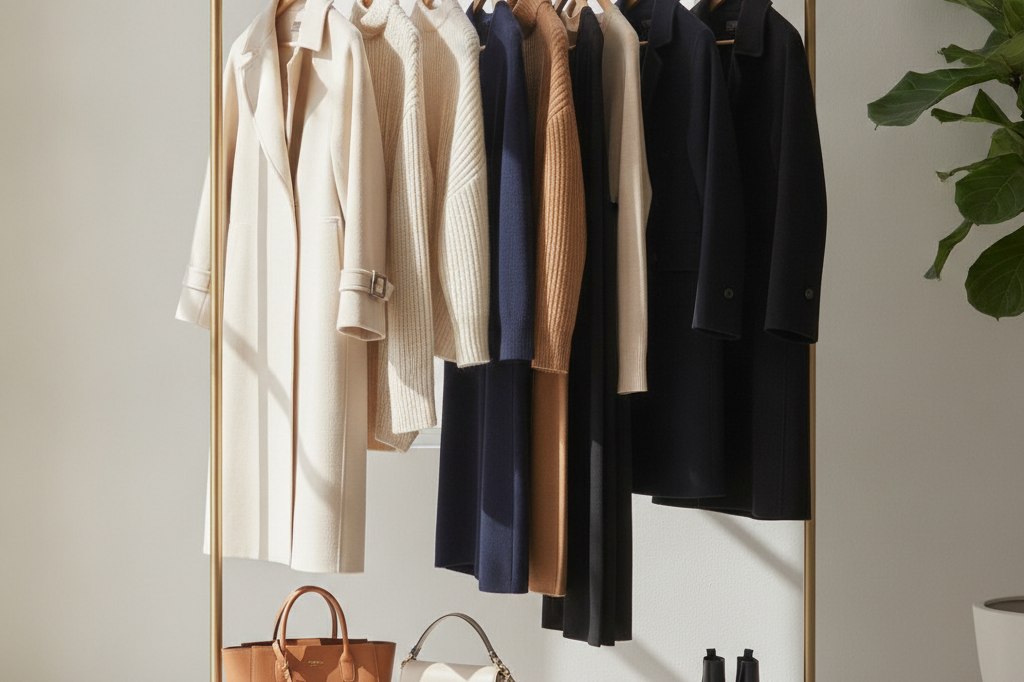
A capsule wardrobe is one of those ideas that sounds restrictive and turns out to be the opposite: a small, deliberate collection of clothes that all work together, so getting dressed becomes easy and everything you own actually gets worn. Done well, it saves money, buys back time, cuts waste, and — the part nobody expects — makes you look more put-together, not less. This is the complete, practical guide to building one that fits your real life.
What a capsule wardrobe actually is
The term was coined in the 1970s by London boutique owner Susie Faux and popularised in the 1980s, but the idea is timeless: a tightly edited set of versatile, high-quality pieces that mix and match into far more outfits than the number of items suggests. A true capsule is not about deprivation or a magic number of garments — it is about cohesion. Every piece earns its place, works with several others, and suits the life you actually lead.
The maths is the magic. Twelve pieces that all coordinate produce dozens of outfits; thirty pieces that don’t coordinate produce a full wardrobe and “nothing to wear.” Cohesion, not volume, is what makes dressing effortless.
Why it works (the real benefits)
- It saves money. You buy less, but better, and cost-per-wear plummets. A £200 coat worn 200 times costs £1 a wear; a £40 trend piece worn twice costs £20.
- It saves time and decision-fatigue. When everything goes together, mornings stop being a negotiation.
- It looks more expensive. A tight, tonal wardrobe reads as considered — the same principle behind quiet luxury.
- It’s kinder to the planet. Fewer, longer-worn clothes is the single most sustainable way to dress.
- It sharpens your style. Constraints force you to learn what actually suits you, rather than chasing every trend.
Step 1 — Audit what you already own
Before you buy a single thing, understand what you have. Take everything out and sort it into four honest piles: love and wear, love but never wear, fine but forgettable, and why do I own this. The “love and wear” pile is the truth about your style — study it. What colours repeat? What shapes? That thread is your actual taste, and your capsule should be built toward it, not away from it.
Step 2 — Define your lifestyle and palette
A capsule has to match how you actually spend your days, not the life you imagine. Roughly split your week — work, home, social, active — and let those proportions guide the mix. Someone office-based five days a week needs different anchors from someone at home with the odd night out.
Then choose a palette: two or three neutrals (camel, cream, navy, grey, black, brown) plus one or two accent colours that flatter you. This is the quiet engine of a capsule — when everything sits in the same family, everything combines. You do not have to wear only beige; you just have to be deliberate.
Step 3 — The core pieces
Most flexible capsules are built from the same building blocks. Adapt quantities to your life; treat this as a checklist, not a shopping list.
Outerwear
The most-seen, most-worn thing you own — spend here first. A great coat with clean shoulders in a neutral will carry the whole wardrobe. Add a casual jacket (denim, leather or a trench) for off-duty days.
Tops and knitwear
A few good t-shirts and fine-knit tops, two or three jumpers, and one or two shirts. Natural fibres wear and wash better and look more expensive than synthetics.
Bottoms
One pair of well-fitting jeans, one pair of tailored trousers, and a skirt if you wear them. Fit is everything — a tailor will do more for your look than another purchase.
Dresses
One easy day dress and one that works for evening covers most occasions. A dress is the fastest complete outfit there is.
Shoes and bags
Three pairs of shoes will cover most lives: a smart flat or boot, a trainer, and something for dressing up. One good structured bag and one everyday tote. Accessories are where a neutral capsule earns its personality.
Step 4 — Fill the gaps, and buy well
Now compare your core list to your audit and note the genuine gaps. Buy them slowly and deliberately, not in one panic-shop. Prioritise the anchors — the coat, the shoes, the bag — because they carry everything else. Apply the one-week rule: if you still want a piece seven days after seeing it, and can name three things you own that it works with, buy it. If not, walk away.
Step 5 — Care for it so it lasts
A capsule only works if the pieces survive. Wash less and cooler, air knits between wears, brush and rotate shoes, and keep a tailor and a cobbler on speed dial. Repairing and re-heeling good pieces is cheaper than replacing them and keeps your cost-per-wear falling.
Building capsules by season
Many people run a light and a heavy capsule and swap them twice a year, keeping the off-season pieces stored. The trick is a consistent palette across both, so summer linens and winter wools still talk to each other. For a worked example of a seasonal edit, see our guide to autumn’s trends and how to wear them.
Common mistakes to avoid
- Chasing a magic number. Thirty-three, thirty-seven, whatever — the number is a gimmick. Cohesion matters, not count.
- Buying a whole capsule at once. You’ll get it wrong. Build slowly from what you already wear.
- Going all-neutral and joyless. Neutrals are the base; your accent colours and accessories are the personality.
- Ignoring fit. The best capsule piece is the one that fits you now — not aspirationally.
Frequently asked questions
How many pieces should a capsule wardrobe have?
There is no fixed number a capsule wardrobe should hit; the right size is whatever cohesive, well-fitting collection covers your actual week, not a round figure borrowed from a challenge. Popular guides often quote somewhere around 30 to 40 pieces including shoes, but that figure only works if every item genuinely coordinates with several others — thirty unrelated pieces still leave you with nothing to wear, while twelve that all sit in the same palette can generate dozens of outfits. Start from your own audit: pull out what you already wear on repeat, note the proportions of work, home, social and active time in your week, and build to match that split rather than a target count. A useful check is whether you can name three other pieces you own that any new item works with; if you can, it earns its place regardless of what number you end up at.
Does a capsule wardrobe really save money?
Yes, a capsule wardrobe saves money, though the payoff shows up over time rather than immediately. Buying fewer, better pieces and wearing each one far more often lowers your cost-per-wear dramatically: a well-made coat worn two hundred times across several years works out at a fraction of the price of a cheap trend piece worn only once or twice, even though the coat costs more upfront. The saving compounds because a genuinely cohesive wardrobe also curbs the impulse buys that quietly drain a clothing budget — when everything already goes together, there is less temptation to fill an imagined gap. The anchors are where to spend deliberately, since a good coat, shoes and bag carry the rest of the wardrobe and are worn the most. Applied patiently, with purchases spaced out and considered rather than bought all at once, a capsule approach is one of the more budget-friendly ways to dress long term.
Do I have to wear only neutral colours?
No, a capsule wardrobe does not require you to live in neutrals only. Neutrals such as camel, navy, grey or black form a flexible base because they combine easily with almost everything else, which is what makes fast, low-effort dressing possible in the first place. But a well-built capsule also includes one or two accent colours chosen because they flatter you, plus personality expressed through accessories like bags, shoes or jewellery. The goal is a deliberate, cohesive palette rather than a colourless one — going entirely neutral without any accent tends to feel flat and can make a wardrobe joyless rather than considered. Think of neutrals as the quiet engine that lets pieces mix freely, and accents as what stops the result looking like a uniform. Choosing your palette with intention, rather than defaulting to beige for its own sake, is what keeps a capsule feeling like genuinely yours.
How often should I refresh my capsule?
A capsule wardrobe should be refreshed lightly, and at most on a seasonal basis rather than constantly. The most practical rhythm is swapping in weather-appropriate pieces around twice a year, moving heavier knits and coats out as lighter layers come in, while keeping a consistent palette across both rotations so the off-season pieces still talk to the current ones. Beyond that seasonal swap, items should only be replaced as they genuinely wear out or as your life changes in a way that creates a real gap, not on a schedule. Treating a capsule as something to slowly evolve rather than rebuild protects the cost-per-wear benefit that makes the whole approach worthwhile in the first place — constantly refreshing it defeats the purpose. Caring for pieces properly, with cooler washes, rotation between wears, and regular visits to a tailor or cobbler, also reduces how often genuine replacement is needed.
Can I build a capsule wardrobe on a budget?
Yes, a capsule wardrobe is arguably one of the most budget-friendly ways to dress, not a luxury approach. The first and cheapest step costs nothing at all: audit what you already own before buying anything, since most capsules fail simply because people skip this step and shop before they understand their own wardrobe. From there, prioritise fit over labels or brand names, since a well-fitting inexpensive piece will earn its place far more often than an expensive one that does not suit you. Where budget is tight, focus spending on the anchor pieces worn most, such as a coat, shoes or a bag, and consider buying those second-hand to bring the cost down further. Add anything new slowly and one considered purchase at a time, following the one-week rule of waiting to see if you still want it and can name pieces it works with, rather than filling gaps all at once.
Build it slowly, buy the anchors well, and let cohesion do the work. A capsule wardrobe won’t just simplify your mornings — it will quietly make you look, and feel, more like yourself. Feel good, look great.