Getting the quiet luxury look for less comes down to three shifts: buying for fabric and cut rather than label, spending your budget on the pieces that touch your face and hands, and using secondhand and tailoring as tools rather than backup plans. None of it requires a bigger budget — it requires spending the one you have on the right things, in the right order.
“Quiet luxury” has been the phrase of the moment for a while now, and for once it’s a trend worth keeping — because at heart it’s just good, timeless dressing. Here’s what it really means, and how to get the look without the eye-watering price tags.
What it actually is
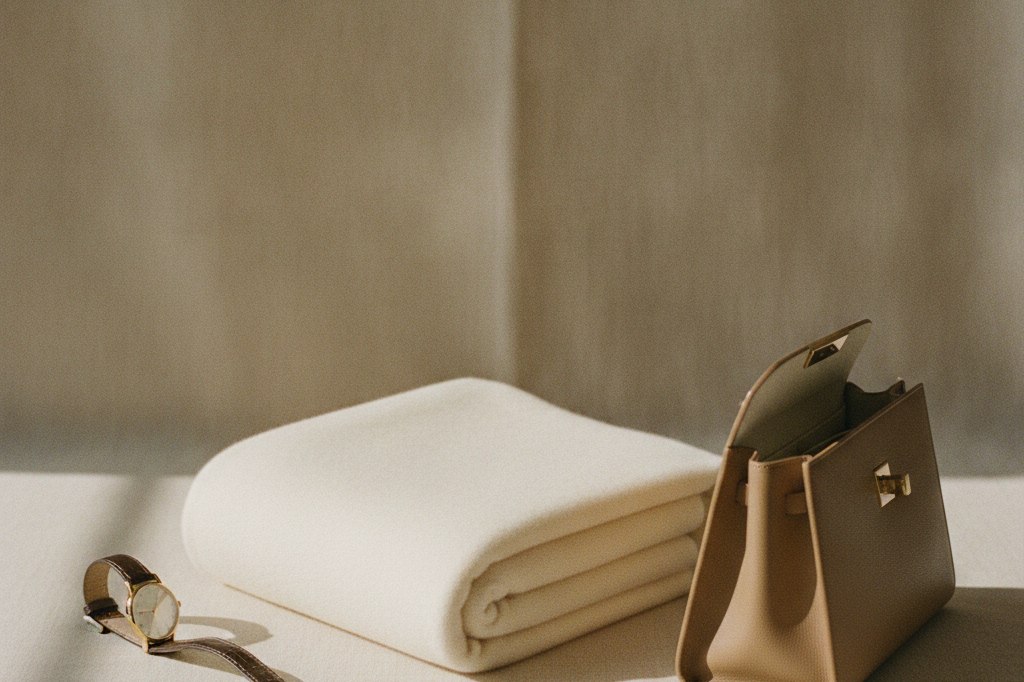
Quiet luxury is the opposite of logos and loud trends: fine fabrics, clean lines, a muted palette, and pieces designed to last rather than to be noticed. It says “I have taste” instead of “I have money” — which is exactly why it feels so aspirational.
Getting the look for less
- Stick to a tight palette — camel, cream, navy, grey, black. Everything goes together, so even cheap pieces look considered.
- Prioritise fabric over brand — wool, cotton, linen and knits that feel good beat anything shiny and synthetic.
- Fit is everything — a budget blazer that fits your shoulders beats a designer one that doesn’t. A tailor is the best money you’ll spend.
- Buy fewer, better — one good coat over five trend pieces, every time.
Do that, and you’ve got the whole look for a fraction of the price — which is the quietest luxury of all.
Spot the fabric that actually looks expensive
Price tags lie more often than fabric does. A cheap wool-blend coat with a tight, smooth weave will read as pricier than a synthetic piece from a premium label, because the eye and the hand notice weight and drape before they notice a logo. Before buying, check three things: some natural fibre content (wool, cotton, linen or a blend, rather than pure synthetic), whether the fabric holds its shape when scrunched in your fist and released, and whether it drapes with weight rather than clings or shines. Knits are the easiest win — a densely knitted jumper in wool or cotton looks considerably more expensive than a thin, bobbly acrylic one, even brand new. The goal isn’t fibre purism, it’s picking the version of a fabric that behaves like the pricier one.
Spend on the pieces closest to your face and hands
Not every item deserves the same share of a budget. Coats, knitwear and scarves sit nearest your face and hands, so they’re what people register and touch first — which makes them worth the largest slice of what you have to spend. Trousers, basics and anything layered underneath can do their job at a lower price point, since fewer people ever feel the fabric or study the stitching up close. Rank a wardrobe gap list by visibility and contact, let the top few items absorb more of the budget, and fill the rest cheaply. A well-made coat worn for several seasons also costs less per wear than a cheap one replaced every winter — the real maths behind “buy fewer, better.”
Use tailoring as a multiplier, not an afterthought
Fit does more for this look than fabric or price, and it’s the cheapest lever available, since most alterations cost a fraction of the garment itself. A jacket taken in at the waist or trousers hemmed to sit exactly on the shoe instantly reads as more expensive, because ill-fitting clothing is the biggest tell of a low-effort outfit regardless of cost. Try a new piece on properly before deciding it’s a keeper, note exactly what’s off, and take it to a tailor rather than wearing it as-is. Shoulders are the one thing a tailor genuinely cannot fix, so get that right at the point of purchase; length, waist and taper are all easy, inexpensive adjustments.
Let secondhand do the heavy lifting
Secondhand and resale is where quiet luxury and budget dressing overlap most naturally, since the whole aesthetic prizes older, well-made pieces over anything obviously new. A worn-in wool coat or a well-cared-for leather bag often has better fabric and construction than a fast-fashion equivalent at the same price, simply because it was built to last the first time round. Search by fabric and silhouette rather than brand, check seams and linings before checking the label, and budget for a clean or a re-tailor as part of the cost. Treated this way, secondhand isn’t a compromise on the look — the checks that matter for quiet luxury are exactly what secondhand shopping already trains you to notice.
Frequently asked questions
How do you get the quiet luxury look on a budget?
By shifting where the money goes rather than spending more of it: put the largest share of a budget into the few pieces people see and touch most (a coat, key knitwear), buy the cheaper pieces underneath without guilt, and spend on alterations before buying anything new. Three habits do most of the work. First, judge fabric by weight and drape in person rather than by price or label — a densely woven, natural-fibre piece reads as expensive regardless of cost. Second, get everything properly fitted; a tailor is inexpensive relative to the garment and fixes the single biggest giveaway of cheap-looking clothes, which is poor fit. Third, shop secondhand for the anchor pieces, where older, better-made garments are often available for less than a new fast-fashion equivalent. None of this requires a bigger clothing budget, just a more deliberate one.
What fabrics look expensive but aren’t?
Several natural and natural-blend fabrics consistently read as more expensive than their price suggests, because the eye responds to weight and weave rather than to cost. A tightly woven wool or wool-blend coat, a dense cotton twill, a substantial linen with some weight to it, and closely knitted jumpers in wool or cotton all fall into this category. What they share is structure: the fabric holds its shape, drapes rather than clings, and doesn’t crease or pill quickly. The fabrics that read cheap regardless of price tend to be thin, shiny synthetics, loosely knitted acrylics, and anything that creases hard and stays creased. The simplest in-store test is to scrunch a section of fabric in your hand for a few seconds and watch what happens when you let go — a fabric that recovers its shape is doing more visual work than one that doesn’t, and that behaviour has very little to do with what it cost.
Is quiet luxury just wearing neutral colours?
No — a neutral palette is one visible feature of the look, not the substance of it. Camel, cream, navy, grey and black show up often because they’re easy to build a cohesive wardrobe from and because muted colour lets fabric and fit do the talking, but wearing beige doesn’t automatically create the look if the fabric is thin or the fit is off. The palette is a shortcut for budget shoppers precisely because everything in it coordinates, which makes cheaper pieces look more considered when worn together than the same pieces would in clashing colours. The actual substance is still fabric quality, fit and restraint from logos and obvious trend pieces. Treat neutrals as a tool that makes a small, mixed-price wardrobe look coherent, not as the finish line — a head-to-toe neutral outfit in poor fabric and bad fit will still look cheap.
Is it worth altering cheaper clothes instead of buying pricier ones?
In most cases, yes. Alterations typically cost a small fraction of a garment’s price, while a poor fit is the fastest way for even a well-made piece to look cheap, and the reverse is also true — a modestly priced item that’s altered to fit properly will usually look better than an expensive one that doesn’t. The best return comes from adjustments to length and waist: hemming trousers to break correctly on the shoe, taking in a waist, or shortening sleeves to sit at the wrist bone. The exception is shoulder width on jackets and coats, which is difficult and expensive to alter properly, so that’s worth getting right at the point of purchase rather than fixing afterwards. As a rule, budget for alterations as part of the cost of a garment rather than treating them as an optional extra, since that’s often what separates an outfit that looks put-together from one that just looks new.