Most of us don’t want a full face on a Tuesday — we want to look like ourselves, awake. The good news: a polished everyday face takes a handful of forgiving products and about five minutes, no artistry required. This is the complete beginner’s guide to everyday makeup that actually looks like skin.
The everyday philosophy: enhance, don’t mask
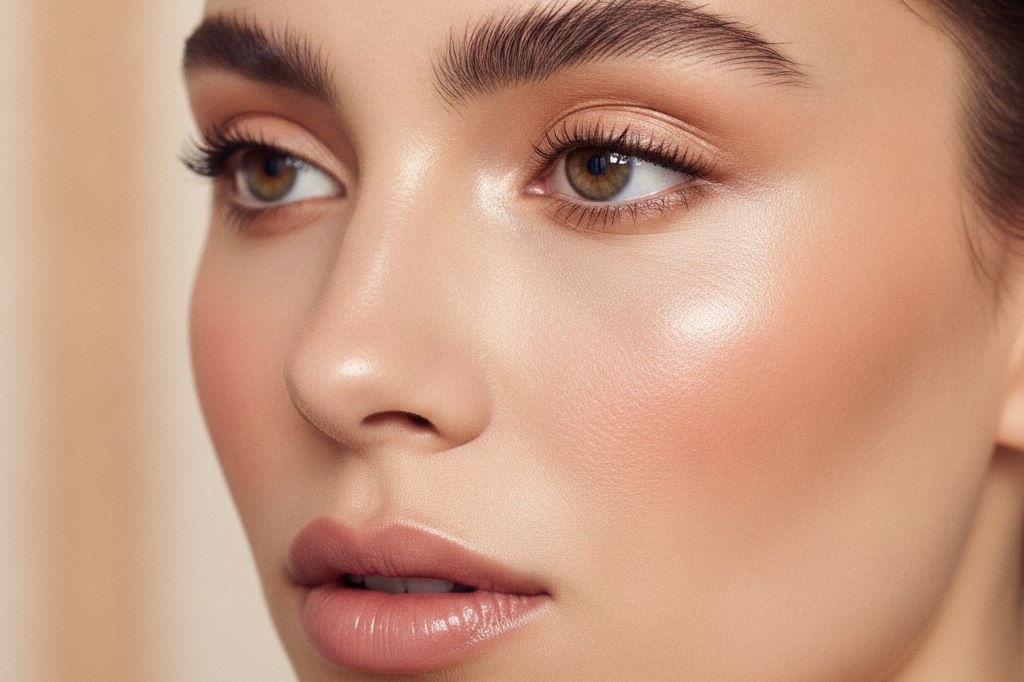
Everyday makeup works best when it evens things out and adds a little life, rather than covering everything. The aim is “you, on a good day” — so lean on sheer, buildable, cream formulas that melt into skin, and save the full-coverage, powdered, sculpted look for when you actually want it.
The core kit
- A light base — tinted moisturiser, skin tint or BB cream evens tone without a mask-like finish.
- Concealer — just where you need it: under-eyes, around the nose, the odd blemish.
- Cream blush — the secret weapon; it brings the whole face back to life in one step.
- Brow gel — brushed-up brows frame everything; clear or tinted.
- Mascara — one coat opens the eyes.
- A tinted lip balm — your perfect everyday “nothing” colour.
The five-minute routine
Even out the skin with a little base and spot-conceal where needed. Warm the face with cream blush blended onto the cheeks (and a touch on the eyelids and lips ties it all together). Brush up the brows, add a coat of mascara, and finish with tinted balm. Done — and it looks effortless because it nearly is.
Building it up for occasions
The same base scales beautifully. For evening, add a little more concealer, a defined brow, a sweep of neutral eyeshadow, a proper lip colour, and a highlight on the high points of the face. Because you started with a natural base, dialling it up never tips into “too much.”
Skin first — it’s most of the job
Makeup sits far better on cared-for skin, so the real everyday glow starts the night before. A simple, consistent routine does most of the work; see our four-step skincare guide. Moisturised, protected skin needs less base and holds makeup longer.
Common beginner mistakes
- Too much base. Apply where you need coverage, not all over.
- The wrong shade. Match foundation to your neck, not your hand, in daylight.
- Skipping blush. It’s the single step that makes a face look alive.
- Powdering everything. A little where you get shiny; leave the rest dewy.
Frequently asked questions
What makeup do I actually need every day?
Six forgiving products, and nothing more: a light base such as a tinted moisturiser, concealer, cream blush, brow gel, mascara and a tinted lip balm. That is the entire everyday kit. Cream formulas are the right choice for beginners because they blend easily with clean fingers, need no brushes or blending skill, and settle into skin rather than sitting on top of it looking flat or mask-like. The reasoning is simple: everyday makeup is meant to enhance the face you already have, not disguise it, so lightweight, buildable products do the job with the least effort. For example, a tinted moisturiser evens out redness and unevenness in one swipe, a dab of cream blush on the cheeks brings colour back to a tired face, and brushed-up brows plus one coat of mascara open the eyes. Skin prep still comes first, since well cared-for skin needs less of all six products to look finished.
What’s the correct order to apply everyday makeup?
Skincare and SPF come first, then base, then concealer wherever it is needed, then cream blush, then brows and mascara, and lips last. The guiding rule is creams before any powder, so every layer melts into the one beneath it instead of sitting separately and looking patchy. Working in this order matters because each product is designed to build on the last: base evens the canvas, concealer spot-treats anything the base did not fully cover, and blush warms the whole face back to life once the skin looks even. For example, applying concealer before base often means reapplying it afterwards, wasting the five minutes the routine is meant to save, while applying blush before base can leave patches of colour with no even skin underneath to blend into. Following the sequence in order, skin first, is what makes a five-minute routine realistic rather than rushed and uneven.
How do I make makeup look natural?
Reach for sheer, buildable, cream formulas rather than full-coverage or powder-heavy ones, apply base only where coverage is genuinely needed rather than all over the face, add cream blush for life in the cheeks, and keep powder to a minimum so skin still reads as skin rather than as makeup. The reasoning behind this is that a natural look depends on texture as much as colour — heavy, matte layers flatten the face and look applied, while sheer cream products let natural skin texture show through. Well-prepped, moisturised skin underneath makes the single biggest difference, since makeup always sits better on skin that is already in good condition. For example, spot-concealing only under the eyes and around the nose, rather than covering the whole face, keeps the finish light, while a little powder just on the shiny T-zone — and none elsewhere — keeps the rest of the face dewy and natural.
How do I choose the right foundation shade?
Match the shade to your neck rather than the back of your hand, and test it in natural daylight rather than under indoor or shop lighting, since both the hand and artificial light can be noticeably different tones from your face and neck. Then choose based on undertone as much as depth — the right shade should disappear into your skin rather than sit on top of it as a visible layer. The reasoning is that foundation is meant to even tone invisibly, so a shade that photographs or looks obviously different from your neck has failed at that one job, however good the formula is. As a practical test, apply a little along the jawline and blend outward: if it vanishes with no visible line where it meets the neck, that is the right shade. If it leaves a ring or looks ashy or too warm, try a different undertone rather than just a different depth.
Six products, five minutes, skin that still looks like skin. That’s everyday makeup — and it’s the most useful beauty skill there is. Feel good, look great.