
 Trending
Ceremonial Matcha
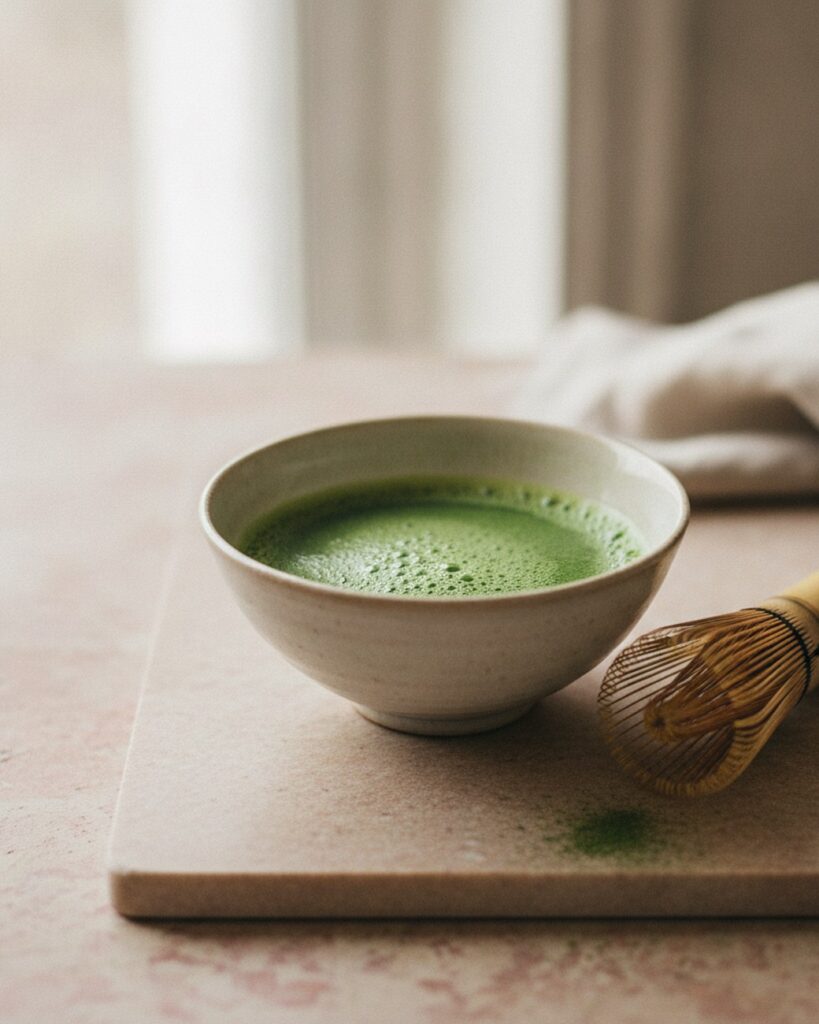
The at-home matcha ritual that is genuinely worth it — smoother, greener and calmer than most café versions.
- Price guide
- £15–£40
- Best for
- Anyone swapping — or supplementing — coffee with a gentler lift.
A small daily ritual that delivers. Better and cheaper than your café habit.
Independent editorial guide. The price guide is a typical market range for this type of product, not a specific retailer’s price. Where we link to shops, some links may be affiliate — which never changes our verdict.
Ceremonial matcha is the finest-grade Japanese green tea powder, stone-ground from young, shade-grown leaves for whisking with hot water and drinking plain. Culinary matcha uses older leaves, is ground coarser and tastes stronger, making it better suited to lattes, baking or smoothies where other ingredients soften its flavour.
What to buy
How to choose Ceremonial Matcha at every budget — what to look for at each tier, from a first-try buy to an investment piece.
A reliable, vivid-green stone-ground powder for daily plain bowls: smooth texture, low bitterness and good everyday value without chasing a single-origin premium price.
Sourced from one named growing region with tighter harvest timing, offering a more layered, naturally sweet cup for those who whisk matcha most days.
A premium/latte-grade powder milled to hold its flavour and colour under steamed milk, ice or light sweetening without turning muddy or dull.
A bundled bamboo whisk, sifter and a small tin of ceremonial-grade powder, giving newcomers everything needed to whisk a proper bowl from day one.
Ceremonial matcha has gone from niche Kyoto ritual to café menu staple, and for good reason: whisked properly, it delivers a smooth, vegetal sweetness and a steady, gentle lift that many people find easier to live with than a jolt of espresso. But “ceremonial grade” is a loosely policed term, and the gap between a genuinely fine, stone-ground powder and a dressed-up culinary tin is real. This guide covers what ceremonial matcha actually is, how ceremonial vs culinary matcha differ in practice, how to make matcha at home without clumps, and how to choose a tin that’s worth the price.
What ceremonial matcha is, and why it’s having a moment
Ceremonial matcha is the finest grade of green tea powder, made from the youngest, shade-grown leaves that are steamed, dried and stone-ground to a fine, almost silky texture. It’s designed to be whisked with hot water alone, drunk plain, and appreciated for its own flavour rather than masked by milk or sugar. Culinary matcha, by contrast, is typically made from slightly older leaves, ground coarser, and priced for blending into lattes, baking or smoothies where its flavour will be softened by other ingredients.
Its popularity now owes as much to ritual as to taste. Making a bowl of matcha forces a short pause: sifting, whisking, watching the froth form. That slow, tactile process is part of the appeal in an otherwise rushed morning, alongside a colour and aroma that photographs and smells like nothing else in the tea world.
How to make matcha at home
The classic preparation is simple in theory and easy to get wrong in practice. Getting the ratios and tools right matters more than any fancy technique.
- Sift first. Matcha clumps in storage, so pass roughly 1–2g (about half a teaspoon) through a fine sieve or dedicated matcha sifter straight into the bowl. This single step prevents most of the lumps people struggle with.
- Add water carefully. Pour in a small splash of water just off the boil (around 70–80°C is typical guidance; fully boiling water can scorch the powder and turn it bitter) and work it into a smooth, lump-free paste before adding the rest.
- Whisk in a “W” or “M” motion. Add the remaining water (roughly 60–70ml for a traditional thin bowl) and whisk briskly back and forth, not in circles, until a fine, even foam sits on top.
- For a matcha latte recipe, whisk the sifted matcha with a small amount of hot water into a concentrate first, then pour over steamed or warmed milk (dairy or plant-based) and stir gently. Adding matcha directly to a full mug of milk is the single most common cause of clumping.
How to whisk matcha without clumps
Clumping is almost always one of three things going wrong: skipping the sift, using water that’s too hot, or adding liquid too quickly. Fix those and the technique itself is forgiving.
- Sift every time, even if the tin looks fine. Matcha absorbs moisture and compacts, especially once opened.
- Make the paste first. Never tip matcha into a full bowl of water and expect it to dissolve; work a small amount of water in first until it’s smooth, then dilute.
- Use a bamboo whisk (chasen) where possible. Its many fine tines aerate matcha far more effectively than a spoon, fork or standard kitchen whisk, which tend to drag powder around rather than break it up.
- Whisk with a loose wrist in quick, straight strokes rather than slow stirring circles. Speed creates the foam; stirring just moves clumps from one side of the bowl to the other.
How to choose ceremonial matcha
Because grading isn’t independently regulated, judging matcha by a handful of physical cues is more reliable than trusting the label alone.
- Grade. True ceremonial grade is milled specifically for drinking plain and should say so clearly, rather than being a culinary powder relabelled for a higher price. If a product is marketed mainly for lattes, baking or smoothies, treat it as culinary or premium/latte grade regardless of the name on the tin.
- Colour. Look for a vivid, almost luminous green. Dull, yellowish or brownish tones usually indicate older leaves, more stem and vein content, or powder that’s past its best.
- Origin. Japanese regions with long-established matcha production are generally associated with more consistent shading and processing, though origin alone doesn’t guarantee quality — it’s one signal among several, not a substitute for checking colour and freshness.
- Freshness. Matcha is a delicate powder that fades fast once opened; check for a harvest or best-before date and buy in a quantity you’ll realistically finish within a few weeks of opening.
- Kit. A bamboo whisk, a sifter and a wide, shallow bowl make a genuine difference to texture. If you’re starting out, a bundled starter kit removes the guesswork of buying each piece separately.
Ceremonial vs culinary vs premium/latte grade
| Grade | Best use | Taste | Colour | Price tier |
|---|---|---|---|---|
| Ceremonial | Whisked plain with hot water, traditional bowls | Smooth, naturally sweet, low bitterness | Vivid, bright jade green | Upper end of range |
| Premium/latte grade | Lattes, iced matcha, light baking | Balanced, slightly more vegetal, holds up to milk | Bright green, slightly less vivid | Mid-range |
| Culinary | Baking, smoothies, cooking, heavily flavoured drinks | Stronger, more astringent, sometimes bitter | Deeper or duller green | Lower end of range |
Matcha vs coffee
Matcha contains caffeine, so comparing it with coffee is fair, though the two aren’t interchangeable. A bowl of matcha generally provides a moderate amount of caffeine — less, cup for cup, than a standard coffee — and it’s often described anecdotally as a steadier, longer lift rather than coffee’s faster peak, an effect some people attribute to the combination of caffeine with other naturally occurring compounds in the leaf. That said, individual responses vary considerably, and matcha is not a replacement for medical or dietary advice if you’re managing caffeine intake for health reasons. Taste-wise, matcha is grassy, slightly sweet and vegetal rather than roasted or acidic, which is part of why it appeals to people who find coffee too harsh but still want a lift.
Storage and common mistakes
Matcha is more perishable than most people expect, and small storage habits make a bigger difference than the price paid for the tin.
- Keep it airtight, cold and dark. Light, heat, air and moisture all degrade matcha’s colour and flavour quickly, so an airtight tin in the fridge is far better than a cupboard shelf.
- Reseal properly after every use. Even brief exposure to air speeds up fading; press excess air out of the bag or tin before closing it.
- Don’t over-buy. A large tin that sits half-used for months will taste noticeably flatter by the end than a smaller one used up promptly.
- Avoid boiling water. It’s the single most common technique mistake and the fastest way to make a genuinely good matcha taste bitter and thin.
- Don’t judge quality by colour alone once opened. Matcha oxidises gradually with exposure to air, so a tin that looked vivid on day one may dull within weeks even if stored reasonably well — that’s a freshness issue, not necessarily a sign it was a poor product to begin with.
The case for
- Smooth, naturally sweet flavour with far less bitterness than a coarse culinary powder
- Vivid green colour and fine texture make it satisfying to whisk and photograph
- Often described as giving a steadier lift than coffee, without the sharp peak and crash
- Preparation ritual encourages a genuine, screen-free pause in the day
Worth considering
- Grading isn't independently regulated, so labels alone can be misleading
- Fades in flavour and colour quickly once opened, demanding careful storage
- Genuine ceremonial grade sits at the upper end of the price range, and quality varies within that price band
Frequently asked questions
What is the difference between ceremonial and culinary matcha?
Ceremonial matcha is milled from the youngest, shade-grown leaves to a very fine texture, designed to be whisked with hot water and drunk plain. Culinary matcha uses slightly older leaves, is ground coarser and tastes stronger and more astringent, which suits lattes, baking or smoothies where other ingredients balance its flavour.
How do you make matcha without clumps?
Sift the powder before whisking, then mix in a small splash of hot (not boiling) water first to form a smooth paste. Add the rest of the water gradually and whisk briskly in a back-and-forth motion rather than stirring in circles. Skipping the sift or pouring matcha straight into a full cup are the most common causes of clumps.
Is matcha better than coffee?
Neither is objectively better; it depends on preference. Matcha generally contains less caffeine per serving than coffee and is often described as giving a steadier, longer-lasting lift rather than a sharp peak, though individual responses to caffeine vary. Matcha also has a grassy, vegetal taste quite different from coffee's roasted, acidic profile.
How much caffeine is in matcha?
Matcha does contain caffeine, generally at a moderate level that tends to be lower per serving than a standard cup of coffee, though this varies by brand, grade and how much powder is used. Because whole leaf is consumed rather than steeped and discarded, matcha also provides other naturally occurring compounds alongside the caffeine.
Do you need a bamboo whisk for matcha?
Not strictly, but it helps considerably. A bamboo whisk (chasen) has many fine tines that aerate the powder into a smooth, even foam far more effectively than a spoon, fork or standard whisk. You can improvise with what you have, but results will be lumpier and less frothy without one.
How do you store matcha?
Keep matcha in an airtight container, away from light and heat, ideally in the fridge once opened. Reseal it promptly after each use to limit air exposure, and buy a quantity you'll get through within a few weeks, since flavour and colour fade noticeably faster than most people expect.
- Ceremonial matcha is milled for drinking plain; culinary is milled for blending into other things
- Sifting and using hot (not boiling) water are the two biggest fixes for clumping
- Vivid green colour, a clear grade label and a recent harvest date are the best quality signals
- Store matcha airtight, cold and dark, and use it up within weeks of opening for the best flavour