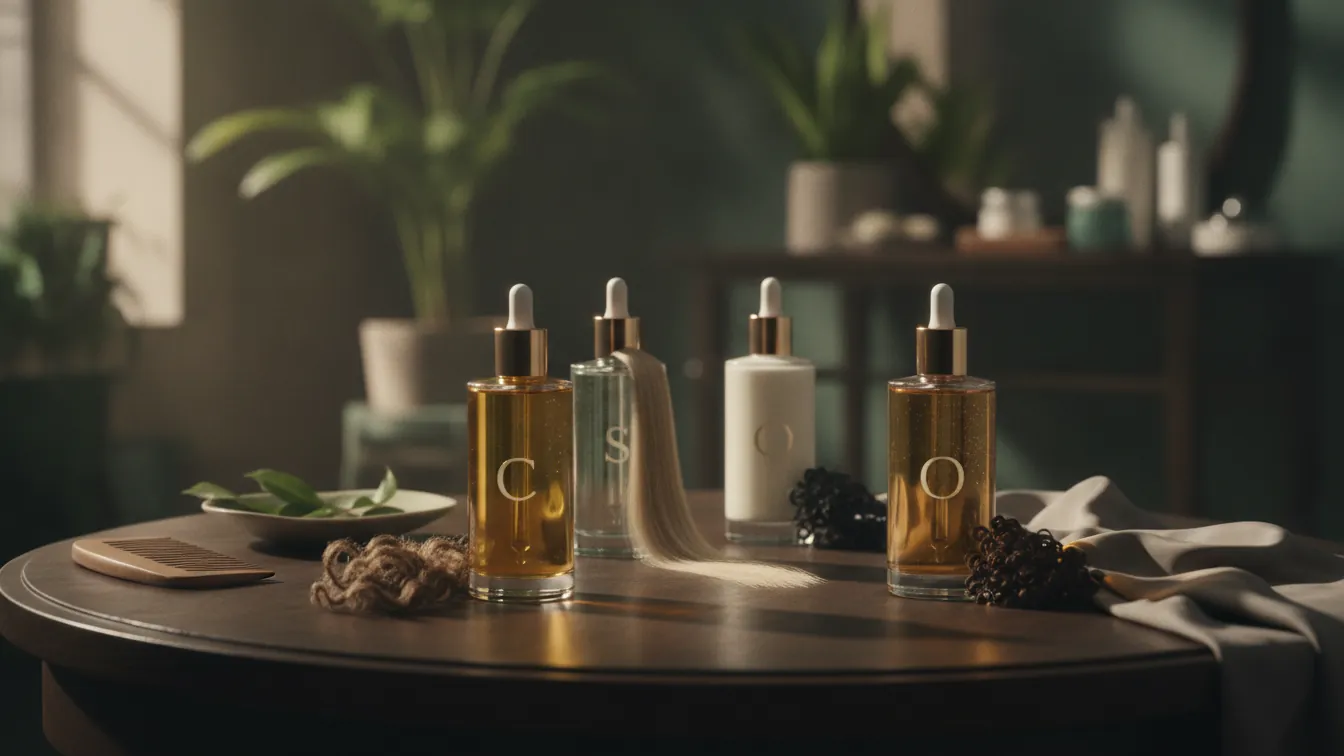
If you ask ten people how they choose a hair serum most will reply that they base their choice on hair type such as frizzy, oily, fine, or curly. That’s reasonable, but it overlooks a number of factors. The thickness of the strands is important, as is the way your scalp behaves by afternoon, how frequently you pick up a straightener, and whether you prefer a shiny finish or a more natural one.
With fine hair a light hair serum works well, but a more rich one can cause it to appear flat within a short time. Curly hair is just the opposite since it generally requires more slip. The best thing to do is to disregard the statements on the bottle and instead consider what kind of care your hair actually needs.
Match Your Concern to the Right Ingredients
Oily scalp
Oily roots don’t mean your ends are well looked after. They often aren’t. Sebum collects near the scalp, while the mid-lengths and tips take all the damage from brushing, tying and styling.
Deal with them one at a time. Select a light, non-greasy serum and apply it only to the lengths and the ends, not to the scalp. Serums based on lightweight silicone can provide a smooth, slippery feel without leaving a thick residue. Make sure to check the label to find out whether the product should be applied to damp or dry hair, and pick one that spreads well without leaving a film.
A frequent error is to find that the hair appears oily after washing and therefore put in more serum, but this does not help at all; instead, use less and keep the serum away from the roots.
Frizzy hair
Frizz occurs when the surface of the hair becomes rough or when the hairs absorb moisture from humid air, and heat styling, friction and chemical treatments all contribute to it.
A serum coats the surface, so hair looks smoother and is easier to handle. Dimethicone is a common ingredient for this, since it reduces friction and adds slip. But be realistic. A serum doesn’t repair split ends or reverse real damage. It makes hair look better for now.
Select a formula which controls flyaways without leaving any residue and another that suits the way you style your hair. If the directions state that the hair should be damp, then follow them. When the hair is dry, only a very small quantity will cause visible flyaways to settle. Begin with an amount less than you imagine is necessary since you can always add more if needed.
Fine hair
Thin strands get weighed down easily. Even a serum made for shine can leave fine hair looking limp if you use too much, so this is where restraint pays off.
Light liquids and fluid formulations work best. Packaging can also make a difference since a pump or dropper is easier to use for controlling the amount than a bottle with a wide mouth. You should mainly apply the product to the ends, and if your hair looks coated when it’s dry, then reduce the length the next time.
Fine hair needn’t avoid silicones since it is the formula and the quantity you use that make the most difference.
Curly and coily hair
The curls and coils tend to bend, loop and catch one another, which makes detangling more difficult. Breakage can result from the friction caused by washing, brushing and styling, and humidity influences how well defined the curls appear.
There is no single correct formula since it all comes down to the type of curl you have, the thickness of your hair strands and the effect that you want to achieve. Those who prefer it tend to choose a light serum to smooth the surface, whereas others go for a more concentrated one in order to get more slip. A serum can be used together with a conditioner or a leave-in product, but it will not usually take the place of either of them.
If the instructions permit, apply the product to damp hair and gently work it through the lengths. If you’re already using a leave-in conditioner or curl cream, consider how the products build on one another since too many heavy ones can lead to buildup and cause the curl definition to become blurred.
What the ingredients actually do
A look at the ingredient list will show you what the product is intended to do, but none of the individual ingredients will guarantee that a particular result will be achieved; the complete formula and the way you apply it matter more.
- Silicones (for example, dimethicone): give a slippery feel, a smooth texture and a shiny appearance.
- Lightweight emollients: soften hair and reduce friction.
- Plant oils: lubricate and change how hair feels.
- Humectants: help attract and hold moisture in the right conditions.
- Fragrance: adds scent, but may not suit sensitive users.
Plant oils aren’t automatically better for curly hair, and silicones aren’t automatically wrong for fine hair. Judge the whole formula against your hair and the finish you want.
Comparing products before you buy
Don’t let the front of the pack or one buzzword decide for you. A quick checklist:
|
Does it suit my texture and strand thickness? |
|
Is it made for smoothing, shine or manageability? |
|
Light or oil-rich? |
|
Damp hair, dry hair or both? |
|
Is there anything I’d rather avoid? |
|
How much do I get, and how much do I need per use? |
If you’re browsing hair serums on Flipkart, read the description, ingredient list, directions, quantity and seller details. Reviews can show recurring patterns, but results vary with hair type and how people apply the product, so treat them as a guide rather than a verdict.
Applying serum properly
Even a good serum can give a poor result if it’s applied wrongly. The routine is simple:
- Read the label first to see if it’s meant for damp or dry hair.
- Start with a small amount, especially on fine hair.
- Rub it between your palms, then run it through the mid-lengths and ends.
- Keep it off the scalp unless the directions say otherwise.
- If hair feels greasy or coated, use less next time.
- Don’t assume heat protection. A smoothing serum isn’t a heat protectant, so only rely on it for hot tools if the label clearly says so.
FAQs
Can one serum work for different hair types?
Sometimes. Certain formulas suit several types, though the right amount and the finish will vary. Go by your hair’s needs and the directions on the pack.
Can serum replace conditioner?
Usually not. The conditioner does the conditioning after a wash. Serum is for surface smoothness, shine and manageability. Many routines use both.
Does hair serum help hair grow?
Don’t expect it to. Ordinary cosmetic serums improve how hair looks and behaves. They aren’t designed to grow it. If you’re losing hair persistently, get it checked by a professional.
How often should I use it?
It depends on the formula, your hair’s condition and the label. More often isn’t better.
Bottom line
Start with what your hair needs. Oily scalp? Keep a light formula on the lengths. Fine hair? Pick something that won’t kill volume. Frizz responds to smoothing ingredients, and curly or coily hair usually wants extra slip.
Compare ingredients, texture, directions and realistic benefits before buying, then start with a small amount and see how your hair reacts. No product works equally well for everyone, so a bit of trial and error is normal.