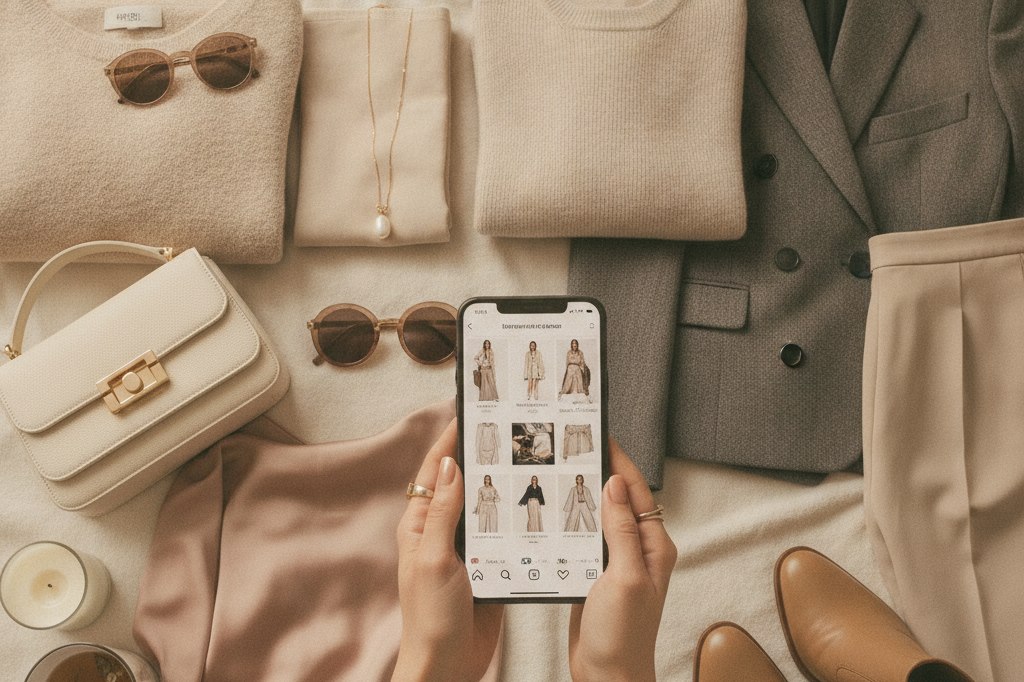
Social media didn’t just add another place to shop — it rewrote the order of events. Discovery now happens before desire: the feed shows you the item, styled and validated by a stranger, and the wanting follows. Buying moved from a deliberate errand to a reflex somewhere between scrolling and checkout, with live streams, in-app carts and haul videos collapsing the gap between seeing and owning to almost nothing.
A decade ago you found clothes in shops and magazines. Now you find them mid-scroll, styled by strangers, sold by an algorithm that knows your size before you do. Social media has completely rewired how we shop — mostly for better, sometimes for worse.
The good
Discovery has never been easier. Real people show how clothes actually look and move, small brands can reach you without a shop, and ‘how to style it’ is a search away. At its best, it’s democratic and genuinely useful.
The catch
The same speed fuels overconsumption. The endless feed is designed to make you want the next thing, and haul culture can turn getting dressed into a treadmill. The clothes pile up; the satisfaction doesn’t.
Shopping smarter
Follow accounts that make you think, not just buy. Save an outfit for a week before you shop it — most cravings fade. And remember the best-dressed people online are usually the ones re-wearing, not restocking.
From search to feed: how discovery flipped
Shopping used to start with a need and a search. You knew roughly what you wanted, then went looking for it — in a shop, a catalogue, or a search bar. The feed reverses that sequence entirely. You’re not looking for anything; the algorithm, trained on what you’ve lingered over, decides what to put in front of you, and the wanting arrives after the seeing, not before it. That’s a genuinely useful shift when it surfaces a small maker you’d never have found on a search engine. It’s a costly one when it means you’re shopping constantly without ever having decided to.
Haul culture, dupes and the churn of micro-trends
Three habits grew directly out of feed-based shopping. Haul videos turned a big shop into entertainment, presenting bulk buying as content rather than consumption. Dupe culture made it normal to chase a cheaper copy of whatever a garment happens to be trending, which keeps the focus on novelty rather than fit or quality. And because feeds reward whatever is newest, trends now rise and fall in the time it used to take a single season to play out, so ‘in style’ has quietly become a much shorter window than it used to be. None of this is accidental — it’s simply what happens when clothing is marketed through a format built to reward constant turnover.
Live shopping and in-app checkout: the funnel gets shorter
The second big change is structural, not cultural. Live shopping streams and in-app checkout removed most of the steps that used to sit between wanting something and buying it — no separate site to visit, no cart to abandon overnight and reconsider. That’s convenient, but convenience was never neutral: every step that gets removed from a purchase is also a step that used to give you a moment to change your mind. A shorter funnel means fewer chances to ask whether you actually need the thing, which is precisely when impulse buying tends to win. The overconsumption that follows isn’t just a wardrobe problem — it’s clothes bought for the scroll rather than the closet, worn once for a photo and then forgotten at the back of a drawer.
Shopping the feed on your own terms
None of this means opting out of social media as a source of style ideas — it’s genuinely good at that. It means adding back the friction the apps removed.
- Screenshot instead of buying, and revisit the folder in a week; most of the pull fades once the scroll stops.
- Ask whether you’re drawn to the garment or to the video — good editing sells plenty of clothes that look ordinary on a hanger.
- Check your own wardrobe for something similar before adding a near-duplicate to it.
- Follow accounts for ideas and inspiration, and do your actual buying somewhere without a built-in checkout button.
Frequently asked questions
How has social media changed the way we shop for clothes?
It changed the order in which shopping happens. Previously, people searched for clothes because they’d already identified a need. Now, algorithmic feeds surface clothing before any need exists, styled on real people and framed as content rather than advertising, so the desire to buy is created by the scroll itself. On top of that, live shopping streams and in-app checkout removed most of the practical steps that used to separate seeing an item from owning it: no separate website, no cart left overnight, no pause for reconsideration. The result is shopping that’s faster, more constant and more impulse-driven than it used to be, sitting alongside genuine upsides like small independent brands reaching an audience without a shopfront, and real people showing how clothes actually fit and move rather than relying on a styled campaign image.
What is haul culture?
Haul culture is the practice of filming and sharing a large batch of clothing purchases, typically as a video where each item is unboxed, tried on and reviewed in turn. It emerged specifically as a social media format, because a single big shop makes better, longer content than one item bought at a time, and the try-on structure gives viewers a rough stand-in for seeing clothes on a real body rather than a styled campaign shot. The format normalises buying in bulk by presenting it as entertainment rather than consumption, and it rewards volume and novelty over cost per wear or how often something actually gets worn afterwards. It’s closely tied to micro-trend culture, since haul videos are also where fast-moving trends get the most visibility, encouraging viewers to buy into a look while it’s current rather than build a wardrobe that lasts beyond one cycle.
How do I stop impulse-buying clothes from social media?
The most effective approach is reintroducing the pause that in-app checkout removed. Screenshot or save an item instead of buying it immediately, then revisit the saved folder after a few days to a week; a large share of that initial pull fades once you’re no longer mid-scroll. It also helps to separate inspiration from purchase by deliberately shopping somewhere without a one-tap checkout, which forces a natural break between wanting and buying. Before adding anything to a cart, it’s worth asking honestly whether you’re responding to the garment itself or to how well the video sold it, and checking your existing wardrobe for something similar first. None of this requires quitting social media as a source of ideas — it just means treating the feed as inspiration rather than a shop front.
Why do clothing trends move faster now than they used to?
Trends move faster because the format they travel through rewards constant turnover. Algorithmic feeds are built to surface whatever is newest and getting the most engagement, so a style only stays visible while it’s fresh, which pushes a constant supply of new items to replace whatever came before. Dupe culture accelerates this further, since a cheaper copy of a trending piece can be sourced and marketed within days, compressing what used to be a seasonal cycle into a matter of weeks. Live shopping adds another layer, letting a trend go from feed to cart in the same sitting instead of over a weekend browsing session. The effect is that clothing trends now behave more like short-form content than the slower, seasonal cycle they used to follow, which is worth remembering before treating any single micro-trend as something worth building a wardrobe around.