
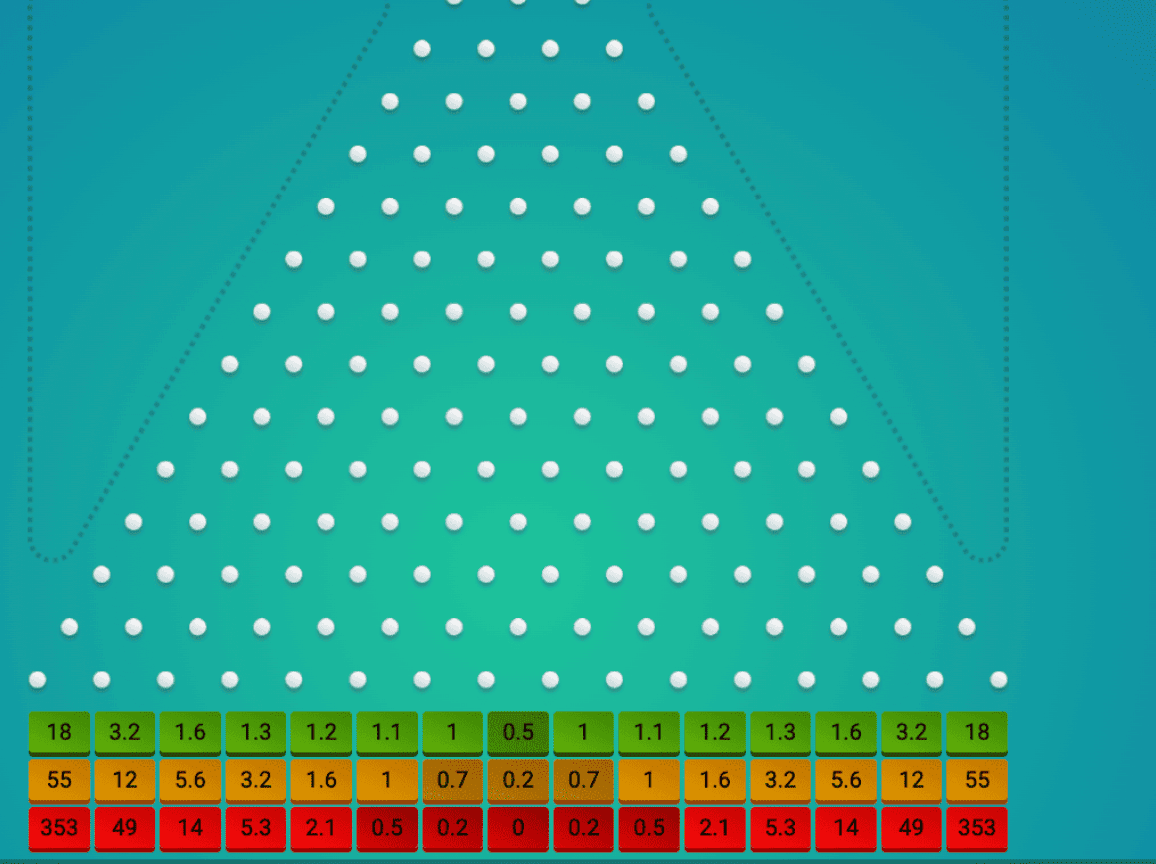
Plinko is one of those games that looks almost too simple the first time you see it. A ball drops from the top of a pegged board, bounces left and right through a grid of pins, and lands in one of several multiplier slots at the bottom. That’s the whole thing. And yet it has built an enormous player base across African online casino markets over the past few years, because what looks simple on the surface is genuinely engaging once you understand how the risk settings work.
This guide covers everything you need to know before you play — the mechanics, the risk levels, the math behind it, how to approach it sensibly, and where to find it.
Where Plinko comes from
The concept originates from the game show The Price Is Right, which aired on American television from the 1970s onward. The Plinko segment became one of the most iconic game show moments in TV history — contestants dropped discs down a giant pegged board and watched them bounce unpredictably toward cash prizes at the bottom. The combination of suspense, randomness, and visual engagement made it instantly memorable.
Online casino developers picked up the format and adapted it into a real-money game around the early 2010s. The digital version allows for adjustable risk settings, variable row counts, and multipliers that scale dramatically with the risk level you choose. It has grown fastest in markets where fast, mobile-first gaming is dominant — which is precisely why it has landed so well in Uganda and across sub-Saharan Africa.
How the game works: the basic mechanics
You set your stake, choose your risk level and the number of rows on the board, then drop a ball from the top. The ball hits pegs as it falls, deflecting left or right at each one. The path is determined by the game’s random number generator — there is no way to predict or influence which direction the ball goes at any individual peg. When it reaches the bottom, it lands in one of the slots arranged across the base of the board, each carrying a multiplier value.
The multipliers are distributed symmetrically: the slots at the far edges of the board carry the highest multipliers, and the slots in the middle carry the lowest. This reflects basic probability — a ball is statistically most likely to end up somewhere near the center after bouncing through multiple rows of pins. Hitting the extreme edge slots is rare, which is why they pay the most.
Risk levels: the most important setting in Plinko
Most online Plinko games offer three risk settings: Low, Medium, and High. This is the single most impactful choice you make in Plinko, and it’s worth understanding what it actually changes before you start.
Low risk
On Low risk, the multiplier distribution is compressed. The edge slots still pay more than the middle, but the gap between the highest and lowest multipliers is narrow. You’ll get a lot of returns that are close to your original stake — small wins and small losses, relatively stable session variance. This is the setting for players who want longer sessions without dramatic swings.
Medium risk
Medium risk widens the gap. The center multipliers drop lower, the edge multipliers climb higher. You’ll see more variation in outcomes — more sessions that end significantly up or significantly down compared to where you started. It’s the middle ground between the stability of Low and the volatility of High, and for most players it’s a natural starting point.
High risk
High risk is where the numbers get dramatic. Center slots can carry multipliers below 1x — meaning you lose part of your stake even when the ball lands there — while edge slots can reach 100x, 500x, or beyond depending on the game and the row count. Most drops will land somewhere in the middle and return less than your stake. But when a ball does find the edge, the return is significant. High risk Plinko is a low-frequency, high-magnitude game — you need to understand that going in and budget accordingly.
Row count: how it affects the game
Most Plinko games let you choose between 8 and 16 rows, sometimes more. More rows means more pegs, which means more deflection points and a tighter probability distribution — balls become statistically more likely to land near the center the more rows they travel through. Fewer rows means more spread and more unpredictability in where the ball ends up.
Combined with the risk setting, the row count gives you meaningful control over the shape of your session. High risk with 8 rows produces wild variance. Low risk with 16 rows is about as stable as Plinko gets. Experiment in demo mode to understand how these combinations feel before you commit real money to a specific configuration.
The math: RTP and what it means
Plinko games from reputable providers typically carry an RTP of 97% or above, which is high by casino game standards. This means that over a large number of drops, the game returns 97 cents for every dollar wagered across all players. In any individual session of 50 or 100 drops, your actual return will vary considerably from that average — that’s what volatility looks like in practice.
The RTP is constant regardless of which risk level or row count you choose. What changes between settings is how that return is distributed — frequent small returns on Low, infrequent large returns on High. The house edge is the same either way.
Plinko in Uganda: why it’s taken off
The Plinko game Uganda community has grown steadily alongside the broader crash and instant game category. The format appeals to Ugandan players for the same reasons Aviator does: fast rounds, an outcome you can watch unfold in real time, and a visual tension that traditional spinning slots don’t deliver. Each drop takes seconds. You see the ball bounce. You know the result immediately. For players on mobile data who want a game that moves at their pace, Plinko fits that need well.
How to approach Plinko as a player
Start with the demo version. Every serious platform that carries Plinko offers free play, and the demo runs on the same RNG as the real money game. Use it to get familiar with all three risk levels and different row counts before putting money in. Understanding how a High risk board actually behaves — how often the ball lands in the low-multiplier center slots versus the edges — is information worth having before it costs you anything.
Set a session budget before you start and treat it as fixed. Plinko moves fast, especially with auto-drop enabled, and it’s easy to go through more drops than you intended without noticing. Deciding your limit before the first ball drops — not after you’ve already lost half of it — is how you keep sessions enjoyable.
Where to play Plinko in Uganda
When it comes to choosing a good casino for Plinko Uganda, the criteria are the same as for any other game: a valid license, mobile money support, a Plinko title from a certified provider with a published RTP, and a mobile experience that works on real connections. Platforms built specifically for African players — with MTN and Airtel Money integrated natively, realistic minimum stakes, and a game library sourced from audited developers — will give you a significantly better experience than a generic international casino that happens to carry Plinko somewhere in its catalog.
Plinko is one of the most visually satisfying games in the instant game category. It’s fast, it’s fair when played on a reputable platform, and the risk settings give you enough control over the shape of your session to make it worth understanding properly. Go in knowing how the board works and you’ll get considerably more out of it.