Yes, we'd love for you to write for us about fashion and share your unique style insights with our growing community. We're always on the lookout for passionate writers, stylists, and industry insiders who can contribute original, high-quality articles that truly connect with fashion lovers.
How to Become a Fashion Contributor
Having a great idea is the first step, but becoming a contributor is also about understanding what our readers love and telling your story in a compelling way. The fashion industry is a powerhouse, expected to hit a revenue of about $770.9 billion in 2024 and projected to break the $1 trillion mark by 2029. With almost half of all fashion retail sales now happening online, sharp digital content is more important than ever.
This explosive growth creates a huge appetite for fresh perspectives. It doesn't matter if you're a seasoned writer or a fresh voice just starting out—if you've got something to say, we want to hear it. Authenticity and a genuine passion for style are what we value most.
Understanding Our Editorial Process
We've kept our submission process simple and clear, so great ideas can get the spotlight they deserve. Getting from a pitch to a published article is a team effort between you and our editors. We're not just filling slots with content; we're building partnerships with people who are excited to create genuinely helpful resources for our readers.
To give you a better idea of the journey, here's a quick look at how your submission will move through our workflow.
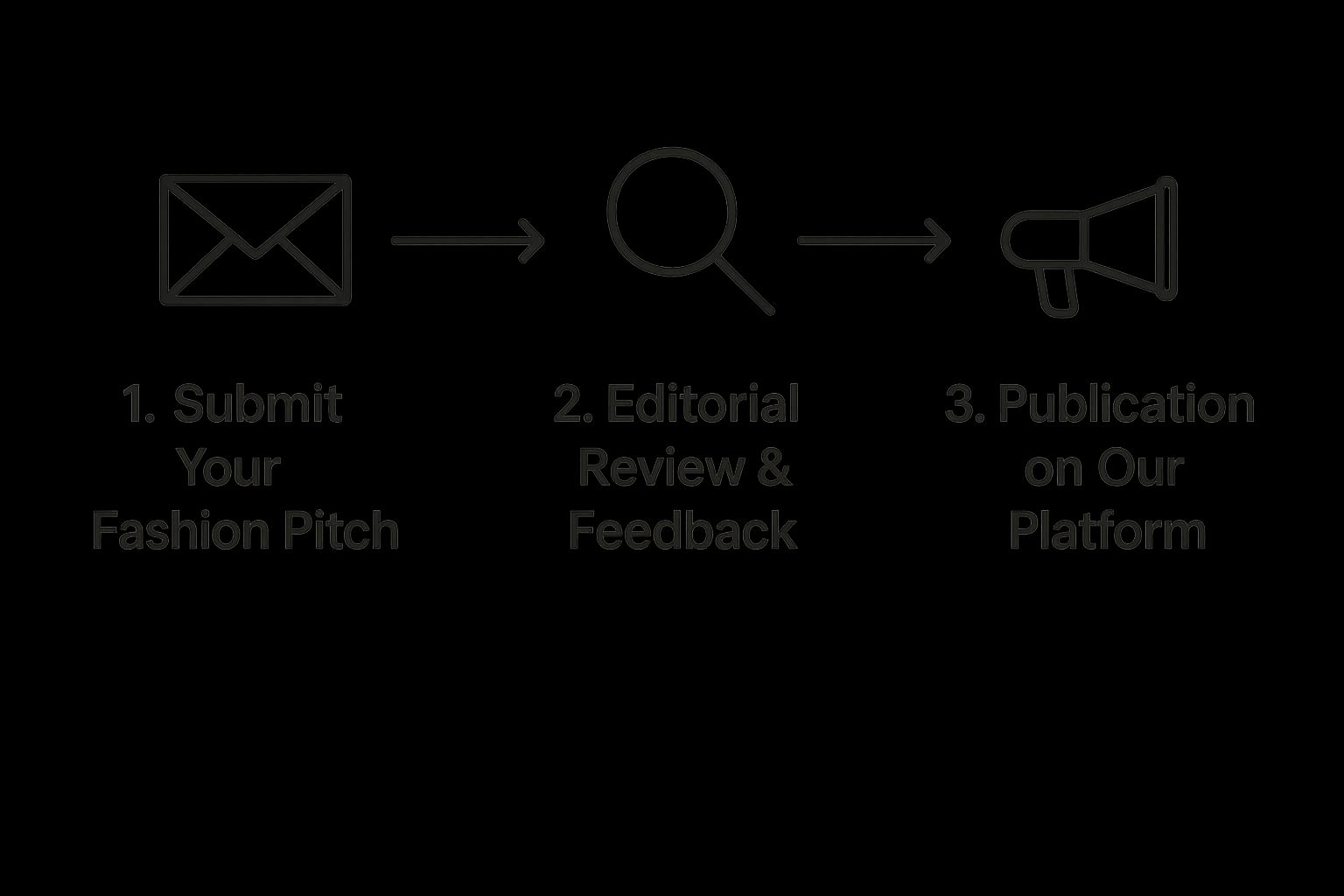
As you can see, it all starts with your pitch. From there, it goes to our editorial team for review and feedback before it's ready for publication. This collaboration ensures every article meets the high standards our readers expect.
What We Look For in a Fashion Writer
Of course, writing skills are important, but what really makes a contributor stand out is their unique point of view. We want writers who can connect fashion to cultural trends, personal stories, or innovative ideas. You don’t need a huge social media following or decades of experience—just a compelling story and the ability to tell it well.
Our ideal contributor is someone who blends personal passion with practical advice, creating content that is both inspiring and genuinely useful for the everyday fashion enthusiast.
To get a better feel for our vibe and the kind of topics that resonate with our audience, spend some time exploring our site. A great place to start is our guide on what fashion blogging is and how you can get started. Doing a little homework first will dramatically increase your chances of getting a "yes" from us. We can't wait to see what you bring to the conversation.
Finding Your Unique Angle

Let's be honest: a generic trend report is the fastest way to get your pitch ignored. To really cut through the noise, your story needs a sharp, unique angle—a perspective that an editor hasn't already seen a dozen times that day.
The secret? Look beyond the runway. The most compelling fashion stories connect the dots between what we wear and the world around us. Instead of just describing a trend, explore its roots.
Think about how fashion intersects with other powerful forces. You could analyze how wearable tech is quietly reshaping haute couture, or maybe you could dig into the real economic impact of the circular fashion movement on established luxury brands. These cross-disciplinary topics are where the truly original, high-value content lives.
Brainstorming Beyond the Basics
The best ideas often come from looking at familiar topics through a completely new lens. So, instead of pitching a broad piece like "Fall Fashion Trends," you need to get much more specific and, frankly, more interesting. A strong angle is a promise to the reader that you have something new to say.
Here are a few ways I like to kickstart fresh ideas:
- Tap into Culture: How are current events, social movements, or even that show everyone is binge-watching on Netflix actually shaping what people want to wear? Tying your story to a timely conversation is always a smart move.
- Spotlight a Niche: Go deep into the style evolution of a specific subculture. Think about the rise of "gorpcore" among city dwellers or the distinct aesthetics of the modern skateboarding scene.
- Follow the Business: Dig into how a brand is successfully using sustainable materials, or analyze how direct-to-consumer models are completely upending the traditional retail experience.
Ultimately, you want to find a story that feels like only you can tell it. Maybe it’s a personal essay about recreating your grandmother's vintage wardrobe. Or perhaps it’s a detailed deep-dive into the historical accuracy of a popular period drama's costumes. Your unique experiences and passions are your biggest assets here.
A Quick Search to Validate Your Idea
Once you've landed on a compelling idea, it's wise to do a quick gut check to see if people are actually curious about it. A simple keyword search can show you what your potential audience is already looking for. This isn't about chasing fleeting trends; it's about confirming that your unique story has an audience waiting for it.
For instance, a search for "sustainable luxury fashion" might reveal related queries like "eco-friendly designer bags" or "ethical fine jewelry." This kind of insight is gold—it can help you fine-tune your title and intro to grab a reader's attention right away.
The guest posts that really resonate don't just state facts; they tell a story. An article about TikTok's influence on style, for example, is far more engaging than a simple list of trending items because it tells a bigger story about culture, community, and technology.
This narrative approach is absolutely essential. For a great example of this in action, check out our piece on how TikTok is influencing the fashion industry. You'll see how it connects a hugely popular platform to real, tangible shifts in the fashion world.
When you pitch to write for us fashion publications, bringing a well-researched, original angle to the table shows an editor you've done your homework. It proves you understand their audience and are ready to deliver a story that will get people talking—making your pitch that much harder to resist.
Crafting a Pitch That Editors Will Actually Read
Think of your pitch as your first—and maybe only—shot at impressing a busy editor. This isn’t a formal application; it's a confident introduction to an idea you genuinely believe in. Trust me, a generic, copy-pasted email is the fastest way to get your message dragged straight to the trash folder.
Personalization is absolutely essential. Before you type a single word, spend some real time on our site. Find a recent article you loved and mention it in your pitch, explaining why it resonated with you. This simple step instantly signals that you get our voice and are pitching with genuine intention, not just spamming inboxes.
The Anatomy of a Winning Pitch
A great pitch is clear, concise, and gets right to the point. It shows you respect an editor's time while proving you’d be a valuable contributor. Every single element, from your subject line down to your sign-off, needs to work together to make an editor think, "Okay, this person gets it."
Putting together a pitch is a lot like knowing how to make a compelling cover letter for a dream job. Structure is everything.
Here’s a practical breakdown of what works for us:
- A Killer Subject Line: Get specific. "Guest Post Submission" is boring. Try something like, "Pitch: The Real Story Behind Dopamine Dressing" or "Idea: How Vintage Outerwear is Dominating Fall 2024."
- A Personalized Opener: A quick, genuine reference to our publication shows you’ve done your homework.
- Your Core Idea: Nail your concept down in one or two sharp sentences. Then, sketch out a brief outline with three or four bullet points to show what you'll cover.
- Your Unique Angle: Why this story, why now, and why are you the one to write it? A sentence or two is all you need.
- Your Credentials: Keep it brief. A short bio and links to 1-2 of your proudest published pieces are perfect.
This framework lets an editor quickly grasp your idea and your ability to bring it to life. You aren't just selling a topic; you're selling your expertise and professionalism.
Common Pitching Mistakes to Avoid
Even a brilliant idea can be torpedoed by a bad pitch. Knowing what not to do is just as important as knowing what to include. The biggest mistake we see? Pitching a topic we just covered. A quick search on our site will save you (and us) a lot of time.
Another common misstep is a lack of focus. Pitch one strong idea at a time. Sending a list of five vague concepts tells me you haven't fully thought any of them through. Show us you’ve developed one fantastic angle, not five half-baked ones.
Your pitch isn’t meant to be a finished draft. It’s about starting a conversation and showing an editor you’ve found a story our audience will absolutely love.
The fashion world is booming online, with global retail sales expected to fly past $7 trillion by 2025. That’s a massive audience hungry for quality content. As you pitch to write for us fashion publications, remember that editors are searching for writers who understand this world and can create content that truly connects.
So, your pitch got the green light. Fantastic! Now comes the fun part: bringing that idea to life and creating a piece that our readers will love. Think of this as the final fitting—it's where you polish your concept into a stunning, ready-to-wear article.
First things first, let's talk about structure. People online don't read word-for-word; they scan. Your job is to make your article as easy to skim as possible.
Breaking up your text with clear, descriptive H3 subheadings every few paragraphs is a great way to do this. It guides the reader through your key points and, as a bonus, helps search engines figure out what your article is all about. It’s a simple trick that makes a huge difference.
Crafting an Introduction That Hooks the Reader
Your introduction is everything. Seriously. You have about three seconds to grab someone's attention and convince them your article is worth their time. Don't waste that opportunity with a slow, rambling opening.
Jump right in. Start with a surprising statistic, a relatable story, or a question that makes them think. You want to create an immediate connection and promise the reader that they'll walk away with something valuable.
Weaving in SEO Best Practices Naturally
Let's be real: writing for an online audience means thinking about search engine optimization (SEO). But—and this is important—it should never feel forced or sound like a robot wrote it. When you write for us fashion pieces, your goal is to seamlessly work in relevant terms like "sustainable streetwear" or "fall 2024 color trends."
Good SEO helps the right readers find your work; great writing makes them stick around and come back for more. If you're looking to brush up on this, the guide on how to write SEO content that ranks is a fantastic resource for finding that sweet spot.
An SEO-friendly article is one that completely and authoritatively answers a reader's question. If you focus on creating genuinely helpful content, the SEO often takes care of itself.
A well-optimized article can even land a featured snippet on Google. We’ve actually put together our own guide on 5 ways to optimize your content for featured snippets that shows you how to aim for that top spot.
Building Trust and Adding Visual Flair
To really connect with readers, you need to build credibility. Don't just make claims—back them up. Citing data adds real weight to your writing. For instance, mentioning that the global fashion market is valued at around $1.84 trillion and employs over 400 million people gives your words instant authority. Sourcing your facts shows you've done your homework.
Finally, a wall of text is a reader's worst nightmare. Break it up with high-quality, royalty-free images. Visuals aren't just decoration; they help illustrate your points, showcase trends, and keep your audience engaged. Sometimes, the perfect image can capture a style or mood far better than words ever could.
What to Do After You Submit Your Article
That moment you hit "send" on your pitch is fantastic, but your job isn't quite over yet. The way you handle the next steps is often what turns a one-off submission into a lasting relationship with an editor.
It all comes down to being patient but proactive. This shows you're not just a great writer, but also a professional who's easy to work with.
Most publications, ours included, will give you a rough timeline for a response. Try your best to respect it. If a week or two passes beyond that window, a polite, brief follow-up email is completely fine. Just keep it simple and friendly—a quick "just checking in" is all you need.
Handling Feedback and Revisions
If you get an email back with edits, that’s great news! It means the editor sees real potential in your article and is willing to invest their time in it. Don't take feedback personally; it's a completely normal, and honestly, essential part of the process.
Read through the editor's notes carefully. They have a deep understanding of what their audience wants and are trying to make sure your piece fits the publication’s unique voice.
The best contributors I've ever worked with treat revisions as a collaboration. They see feedback as a tool, ask smart questions if something is unclear, and turn around edits that show they’ve really engaged with the suggestions.
When you respond quickly and with a positive, open-minded attitude, it makes the entire process smoother and more enjoyable for everyone. That kind of professionalism is something editors remember, and it often leads to more opportunities to write for us fashion pieces in the future.
Promoting Your Published Work
Once your article goes live, it’s time to celebrate! And then it's time to share it with the world.
Promoting your work isn't just a nice thing to do; it’s a smart career move. When you share the article with your network, you're showing us you’re a real partner who is invested in helping the piece succeed. This drives traffic, boosts engagement, and benefits both of us.
Here are a few easy wins for getting the word out:
- Hit Your Socials: Post the link on your LinkedIn, Instagram, X (formerly Twitter), or wherever you connect with your audience. Don't forget to tag us so we can see it and share it, too!
- Link from Your Website or Blog: If you have your own site, write a short teaser post about your article and link back to the full piece on Are You Fashion. This is a great way to build your own site's authority while showcasing your published work.
- Update Your Portfolio: Add the link to your online portfolio. Every published clip builds your credibility and makes it easier to land your next gig.
By taking an active role in promotion, you're doing more than just sharing an article—you're cementing your reputation as an expert voice in the fashion industry.
Common Questions About Fashion Guest Blogging
Diving into the world of guest blogging can feel a little intimidating, and it's totally normal to have questions. Getting a handle on the unwritten rules and expectations from the get-go will help you pitch like a pro and forge great relationships with editors.
Let's start with the big one: money. Do guest bloggers get paid? The honest answer is… it depends. Some big-name publications will offer a flat fee, but it's very common, especially with independent blogs, for the compensation to be a byline and exposure. Don't underestimate that value—it’s a powerful way to build your portfolio and get your name out there. Just be sure to clarify the terms before you pour your heart into the keyboard.
What Editors Are Really Looking For
Once you get past the logistics, the real challenge is figuring out what makes an editor’s eyes light up. They're not just looking for another trend report; they're on the hunt for a fresh angle, a unique story, or a deep dive their audience can't find anywhere else.
To get your pitch noticed, think about moving beyond the obvious. Here are a few areas that always have potential:
- Sustainable Fashion Deep Dives: Instead of just saying "buy eco-friendly," why not analyze a specific brand's circular supply chain? Or explore the real-world impact of a new textile innovation? Get specific.
- The Intersection of Tech and Style: This space is exploding. You could pitch a piece on how augmented reality is revolutionizing the try-on experience or how AI stylists are changing the way we build our wardrobes.
- Personal Essays with a Strong Voice: Stories connect people. A piece about how fashion helped you find your confidence or navigate a life change can be incredibly powerful. Authenticity resonates.
When you pitch to write for us fashion blogs, demonstrating you can explore these nuanced topics shows you're not just another voice in the crowd.
Content Rights and Best Practices
Another area that often trips people up is content ownership. You've written an amazing article, it's published… can you post it on your own blog, too? Almost universally, the answer is no. Publications need exclusive rights to the content to avoid getting penalized by search engines for duplicate content.
Here’s a pro tip: Instead of reposting the whole article, write a short, snappy intro on your own site. Tease the topic, explain why it's a must-read, and then link directly to your published piece. This sends traffic (and goodwill) back to the publisher while still letting you show off your work.
Finally, how long should your article be? There's no magic number. Some blogs want quick, punchy reads around 800 words, while others are looking for in-depth, feature-style articles of 2,000+ words. The best way to know for sure is to look for official contributor guidelines. If you can't find any, do a little detective work—scan their last few posts to get a feel for their average word count and aim for that.
Ready to share your unique fashion perspective with a passionate audience? Are You Fashion is always looking for fresh voices to contribute to our style conversations. Learn more and submit your pitch today at https://areyoufashion.com.