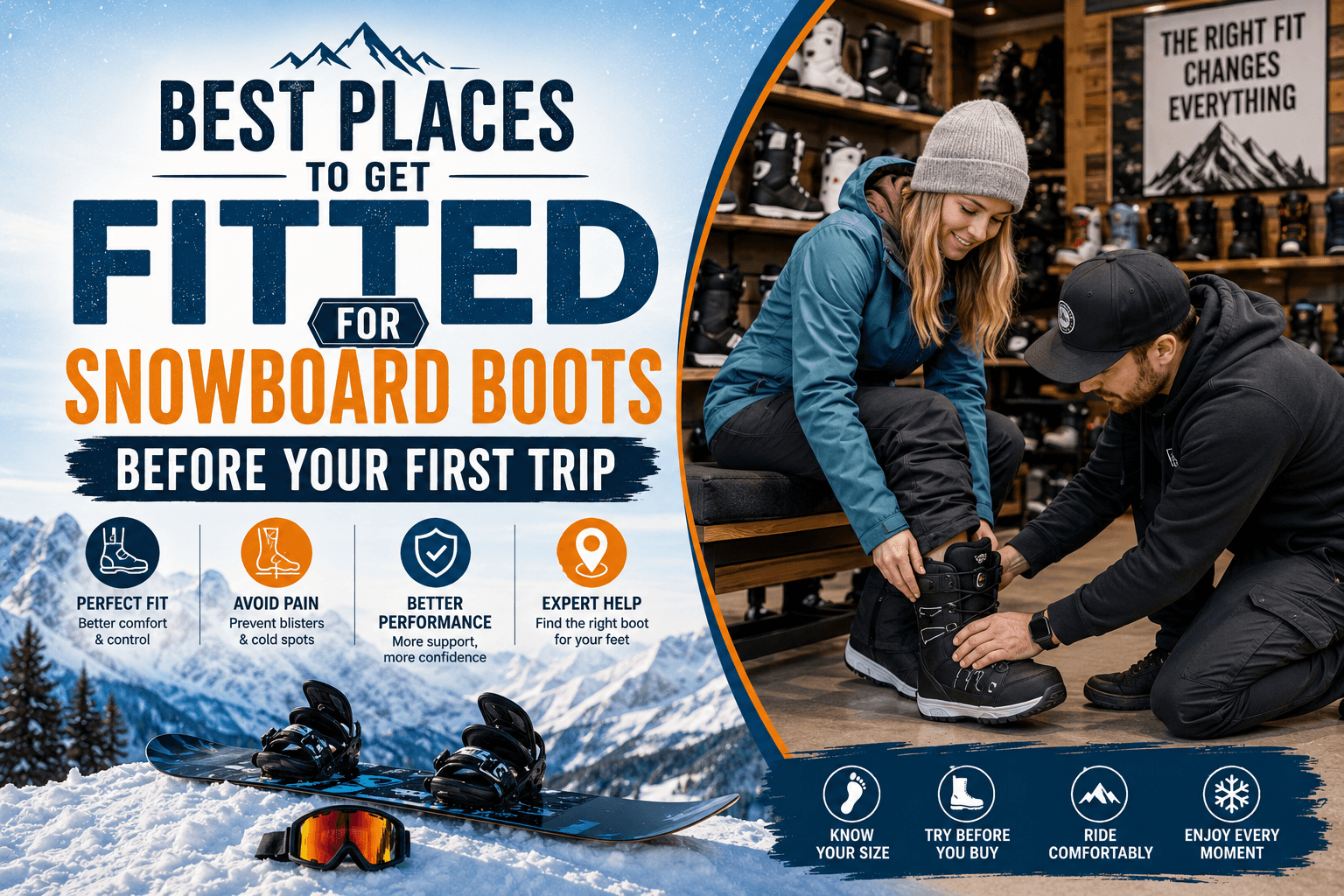
If you are heading to the mountain for the first time, the single most important thing you can sort before you go is your boots. Not your jacket, not your goggles, not your board. The boots are where your body connects with the equipment, and a poor fit turns what should be an exhilarating few days into a grinding battle with numb toes and unresponsive turns. Getting fitted properly, ideally before you arrive at the resort, changes the experience entirely.
These are the best places to make that happen.
1. REI
For first-timers without an existing connection to the snowboard world, REI is the most accessible and least intimidating starting point. Their boot-fitting process is handled by staff who are trained specifically in snow sports fit, they carry a broad range of brands across multiple price points, and they offer a satisfaction guarantee that makes the whole thing lower risk. REI stores with dedicated snow sports sections also have the full range of complementary gear, so you can sort your helmet and layering system in the same visit. The staff will walk you through the toe-brush test, heel lift check, and the flex assessment without assuming you already know what those mean.
2. Tactics
Not everyone has a specialist shop nearby, and for those planning their first trip from somewhere without convenient access to snow sports retail, Tactics fills the gap well. Their Tactics’ snowboard boot fitting guide covers fit, sizing, and lacing systems in more depth than most retailers bother with online, including a clear explanation of why boots that feel roomy straight out of the box are a warning sign rather than a comfort feature. The guide is written for someone who does not already know the terminology, which makes it genuinely useful as a preparation tool before you visit any shop or make a purchase.
3. Evo
Evo has built a strong reputation in the snowboard community for stocking a deep and well-curated selection, and their Seattle flagship offers proper in-person fitting alongside an online presence that rivals the big retailers. What sets Evo apart for first-timers is the level of specificity in their product descriptions and staff guidance. They distinguish clearly between lacing systems, flex ratings, and volume fits in a way that helps a buyer understand what they are choosing and why. If you are in the Pacific Northwest or can time a visit, the in-store experience is worth it.
4. Your Local Mountain Rental and Retail Shop
The shop at or near the resort you are visiting is underrated as a fitting destination. The staff there fit boots on people who are about to go out the next morning, which concentrates their advice considerably. They know which models perform well in the specific conditions you are about to encounter, they can advise on how the resort’s terrain affects equipment choice, and they are used to dealing with nervous first-timers who need more explanation than experienced riders. If you have flexibility in your schedule, visiting the day before your first day on the mountain gives you time to address any issues before you commit to a full day in the wrong pair.
5. Specialty Boot Fitters
For anyone making a more serious investment, dedicated boot-fitting specialists operate in most major ski towns and in some larger cities. Shops like The Boot Pro, Surefoot, and similar boutique fitters offer heat-moulded liners, custom footbeds, and fitting sessions that go considerably deeper than what a general retailer can provide. The process typically takes 30 to 45 minutes and results in a boot that is shaped specifically to your foot rather than the average foot the manufacturer designed around. It is a step above what most first-timers need, but worth knowing about if you find standard fits consistently uncomfortable or if you are planning to invest in riding seriously.
6. Burton Flagship Stores
Burton’s own retail locations offer a fitting experience that is specifically calibrated to their products, which matters if you are buying within their range. The staff are brand-trained and familiar with the nuances between models in a way that a multi-brand retailer cannot always match. Burton’s boot range spans beginner to advanced with distinct fit philosophies across the lines, and getting advice directly from someone who knows those differences well is useful when you are trying to understand whether a softer or stiffer flex suits what you are about to do. Flagship locations in major US cities and resort towns also carry step-on binding systems that require fitting alongside their compatible boots.
One Thing Worth Knowing Before You Go
Whatever shop you choose, go wearing the socks you plan to snowboard in. Thin, synthetic snowboard socks rather than hiking socks or thick wool, because the thickness difference affects the fit enough to skew any professional assessment. Burton’s official boot sizing guide notes that fit and comfort should be assessed while standing and flexing in a riding stance, not while sitting, which is worth remembering if the shop gets busy and someone tries to rush through the assessment. A good fitter will always have you stand up, walk around, and flex before making a recommendation. If they don’t, ask.