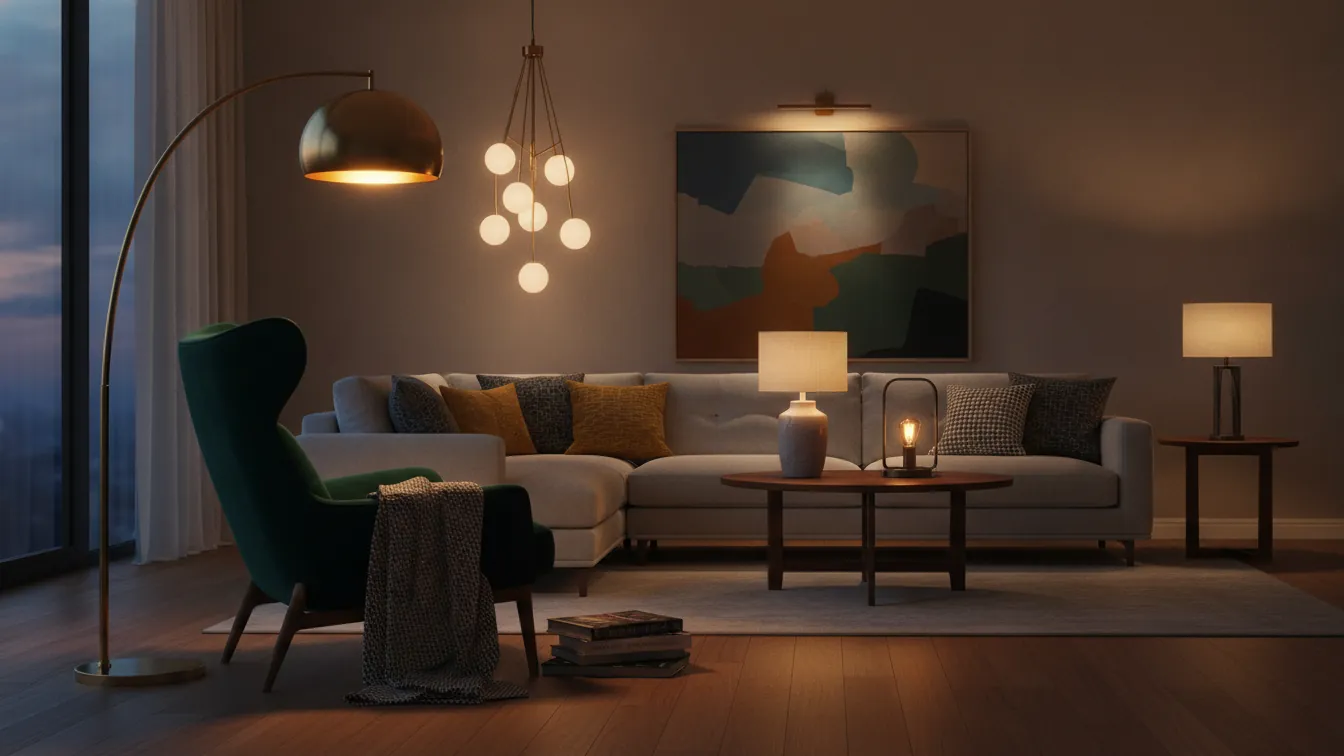
The oak table is staying. The rug is staying too, even if neither looks much like the rooms in your lighting inspiration folder. Choosing a new light becomes more interesting when it has to work with things you already own.
Those pieces give you a useful starting point. A curved chair back, a woven basket or the metal edge of a mirror can suggest a connection worth exploring. The aim is to find a fitting that looks comfortable among your belongings and puts light where the room needs it.
Start with the things that are staying
Take a photograph of the room in daylight, with the furniture in its usual position. Include the curtains, artwork and flooring. These details are easy to forget when a product photograph fills your screen and shows a perfectly coordinated interior.
Look at the materials that occupy the most space. A timber floor may be more noticeable than the brass handles on a cabinet. A large patterned rug may have more influence than the colour of a small vase. Use those larger elements to narrow the choice.
Choose one connection to begin with. A woven shade can pick up the texture of a basket or upholstered chair. A rounded glass fitting can relate to a circular mirror. A dark metal frame can sit alongside black picture frames. These are options to try against the room, rather than rules that every piece must follow.
When browsing pendant lighting, keep the room photograph beside your shortlist. Compare the complete shade, suspension and ceiling canopy. The small parts count, particularly when a pale fitting hangs from a contrasting cable or a metallic shade has a different finish inside.
Give the new shape enough room
A sculptural pendant needs consideration from more than the doorway. Look at where it will sit against a window, artwork or a tall cabinet. Its outline becomes part of those views, and an elaborate shape can overlap with details you already enjoy.
Make a simple paper outline using the listed dimensions and have someone hold it at the proposed position. View it from the sofa and dining chairs. This helps you judge scale, although a flat outline cannot reproduce the volume or transparency of the finished fitting.
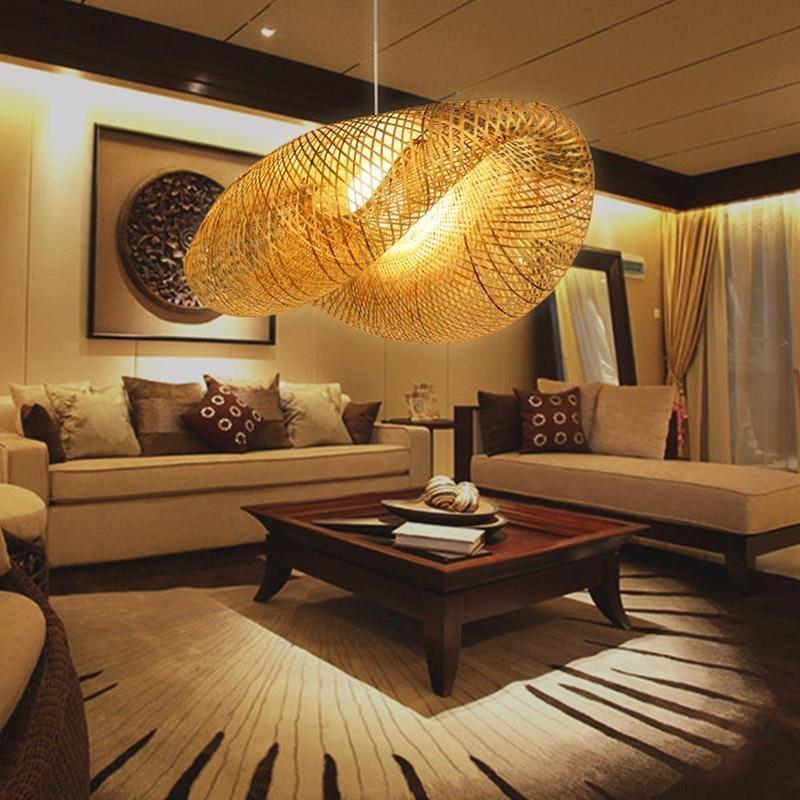 A woven shade introduces texture alongside timber and upholstery. Its full shape still needs space in the room.
Notice the difference between physical size and how much of the view a fitting occupies. An open frame lets you see through parts of it; a solid shade covers more of what sits behind it. Compare both with the furniture beneath them.
For a pendant over a table, settle the table position first. Then discuss the fitting’s dimensions, hanging range and installation position with the installer. Include chairs pulled out and the route people take around the furniture.
Give wall lights their own place
Wall lights meet the room at closer quarters. Their backplates, arms and shades sit directly beside wallpaper, panelling, mirrors and artwork. A detail that looks delicate in a product close-up may feel quite prominent on a narrow section of wall.
When choosing wall sconces, compare the height, width and projection together. Check the position beside furniture that moves, including cupboard doors, reclining chairs and curtains. For fixed wiring, have the installer assess the proposed mounting point before finalising the decoration around it.
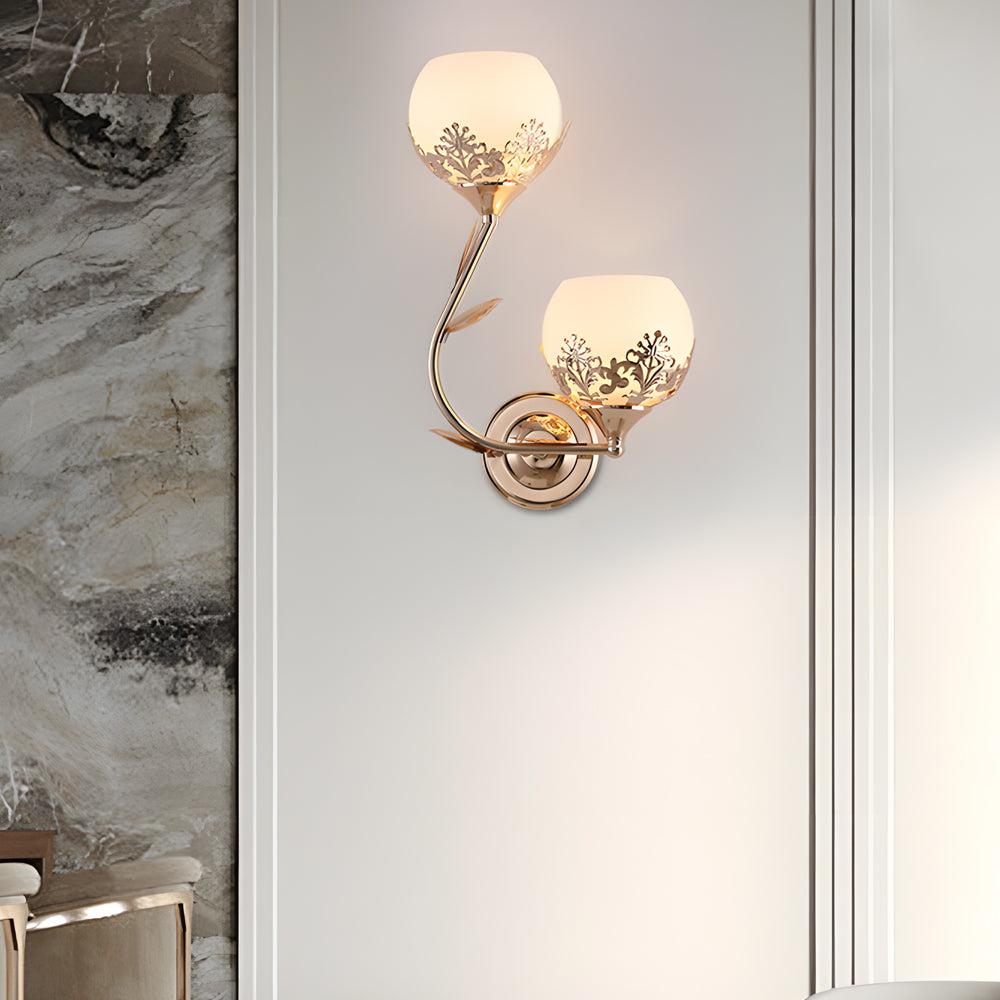 The backplate, curved arms and glass shades all contribute to how a decorative wall light sits against its background.
A plain wall gives ornamental metalwork space to be seen. With patterned wallpaper, compare the fitting against an actual sample: a leaf-shaped arm might overlap a large floral motif, while a simpler outline may be easier to distinguish.
Also decide what the light is there to do. A glow across the wall, illumination beside a mirror and light for reading call for different directions and coverage. Check that practical role before choosing a companion for the pendant.
Look at the combination with the lights on
Metal finishes deserve a closer comparison than their colour names suggest. Brushed brass, polished gold and aged bronze have different surfaces. Request a finish sample where available, or ask for a close-up in ordinary daylight. Compare it with a nearby permanent detail, such as a door handle or mirror frame.
Then consider the shades when illuminated. Clear glass exposes more of the light source, while woven materials can cast a visible pattern. Ask how the selected fitting directs light and whether its bulbs or integrated LEDs offer the output and controls you need.
Keep maintenance in the decision as well. Think about reaching the shade, cleaning its surface and replacing any removable bulbs. An intricate fitting above a large table may need a different care routine from a simple wall light beside an accessible chair.
Bring the shortlist back to the room photograph before ordering. Check each light against the pieces immediately around it, then look at the room as a whole. You should still be able to enjoy the table, the rug and the artwork that made you want to keep the room largely as it was.