
In the fast-paced world of digital celebrity, the line between viral fame and viral infamy is dangerously thin. While influencers shape trends in fashion, beauty, and lifestyle, some have become cautionary tales, demonstrating the consequences of unchecked ambition and poor judgment. This article explores six of the most shocking "influencers gone wild" moments that captivated global audiences, sparked critical conversations, and permanently altered the landscape of content creation. These events serve as powerful case studies in personal branding, crisis management, and the immense responsibility that comes with a massive following.
Understanding the intense pressure to produce engaging material is key to grasping why some creators make such catastrophic missteps. The drive for visibility can be all-consuming, and a deeper look into the psychology behind viral content reveals the high-stakes strategies that can lead to both massive success and public ruin.
From Logan Paul's ill-fated trip to Japan to the intricate feuds that dismantled online empires, each entry provides more than just a recap of the drama. We will dissect what happened, why it mattered, and extract the crucial lessons every aspiring creator, marketer, and brand should learn from these public falls from grace.
1. Logan Paul's Suicide Forest Video (2017)
Perhaps one of the most infamous examples of influencers gone wild, Logan Paul's 2017 Aokigahara forest video stands as a pivotal moment in creator culture. At the peak of his YouTube fame, Paul uploaded a vlog from Japan's Aokigahara, a location tragically known as a site for suicides. The video included footage of a deceased individual, and Paul's reaction was widely condemned as disrespectful, flippant, and exploitative.
The global backlash was immediate and immense, creating a firestorm that forced both the creator and the platform to confront their responsibilities. This incident wasn't just a personal misstep; it triggered a significant re-evaluation of content moderation and creator accountability across the digital landscape. It serves as a powerful case study in the consequences of chasing views without ethical consideration.
The Fallout and Platform Response
The repercussions for Logan Paul were severe and multi-faceted, demonstrating that even top-tier creators are not immune to consequences. YouTube responded by removing the video, issuing a community guidelines strike against his channel, and temporarily suspending his advertising revenue.
More significantly, Paul was removed from the Google Preferred program, a premium advertising tier that connects top creators with major brands. This action had direct and substantial financial implications. Additionally, several of his upcoming projects, including a sequel to his YouTube Red movie, were canceled or put on hold, stalling his career momentum. Paul issued multiple apology videos, but the damage to his public image was extensive and long-lasting.
Actionable Insights for Creators
The Aokigahara video offers critical lessons for any content creator, brand, or marketer operating in the digital space. It highlights the non-negotiable importance of ethical content creation and the potential for severe brand damage when these lines are crossed.
- Prioritize Cultural Sensitivity: When creating content abroad, thoroughly research and respect local customs, sensitivities, and history. What might be acceptable in one culture can be deeply offensive in another.
- Implement a Content Review Process: Establish a multi-step review process before any content goes live. This could involve a trusted team member, a manager, or even an external consultant for particularly sensitive topics. A second set of eyes can prevent a catastrophic error in judgment.
- Consult Experts for Sensitive Subjects: If your content touches on complex issues like mental health, tragedy, or social justice, seek guidance from qualified experts. This ensures your message is responsible, accurate, and respectful, preventing harm to both your audience and your brand.
2. Belle Delphine's Bathwater Controversy (2019)
Pushing the boundaries of fan culture and monetization, Belle Delphine's 2019 bathwater stunt is a quintessential example of influencers gone wild. Known for her provocative "gamer girl" and e-girl aesthetic, the internet personality offered her followers something uniquely intimate: jars of her used bathwater for $30 each. The product, marketed as "GamerGirl Bath Water," sold out almost immediately.
This controversial move brilliantly blurred the lines between performance art, social commentary, and brazen commerce. It ignited a viral debate across the internet, questioning the ethics of monetizing parasocial relationships and highlighting the extreme lengths to which creators will go to capture attention. The incident became a cultural touchstone, demonstrating the strange and powerful dynamics of influencer-fan interactions in the digital age.
The Fallout and Platform Response
Unlike incidents involving clear policy violations, the bathwater controversy created a complex dilemma for platforms. The product itself was sold through her personal store, not directly on social media sites like Instagram, which made direct moderation difficult. However, the promotion of the product and the subsequent media frenzy put Delphine under intense scrutiny.
The primary consequence was a massive, albeit polarizing, boost in her notoriety and brand recognition. While many criticized the stunt as exploitative and bizarre, it also cemented her reputation as a master of viral marketing. Her Instagram account was later banned for unrelated violations, but the bathwater event itself became a case study in leveraging shock value for commercial gain, sparking numerous copycat attempts and solidifying her unique, often controversial, place in internet history.
The timeline below highlights the rapid success and viral nature of this unusual product launch.
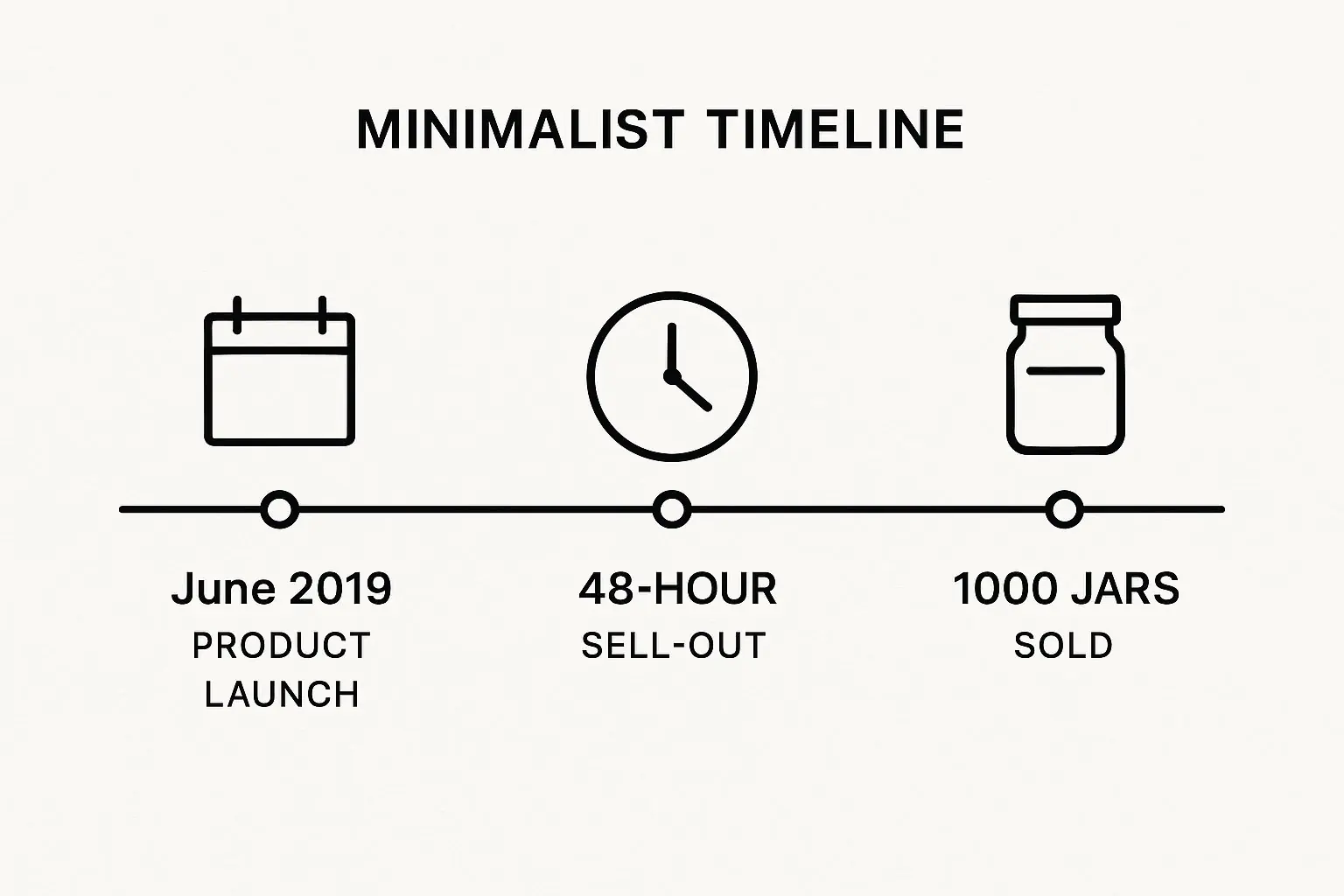
This rapid sell-out demonstrates the incredible power of a deeply engaged niche audience and a well-executed viral marketing strategy.
Actionable Insights for Creators
While selling bathwater is not a recommended business strategy, Delphine's stunt offers valuable, if unconventional, lessons in audience engagement, product creation, and managing viral attention. The event also underscores how modern influencer marketing is increasingly shaping consumer trends, a phenomenon you can explore further by learning more about how TikTok is influencing the fashion industry on areyoufashion.com.
- Understand Audience Demand: Delphine had a profound understanding of her audience's desires and the inside jokes within her community. Creating a product, however strange, that caters directly to a superfan base can generate incredible demand.
- Prepare for Viral Backlash: Any provocative or unconventional product will attract both positive and negative attention. Prepare a communications strategy to handle media inquiries, public criticism, and the inevitable wave of memes and social media discourse.
- Consult Legal and Safety Experts: When selling any physical product, especially one as unusual as this, legal and health considerations are paramount. Ensure your product is safe, your marketing claims are legally sound, and you have clear disclaimers to protect both your business and your customers.
3. James Charles' Tati Westbrook Feud (2019)
The 2019 public implosion of the relationship between beauty gurus Tati Westbrook and James Charles is a landmark case of influencers gone wild. The conflict erupted when Westbrook, Charles's mentor, uploaded a 43-minute video titled "BYE SISTER…" It accused Charles of betrayal for promoting a rival supplement brand and leveled serious allegations of manipulative behavior. The video went viral, sparking an internet-wide spectacle of "cancellation."
This event, dubbed "Dramageddon 2.0," was unique in its speed and scale, with millions watching Charles's subscriber count plummet in real-time. It demonstrated how quickly digital loyalty can evaporate when personal disputes are aired publicly. The feud pulled in other major creators like Jeffree Star, escalating the drama and showcasing the volatile nature of influencer alliances.
The Fallout and Platform Response
The immediate fallout was catastrophic for James Charles's brand. He lost nearly 3 million subscribers in a matter of days, an unprecedented and publicly tracked decline. The "BYE SISTER…" video amassed tens of millions of views, and the controversy dominated social media platforms for weeks, with other influencers publicly taking sides.
Unlike platform-led interventions, the consequences here were primarily audience-driven. While YouTube did not demonetize the videos, the damage was reputational and financial. Brands paused collaborations, and public sentiment turned sharply against Charles. Though he later regained his subscriber base after posting a detailed response video addressing the claims, the event left a permanent scar on his image and served as a harsh lesson in public relations and crisis management within the creator economy.
Actionable Insights for Creators
The James Charles and Tati Westbrook feud provides a masterclass in what not to do when professional relationships sour. It underscores the immense risk of turning private disagreements into public content.
- Handle Conflicts Offline First: Before taking grievances public, exhaust all private channels of communication. A public call-out should be an absolute last resort, as it invites uncontrolled speculation and can cause irreversible damage to all parties involved.
- Prepare a Crisis Management Plan: Don't wait for a scandal to break. Have a crisis strategy ready that outlines key spokespeople, communication protocols, and steps for issuing a timely, sincere, and well-thought-out response. A delayed or poor response can amplify the negative impact.
- Scrutinize Public Allegations: Making serious accusations in a public forum requires irrefutable evidence. The feud's narrative shifted multiple times as claims were challenged and retractions were made, ultimately damaging the credibility of those who made the initial allegations without sufficient proof.
4. Jake Paul's FBI Raid and Legal Troubles (2020-2021)
Continuing the theme of controversial siblings, Jake Paul’s escalating legal issues provide another stark example of influencers gone wild. The pivotal moment came in August 2020 when federal agents executed a search warrant at his Calabasas mansion, an event that was widely publicized. The raid was linked to his presence at an Arizona mall during civil unrest earlier that year, where he was filmed amid looting, leading to misdemeanor charges.
This high-profile FBI intervention was the culmination of a pattern of reckless behavior, including hosting massive parties that defied COVID-19 public health orders and facing numerous allegations of scams related to his business ventures. The incident demonstrated that the boundary between online provocations and real-world legal consequences is thin, bringing a new level of scrutiny to influencer accountability.
The Fallout and Platform Response
The FBI raid triggered immediate and serious repercussions that went beyond typical social media drama. While the federal investigation ultimately did not result in charges against Paul, the damage to his brand was significant. Several brand partners publicly distanced themselves from him, canceling sponsorships and severing ties to avoid association with the controversy.
The legal troubles also impacted his content creation, as platforms like YouTube have policies against creators involved in or promoting illegal activities. The combination of legal battles, public condemnation, and brand desertions created a perfect storm that threatened the viability of his influencer career. This period forced a pivot in his public persona, steering him more aggressively into the world of professional boxing, partly as a way to rebrand and move past his tarnished image.
Actionable Insights for Creators
Jake Paul’s legal entanglements offer a crucial lesson in understanding that an influencer’s actions, both online and offline, are subject to the law. A large following does not grant immunity from legal or financial consequences.
- Understand Legal Boundaries: Content creators must recognize that participating in or documenting illegal activities for views can lead to serious criminal charges. Never assume that being "just a vlogger" provides any form of legal protection.
- Adhere to Public Health and Safety Guidelines: During crises like a pandemic, ignoring official guidelines not only poses a public health risk but can also result in fines, legal action, and severe brand damage. Prioritize community well-being over content opportunities.
- Secure Competent Legal Counsel: For high-profile influencers, having a legal team on retainer is essential. This counsel can advise on the potential risks of planned stunts, business ventures, and public appearances, preventing costly and reputation-damaging mistakes before they happen. For those navigating complex platform rules, it's also wise to research an overview of using promotions for YouTube to ensure all activities are compliant.
5. Nikocado Avocado's Extreme Mukbang Transformation
A deeply unsettling and long-running example of influencers gone wild, the story of Nicholas Perry, known as Nikocado Avocado, serves as a dark cautionary tale about the perils of chasing viral fame at any cost. Perry's channel documented his transformation from a vegan violinist into an extreme mukbang creator, consuming massive quantities of high-calorie food on camera for views. His content is a case study in the devastating impact that online performance can have on a creator's physical and mental health.
Over several years, viewers watched as Perry gained over 200 pounds, engaged in staged emotional breakdowns, and performed increasingly shocking and clickbait-driven videos. The controversy surrounding him is complex, blurring the lines between performance art, genuine distress, and audience exploitation. His journey highlights a symbiotic, often toxic, relationship between a creator willing to sacrifice everything and an audience that rewards extreme behavior with attention.
The Fallout and Platform Response
Unlike a single scandalous event, the fallout for Nikocado Avocado has been a slow, public decline rather than a direct platform sanction. His content, while controversial, rarely violates specific platform policies on harmful or dangerous acts in a way that triggers removal. The primary response has come from the audience and the wider creator community, sparking countless discussions about the ethics of watching and promoting what many see as self-destructive behavior.
Concerns from viewers and health professionals have been vocal and persistent, with many calling for platforms to intervene. However, the lack of a clear policy violation has allowed his channels to remain active and monetized, raising critical questions about platform responsibility for creator well-being. This ongoing controversy has made Nikocado Avocado a symbol of a digital ecosystem that can incentivize and reward a creator's public self-destruction.
Actionable Insights for Creators
Nikocado Avocado's trajectory offers profound lessons for creators on the importance of sustainability and personal well-being over fleeting viral success. His story is a powerful reminder that the person behind the camera must be protected.
- Establish Firm Personal Boundaries: Define a clear line between your on-camera persona and your private life. Sacrificing your mental or physical health for content is a short-term strategy with devastating long-term consequences. Your well-being is not a negotiable asset for views.
- Prioritize Sustainable Content Formats: Build a brand that can evolve and last. Avoid content strategies that rely on extreme, harmful, or physically demanding trends, as these are inherently unsustainable and can trap you in a cycle of escalation.
- Decouple Your Self-Worth from Analytics: Views, likes, and comments are metrics, not measures of your value as a person. Seek validation from offline sources like friends, family, and mental health professionals to maintain a healthy perspective on your online career and avoid performance-based self-worth.
6. Jeffree Star's Business and Personal Scandals (2020-2021)
Jeffree Star, once an untouchable titan of the beauty industry, serves as a complex example of how influencers gone wild can face a reckoning when personal controversies and business issues collide. Throughout 2020 and 2021, the beauty mogul was embroiled in a series of scandals, including resurfaced allegations of racism, high-profile feuds with other creators like Tati Westbrook and James Charles, and a public, messy breakup with his long-term partner.
This period was marked by a constant barrage of negative press, from accusations of manipulative behavior to reports of warehouse break-ins that resulted in millions of dollars in stolen makeup. The cumulative weight of these events created a perfect storm that significantly tarnished his brand, alienated a large portion of his audience, and showcased the vulnerability of an empire built so heavily on a single, controversial personality.
The Fallout and Platform Response
The repercussions for Jeffree Star were a slow burn rather than a single explosive event, affecting his business and industry standing over time. Major retailer Morphe, a key partner, publicly severed ties with Jeffree Star Cosmetics, a move that signaled a major shift in the industry's tolerance for controversy. This decision removed his products from a massive distribution channel and represented a significant financial and reputational blow.
While YouTube did not de-platform him, his social media engagement and viewership saw a noticeable decline as consumers grew weary of the constant drama. The once-dominant force in the beauty community found himself increasingly ostracized, leading him to eventually relocate from Los Angeles to Wyoming in an attempt to distance himself from the industry's epicenter. This move symbolized a retreat from the very community he once ruled.
Actionable Insights for Creators
Jeffree Star's saga offers critical lessons on brand sustainability, public relations, and the dangers of intertwining personal drama with professional enterprise. It demonstrates that even a financially successful brand can be jeopardized by its founder's actions.
- Proactively Address Past Controversies: Do not wait for past problematic behavior or content to be weaponized against you. Address it head-on, apologize sincerely, and demonstrate tangible growth. A proactive strategy is far more effective than a reactive defense.
- Separate Personal and Professional Brands: While authenticity is key, creating some professional boundaries is crucial. Avoid airing personal disputes publicly, as the resulting drama can alienate business partners, damage brand reputation, and exhaust your audience.
- Diversify Your Brand's Foundation: Building an empire solely on one personality is a high-risk strategy. Diversify your business model so it can stand on the quality of its products or services, independent of the founder's public image. This creates a more resilient and sustainable enterprise.
Controversies & Impact Comparison of 6 Influencers
| Incident | Implementation Complexity 🔄 | Resource Requirements ⚡ | Expected Outcomes 📊 | Ideal Use Cases 💡 | Key Advantages ⭐ |
|---|---|---|---|---|---|
| Logan Paul's Suicide Forest Video (2017) | High – sensitive content requiring cautious approach | Moderate – mental health expertise recommended | High impact backlash, policy changes, increased awareness | Awareness campaigns on mental health and content ethics | Sparked policy reforms, raised suicide prevention awareness |
| Belle Delphine's Bathwater Controversy (2019) | Low – simple product creation and sales process | Low – personal product, limited logistics | Viral attention, niche monetization, mixed public reaction | Testing unconventional influencer merchandise strategies | Innovative monetization, boosted brand awareness |
| James Charles' Tati Westbrook Feud (2019) | Medium – public conflict management and video production | Moderate – video editing and PR crisis support | Rapid subscriber loss, major public dispute, eventual dialogue | Conflict resolution and influencer accountability scenarios | Highlighted power of peer critique, accountability shown |
| Jake Paul's FBI Raid and Legal Troubles (2020-2021) | High – legal complexities and crisis management | High – legal counsel and compliance resources | Significant legal consequences, brand and reputation damage | Influencer legal risk assessment and compliance efforts | Demonstrated influencer accountability with legal impact |
| Nikocado Avocado's Extreme Mukbang Transformation | Medium – ongoing personal health documentation | Moderate – filming, medical monitoring | Controversial attention, health deterioration, audience growth | Content exploring mental/physical health issues | Authentic vulnerability, sparked mental health discussions |
| Jeffree Star's Business and Personal Scandals (2020-2021) | High – managing multiple concurrent crises | High – legal, PR, business security resources | Business decline, reputation damage, industry influence loss | Crisis management in high-profile influencer businesses | Prompted accountability conversation, amplified diverse voices |
Navigating Influence: Key Takeaways from the Chaos
The journey through these high-profile cases of influencers gone wild reveals a complex and often turbulent digital landscape. From Logan Paul's shocking misjudgment in Japan's Aokigahara forest to the intricate web of accusations surrounding James Charles and Jeffree Star, these stories are more than just internet drama. They are powerful case studies on the volatile nature of online fame, the amplification of mistakes, and the profound responsibility that accompanies a large digital platform. The common thread weaving through each scandal is a fundamental disconnect between the influencer's actions and the expectations of their audience, highlighting the fragile nature of trust in the creator economy.
These events serve as a crucial learning opportunity for everyone involved in the digital ecosystem. For the audience, they underscore the importance of media literacy and critical consumption. It's a reminder that the polished personas we see on screen are often curated and that parasocial relationships can obscure problematic behavior. Questioning the content we consume and the creators we support is not just healthy; it's essential for fostering a more accountable online environment.
Actionable Lessons for Creators and Brands
For aspiring creators and established brands, the takeaways are even more direct and urgent. The rapid downfall of once-beloved figures demonstrates that a strong personal brand is built on more than just follower counts and engagement metrics. It's founded on authenticity, ethical conduct, and a deep respect for the community you've built.
Key principles to internalize include:
- Proactive Accountability: Don't wait for a scandal to erupt. Regularly assess your content and conduct against a strong ethical framework. Understand the potential impact of your words and actions before you post.
- The Non-Apology Pitfall: As seen in several of these cases, a disingenuous or defensive apology can inflict more damage than the original offense. A genuine apology owns the mistake, explains the lesson learned, and outlines concrete steps for future improvement.
- Crisis Preparedness: The swift and brutal nature of online backlash means you cannot afford to be unprepared. A crisis can manifest from a single ill-conceived video or an old, resurfaced tweet. For those caught in such situations, understanding and implementing effective social media crisis management strategies is paramount to navigating the storm and attempting to salvage a reputation.
Ultimately, the era of influencers gone wild is a sign of the creator economy's maturation. The initial, unregulated "wild west" days are over, replaced by an environment where accountability is increasingly demanded by audiences and platforms alike. The influencers who will thrive in the long term are not necessarily the loudest or most outrageous, but those who consistently provide value, demonstrate integrity, and build a legacy based on positive impact rather than fleeting controversy.
The world of influencers is constantly shifting, and so is fashion. To stay ahead of the trends without the drama, explore the curated collections at Are You Fashion. Discover styles that make a statement for all the right reasons and build your own influential look with confidence and class.