
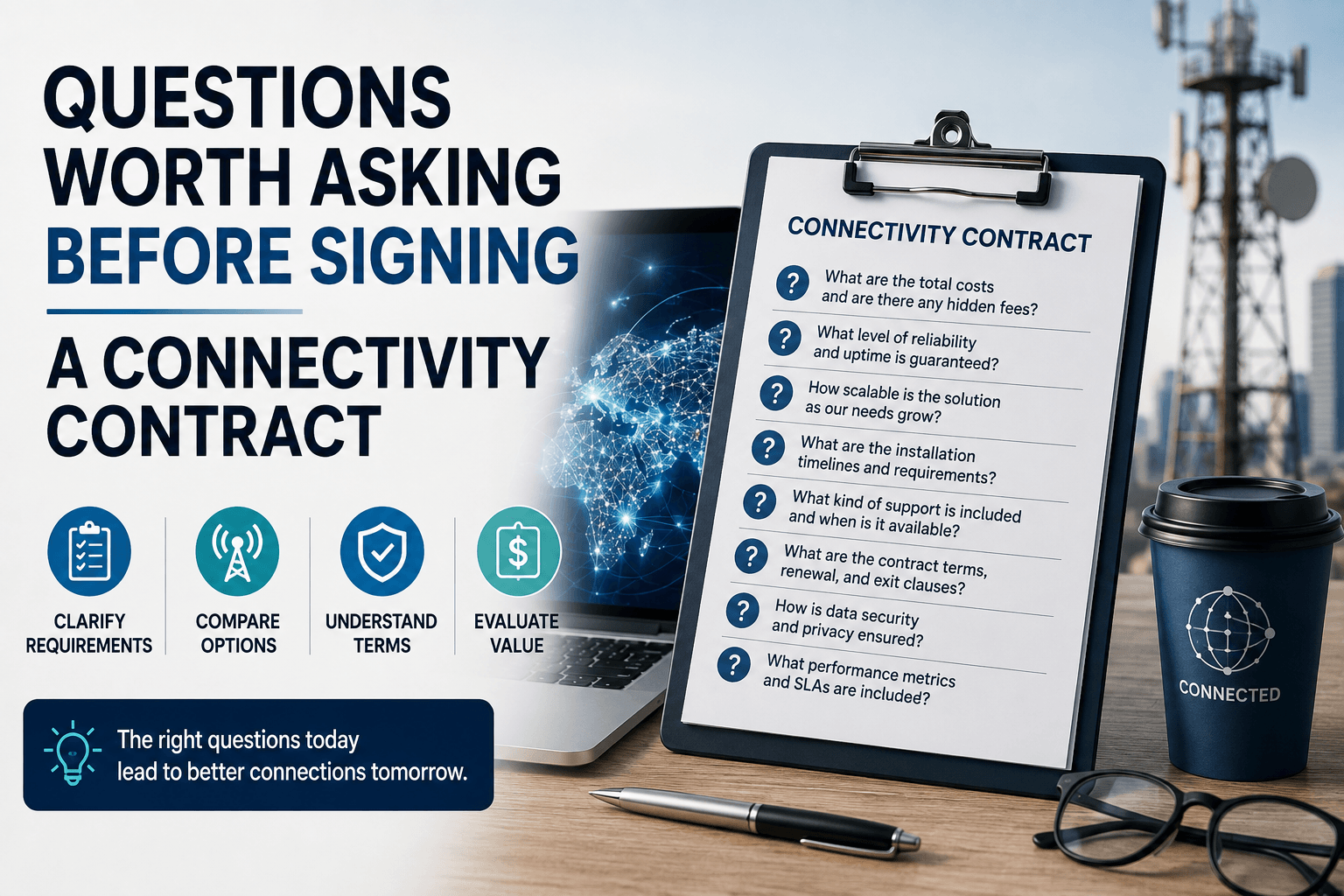
Every provider’s pitch sounds about the same on a sales call. Reliable uptime. Fast support. Easy setup. The differences that really matter tend to show up later, usually during the first outage, which is the worst time to find out.
Before signing anything, it helps to know what actually separates a dependable partner from a disappointing one among the many companies now offering commercial iot services to retail businesses. A few questions, asked early, tend to show more than any glossy brochure.
How Fast Is Support, Actually?
Every provider says their support is fast. Few say what that actually means in writing. A support ticket answered within an hour sounds fine until a store’s payment system is down during a lunch rush, and that hour feels like a full shift.
Worth asking directly. What’s the average response time, not the promised one? Is support there on weekends and holidays, when stores are busiest and in-house IT teams are usually off? A provider that routes every issue through a general call center usually takes longer to fix things. One where support staff can already see which device is offline, before the phone even finishes ringing, tends to move faster.
What Happens When the Main Connection Fails?
This is where the difference between providers becomes clear fast. Some offer a backup connection built in. Others treat it as a costly add-on, or don’t offer one at all. Good coverage tends to look like this.
- Automatic failover, not a manual switch someone has to remember to flip
- Alerts the moment a store drops offline
- Support that can already see the device status before the call connects
- Hardware built for more than one cell carrier
- Uptime reports broken out store by store
Can You See What’s Happening Across Every Store?
A provider worth keeping should offer a clear view of every connected store, not just the one having trouble. If checking on a store’s connection status means making a phone call instead of a quick look at a screen, that’s worth noticing before signing, not after.
Trial periods, when a provider allows one, tend to show more about commercial iot services than any brochure or sales call ever will. A few weeks of real use shows how a company acts when something actually goes wrong, not just how well they talk when everything is working fine.
Common Questions
Does switching providers mean replacing all the hardware?
Not always. Some setups are built to work alongside equipment that’s already there, instead of needing a full replacement, which keeps cost and disruption lower.
How long does a typical setup take across many stores?
It depends on the provider, and on how much the equipment already matches from store to store. A company with real multi-store experience should be able to give a clear answer instead of a vague guess.
One more thing worth checking before signing. What happens if a single cell carrier has an outage in one area? A provider that leans on just one carrier is only as reliable as that carrier’s coverage in every market a business runs in, which can be a real problem in spots where one network has always been weak. Providers that support several carriers can work around a regional outage instead of just waiting for it to end.
Price Isn’t the Whole Story
The cheapest option on paper often turns into the most costly one in practice, once downtime, slow support, and future hardware swaps get added up. Price still matters. It’s just one part of what a contract is really worth, not the whole picture. A slightly higher monthly cost is easy to accept once it’s weighed against even one outage avoided during a busy weekend.