Wedding dress shopping is one of the most anticipated parts of planning your big day, but it can also feel overwhelming. With endless silhouettes, fabrics, and designers to choose from, knowing where to even begin is a significant challenge. This journey is about more than just fabric and thread; it’s about discovering the gown that perfectly captures your personality and vision for a once-in-a-lifetime moment.
To transform this process from stressful to seamless, we’ve curated the ultimate guide filled with actionable wedding dress shopping tips. This isn’t just about finding a dress; it’s about finding the dress that feels unequivocally you. Drawing on expert insights from seasoned bridal consultants and the experiences of real brides, this comprehensive list will navigate you through every critical step.
From establishing a realistic budget and researching styles before your first appointment to understanding the nuances of alterations and final fittings, we have you covered. Our goal is to equip you with practical advice that demystifies the entire experience. Let’s ensure your path to the aisle is as beautiful and memorable as the gown you’ll be wearing when you walk down it.
1. Start Shopping 6-9 Months Before Your Wedding
One of the most crucial yet often underestimated wedding dress shopping tips is to give yourself an adequate timeline. Beginning your search 6 to 9 months before your wedding date isn’t just a suggestion; it’s a strategic move to ensure a stress-free experience from the initial browse to the final fitting. This buffer accommodates the entire process, from production lead times to intricate alterations.
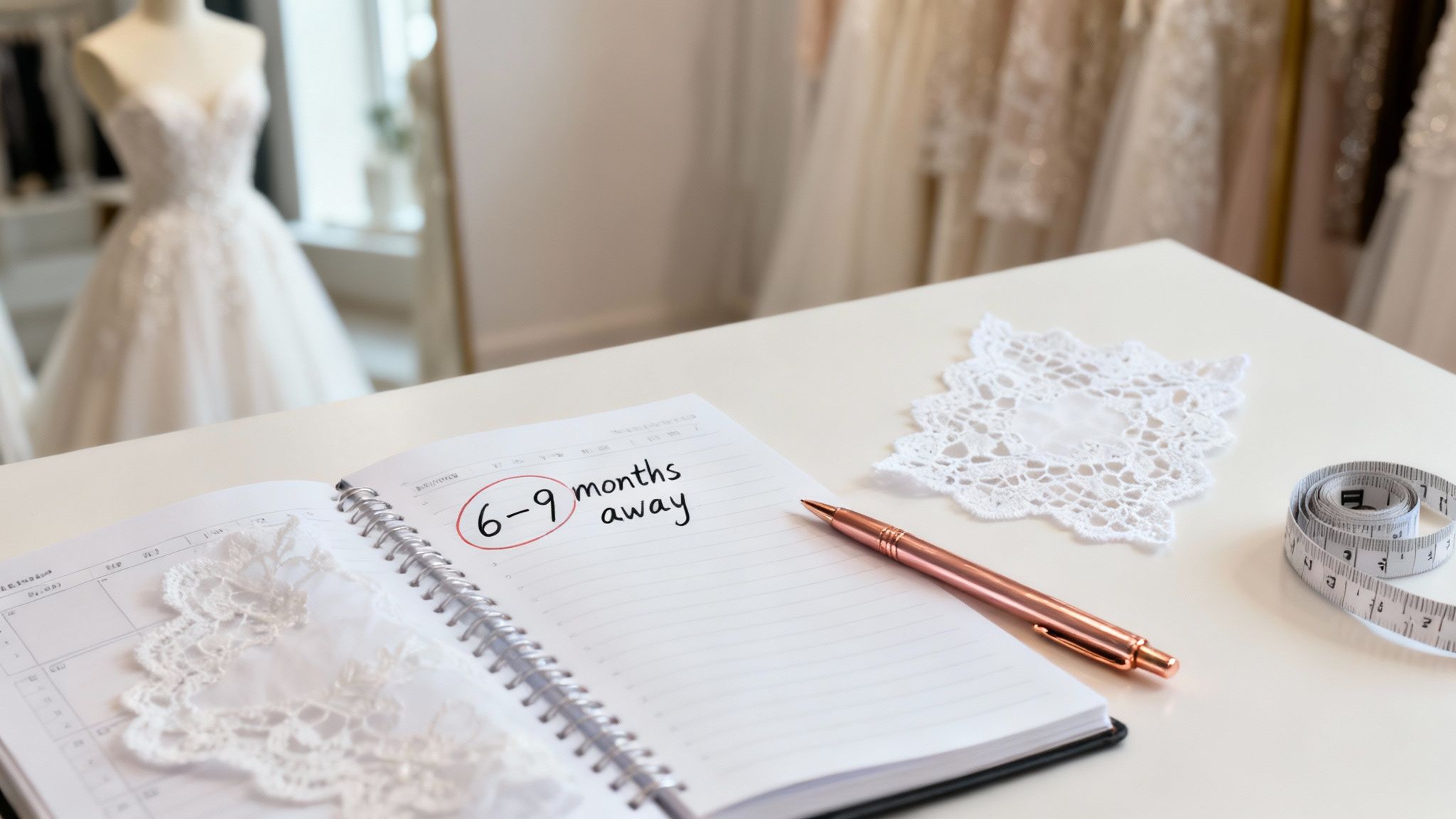
Most designer gowns are made-to-order, meaning production doesn’t start until you’ve placed your deposit. Renowned houses like Vera Wang can require at least six months for creation and delivery. Even larger retailers, such as David’s Bridal, often need four to six months for specific styles to arrive. Starting early prevents you from being limited to off-the-rack samples or paying hefty rush fees.
Actionable Timeline Strategy
To implement this timeline effectively, treat it like a mini-project with clear deadlines. This approach ensures you never feel rushed and can enjoy every moment.
- 9 Months Out: Begin your research. Create a vision board, explore different silhouettes online, and set your budget. Start booking your initial boutique appointments, as popular shops can be booked weeks in advance.
- 6-8 Months Out: This is the ideal window to say “yes” to the dress and place your order. You’ll feel confident in your choice without the pressure of a looming deadline.
- 3-4 Months Out: Your dress will likely arrive. This is the perfect time to schedule your first of two to three alteration appointments to begin tailoring the fit.
- 1-2 Months Out: Finalize alterations and schedule your last fitting. You can also start accessorizing with veils, shoes, and jewelry.
2. Set a Realistic Budget Before Shopping
One of the most practical wedding dress shopping tips is to establish a firm, realistic budget before you set foot in a single boutique. This crucial step prevents the heartbreak of falling for a gown outside your price range and streamlines your search by focusing your attention on attainable options. Wedding dress costs vary significantly, from accessible brands around $500 to luxury designers commanding $8,000 or more.
Knowing your number empowers you to shop confidently. The average cost of a wedding dress in the U.S. is between $1,500 and $2,000, but brands like BHLDN offer stunning styles for under $1,500, while renowned designers like Monique Lhuillier often start at $3,000. By defining your budget first, you can inform bridal consultants of your price point immediately, ensuring they only pull dresses that align with your financial plan.
Actionable Budgeting Strategy
Treat your dress budget as a comprehensive financial plan, not just a single number. This approach accounts for all associated costs and prevents unexpected expenses from derailing your overall wedding budget.
- Define Your Core Budget: Decide on the maximum amount you are comfortable spending on the gown itself. Have this conversation with anyone contributing financially to ensure everyone is aligned.
- Allocate for Extras (10-15%): Set aside an additional 10-15% of your dress budget for alterations, which can range from $300 to over $1,000. This buffer should also cover accessories like your veil, shoes, and undergarments.
- Research and Compare: Look up the average price points of boutiques in your area and the designers they carry. This research helps you book appointments at stores that fit your financial comfort zone.
- Explore Savings Opportunities: If your dream dress is out of reach, look into trunk shows for potential discounts, or consider sample sales and off-the-rack options for significant savings.
3. Bring 1-3 Trusted Companions to Appointments
Choosing who to bring to your dress appointments is just as important as choosing the boutique. While it’s tempting to invite your entire bridal party, limiting your entourage to one to three trusted companions is one of the most effective wedding dress shopping tips. This smaller group provides valuable, honest feedback without overwhelming you with a flood of conflicting opinions, ensuring your voice remains the most important one in the room.
Think of the focused, intimate appointments you see on shows like Say Yes to the Dress, where the bride is typically joined by just a few key people. A curated group helps maintain focus on your vision and prevents the experience from turning into a party where your preferences get lost. The goal is to find your perfect dress, not one that pleases a large committee.
Actionable Companion Strategy
Selecting your shopping squad requires a strategic approach. Choose individuals who understand your personal style, respect your budget, and will offer constructive, supportive feedback.
- Choose Wisely: Select people whose opinions you genuinely value and trust. This could be your mother, a sister, maid of honor, or a close friend who has a great sense of style and knows you well.
- Brief Your Crew: Before the appointment, share your Pinterest board and discuss your vision for the dress. Let them know what silhouettes, fabrics, and overall vibe you’re leaning towards so their feedback is aligned with your goals.
- Set Ground Rules: Ask your companions to be honest yet kind. Their role is to support you, not just validate every choice or, conversely, tear down every option. A simple request for “constructive thoughts” can set a positive tone for the day.
- Consider a Solo Trip First: If you’re easily swayed by others’ opinions, consider attending your first appointment alone. This allows you to form your own initial impressions without any outside influence.
4. Know Your Body Type and What Flatters You
One of the most effective wedding dress shopping tips is to understand your unique body shape and the silhouettes that enhance it best. While you should always try on what you love, knowing what styles naturally flatter your figure can streamline your appointments and boost your confidence. This knowledge helps you and your consultant pull dresses that will make you feel incredible from the moment you put them on.
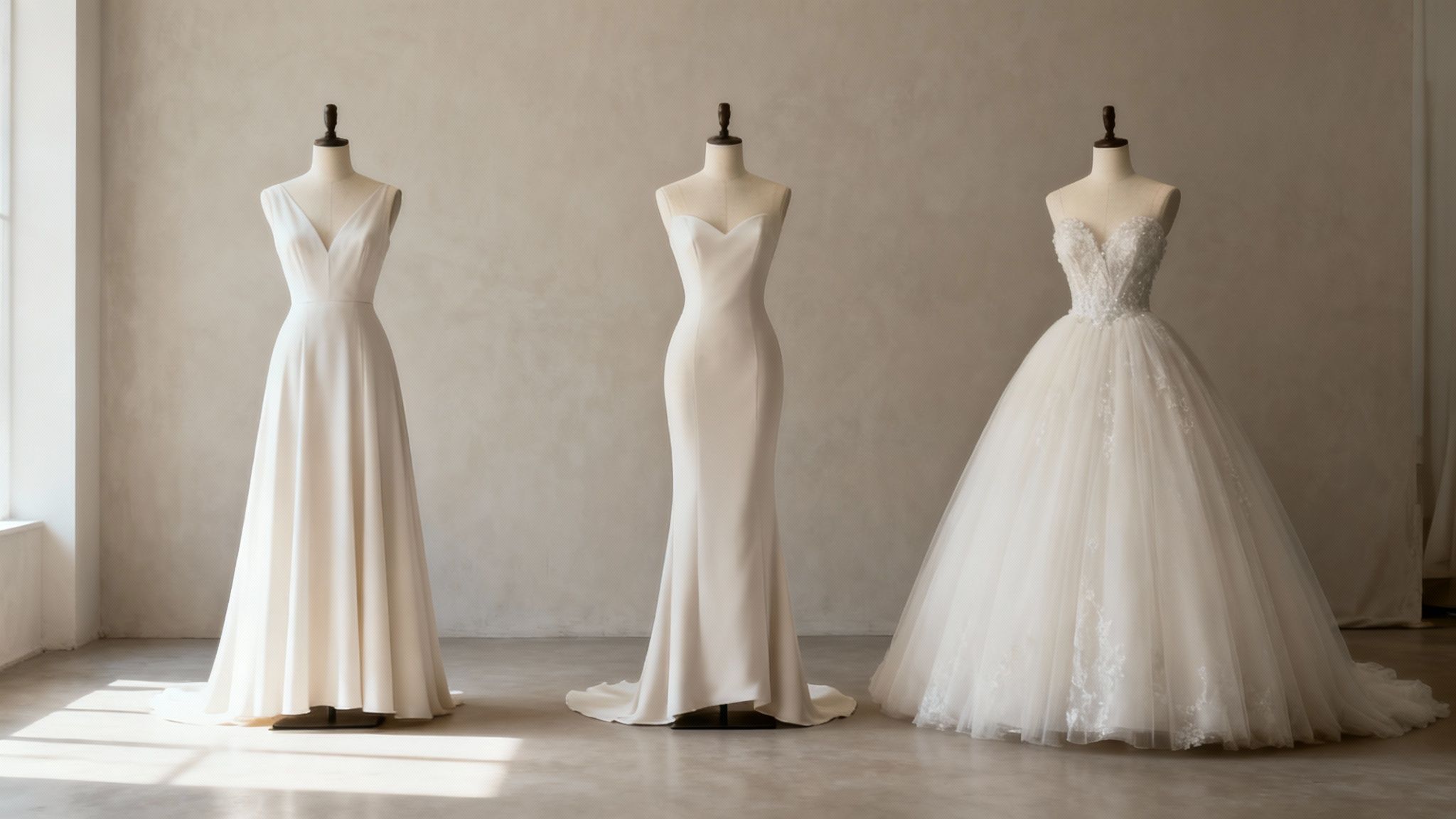
This isn’t about fitting into a mold; it’s about using fashion to highlight your favorite features. For instance, pear-shaped brides often find that A-line or ballgown skirts beautifully balance their proportions, while petite brides may discover that sheath or modified A-line gowns elongate their frame. An empire waist can be particularly flattering for apple shapes, just as a fitted mermaid or trumpet silhouette can wonderfully showcase an hourglass figure.
Actionable Silhouette Strategy
Use your body type as a guide, not a rule. This approach helps you focus your search while remaining open to surprises.
- Before Your Appointment: Do some initial research on common body types and their corresponding flattering silhouettes. To truly understand what flatters you and communicate effectively with your bridal consultant, learning how to accurately take body measurements can be incredibly helpful.
- During Your Appointment: Share your findings with your bridal consultant but also trust their expertise. Ask them to pull a “wild card” silhouette you might not have considered.
- Focus on Feeling: Pay close attention to how each dress makes you feel. The most flattering gown is the one that fills you with confidence and comfort.
- Consider Details: Look beyond the silhouette. A V-neckline can elongate the torso, while an off-the-shoulder style can highlight your collarbones. These small details make a big impact.
5. Research Designers and Styles Before Shopping
Walking into a bridal boutique without any prior research can feel overwhelming, like trying to find a needle in a haystack of tulle and lace. One of the most effective wedding dress shopping tips is to research designers and styles before your appointments. This preliminary work empowers you to articulate your vision, identify boutiques that carry your preferred aesthetic, and make your in-person experience far more productive and enjoyable. In addition, you’ll have an easier time narrowing down your options and selecting from the many designer wedding gowns available, ensuring you find a dress that aligns with your personal style and overall wedding vision.
Moreover, understanding the nuances of different design houses helps you narrow down the vast world of bridal fashion. For instance, designers like Monique Lhuillier are known for romantic, feminine details, while Amsale offers clean, architectural silhouettes. Knowing these distinctions allows you to curate a list of “must-try” gowns and communicate effectively with your stylist, ensuring you spend your time trying on dresses that genuinely resonate with your personal style.
Actionable Research Strategy
To streamline your pre-shopping research, create a focused plan. This will help you build a clear vision and provide tangible inspiration to share with your bridal consultant.
- Create an Inspiration Board: Use Pinterest or a physical folder to collect images of gowns you love. Look for common themes in silhouette, neckline, fabric, and overall vibe.
- Explore Designer Websites: Once you identify designers you like, visit their official websites to view their full collections. This will give you a deeper understanding of their signature style and price point.
- Follow Key Bridal Accounts: Instagram and bridal blogs are excellent resources for discovering new designers and seeing how gowns look on real brides. You can also explore the latest wedding dress trends to watch to see what’s current.
- Check Boutique Inventories: Before booking an appointment, check the boutique’s website or call them to confirm they carry the specific designers or styles you want to try on.
6. Wear Appropriate Undergarments and Shoes During Fittings
One of the most practical wedding dress shopping tips is to arrive at your appointments prepared with the right foundations. What you wear underneath a gown can dramatically alter its silhouette, fit, and overall appearance. Wearing appropriate undergarments and shoes similar in height to what you plan for the big day provides the most accurate vision of how the dress will truly look and feel.
The wrong bra can create lumps or fail to provide the necessary support for a specific neckline, while dark underwear can show through delicate fabrics like chiffon or crepe. Similarly, trying on a floor-length gown in flats versus heels changes the hemline and your posture. Proper preparation ensures you get a precise fit from the very first try-on, preventing any surprises during alterations.
Actionable Undergarment and Shoe Strategy
Thinking ahead about your foundations will make your fitting experience smoother and more effective. This strategic approach helps you and your consultant make the best decisions.
- Bring Versatile Options: Pack a small bag with nude-colored undergarments, including a strapless or convertible bra and seamless panties or shapewear. This allows you to adapt to different gown styles, from a plunging neckline to a form-fitting mermaid silhouette. Some modern gowns even come with built-in shapewear, which can simplify the process. You can learn more about premium built-in shapewear dresses on areyoufashion.com.
- Wear Similar Heel Height: While you don’t need your exact wedding shoes for initial appointments, bring a pair with a heel height you’re comfortable with and envision wearing. This gives the consultant an accurate idea of where the hem should fall and how the dress will drape.
- Consult Your Stylist: Don’t hesitate to ask your bridal consultant for recommendations. They are experts and can suggest specific undergarments that work best with the structure and fabric of your chosen dress.
7. Don’t Get Fixated on Size Numbers
One of the most important wedding dress shopping tips is to completely ignore the number on the tag. Bridal sizing operates in its own universe, often running one to three sizes smaller than standard street wear. A fixation on a specific number can lead to unnecessary stress and prevent you from finding the gown that truly flatters your body and makes you feel incredible.
This sizing discrepancy is a historical remnant of couture standards and varies wildly between designers. For instance, a street size 6 might be a bridal size 10 in a Vera Wang gown, while a BHLDN dress might fit closer to your everyday size. The goal is to focus on how the dress looks and feels, not the label inside. Trust your consultant; they are experts at pulling dresses that will fit well, regardless of the number.
Actionable Sizing Strategy
Adopting a size-agnostic mindset will make your appointments more enjoyable and productive. Your focus should be on fit, silhouette, and feel, allowing you to make a choice based on confidence rather than a number.
- Trust Your Consultant: Let your bridal consultant guide you. They are familiar with each designer’s unique sizing chart and can select the best sample size to start with, saving you time and frustration.
- Focus on Fit Feedback: When trying on gowns, articulate what you like or dislike about the fit, not the size. Use descriptive phrases like “it’s too snug in the hips” or “the bust needs more support” to help your consultant find better options.
- Consult Size Charts Before Ordering: When you find “the one,” ask to see the designer’s official size chart. Your consultant will take your measurements (bust, waist, hips) and help you choose the best size to order, which will then be tailored perfectly during alterations.
- Embrace Alterations: Remember that nearly every wedding dress requires alterations. The initial size you order is simply the closest starting point for your seamstress to work their magic and create a custom fit.
8. Avoid Major Changes Before Final Fitting
One of the most practical wedding dress shopping tips is to maintain your body’s status quo after your dress is ordered and especially during the alteration phase. A wedding gown is tailored to your exact measurements, and significant weight fluctuations or physical changes can completely alter its fit, leading to costly and stressful last-minute adjustments. The goal is to ensure the masterpiece you’ve chosen fits as perfectly on your wedding day as it did at your final fitting.
While the desire to look your best is understandable, embarking on an extreme diet or an intense new workout regimen after your dress has been fitted can be counterproductive. Seamstresses typically complete the bulk of alterations three to four weeks before the wedding, with a final fitting scheduled just one or two weeks prior. Drastic changes during this critical window can undo their meticulous work, requiring emergency re-fittings that add unnecessary expense and anxiety to your final preparations.
Actionable Stability Strategy
To keep your dress fitting flawlessly, focus on consistency rather than drastic transformation in the months leading up to your wedding. This ensures you walk down the aisle feeling comfortable and confident.
- Maintain Your Routine: Continue with the same diet and fitness habits you had when you were measured. If you don’t have a routine, focus on balanced, healthy habits rather than a crash course.
- Communicate with Your Seamstress: Be transparent with your alterations specialist. If you anticipate any minor changes, let them know at your first appointment so they can plan accordingly.
- Schedule Final Fittings Wisely: Book your final fitting one to two weeks before your wedding. This timeframe is close enough to the date to ensure an accurate fit but leaves a small buffer for any tiny, unforeseen tweaks.
- Avoid New, Intense Workouts: Steer clear of new workout programs that target specific muscle groups, like your back or arms, as this can change how the bodice and sleeves of your dress fit.
9. Explore Dress Customization and Alteration Options
Finding a dress that feels almost perfect is common, but knowing you can tailor it to your exact vision is a game-changer. One of the most empowering wedding dress shopping tips is to understand the extensive customization and alteration possibilities available. Modern bridal boutiques and designers can often modify gowns to create a truly one-of-a-kind piece that reflects your personal style.
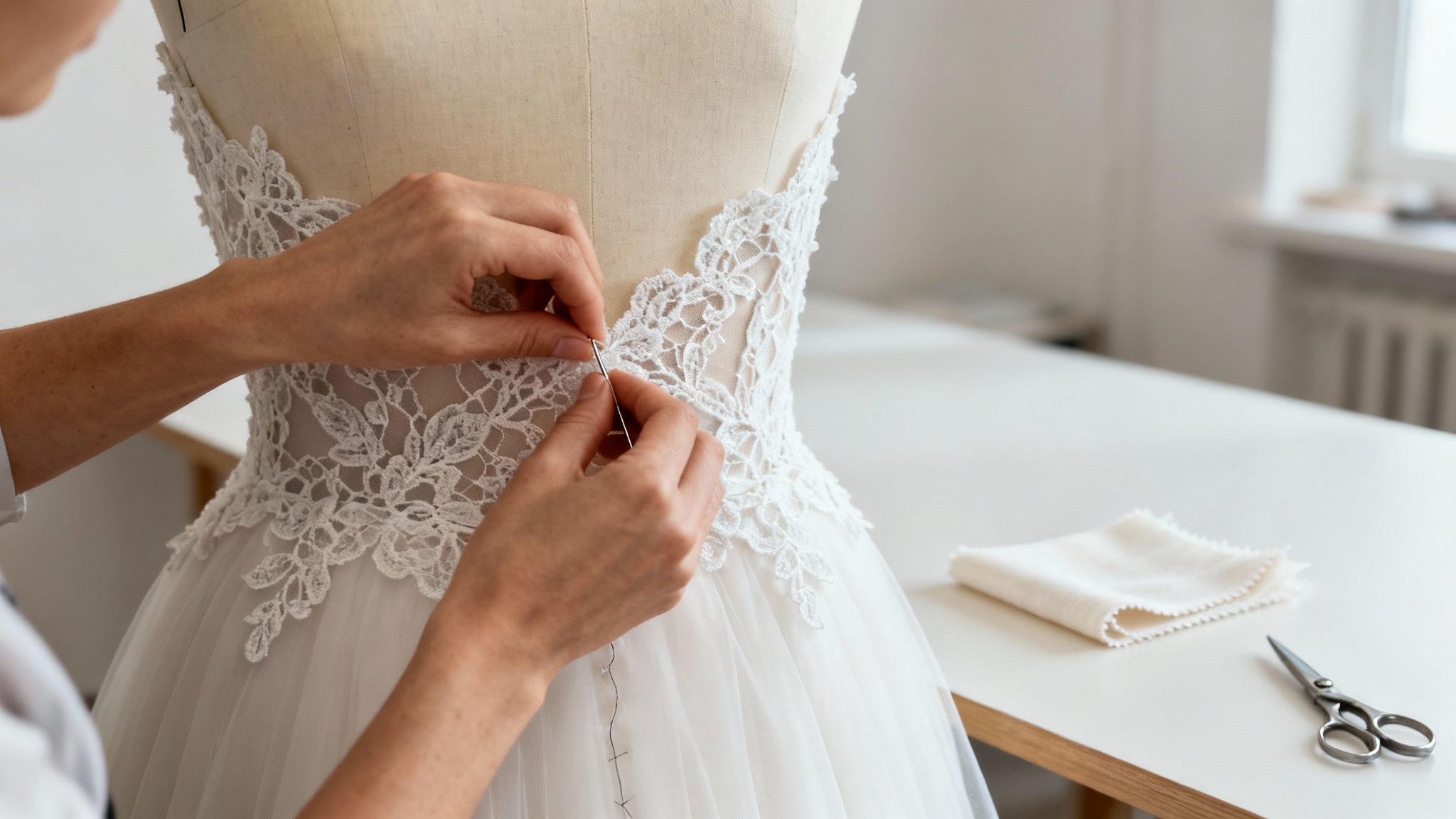
This goes far beyond simple hemming. Services popularized by luxury ateliers like Kleinfeld now allow for significant changes, such as adding delicate off-the-shoulder sleeves to a strapless gown or lowering a conservative neckline for a more dramatic effect. You might even be able to add pockets to a ballgown skirt or swap out intricate beading for a cleaner, minimalist look. This flexibility ensures you don’t have to compromise on your dream dress.
Actionable Customization Strategy
To successfully navigate customizations, you need a clear plan and open communication with your bridal consultant and seamstress. This approach transforms a nearly-perfect dress into your perfect dress.
- Ask Proactively: During your appointment, ask your consultant about the customization capabilities for each dress you love. Inquire about specific changes like adding sleeves, modifying the neckline, or changing fabric.
- Budget Accordingly: Customizations are an additional cost. Plan to budget an extra 15-25% of the dress price for significant alterations or modifications.
- Get It in Writing: Ensure all agreed-upon changes, from adding embellishments to altering the silhouette, are detailed in a signed contract with clear cost breakdowns and timelines.
- Start Early: Complex customizations require more time. If you plan significant changes, make your decision and place the order closer to the 9-month mark to avoid rush fees and ensure a flawless result. This extra time also allows for unique accessory planning, and you can explore the rise of jeweled headbands to complete your custom look.
10. Consider Purchasing Sample or Off-Season Dresses for Savings
One of the most effective wedding dress shopping tips for budget-conscious brides is to explore sample sales and off-season gowns. This strategy allows you to purchase a designer dress for a fraction of its original price, often with discounts ranging from 20% to 50% off. These dresses are typically floor models that have been tried on in the boutique, making them an excellent value without sacrificing style.
Trunk shows also present a unique opportunity for savings, offering a small discount (usually 10-15%) on new collection gowns ordered during the event. Retailers like David’s Bridal and BHLDN host well-known sample sales, while online consignors like Nearly Newlywed provide access to pre-owned designer dresses. This approach makes high-end fashion accessible, allowing you to allocate more of your budget to other wedding priorities.
Actionable Savings Strategy
To successfully find a discounted dress, you need to be proactive and informed. A little bit of planning goes a long way in securing a beautiful gown at a great price.
- Follow and Subscribe: Start following your favorite local bridal boutiques on social media and subscribe to their email newsletters. This is the best way to get advance notice of upcoming sample sales and trunk shows.
- Inspect Thoroughly: Before purchasing a sample, examine it carefully for any damage like loose beads, small tears, or makeup smudges. Most wear is minor and can be fixed during alterations. It’s wise to understand how dry cleaners remove stains to assess if potential marks are treatable.
- Budget for Aftercare: Always factor in the cost of professional cleaning and alterations. Sample dresses are sold as-is, and tailoring will be essential to achieve a perfect fit. Ask the boutique if they offer repair services for any noticeable damage.
10-Point Wedding Dress Shopping Comparison
| Strategy | 🔄 Implementation Complexity | ⚡ Resource Requirements | 📊⭐ Expected Outcomes | 💡 Ideal Use Cases | ⭐ Key Advantages | 💡 Quick Tip |
|---|---|---|---|---|---|---|
| Start Shopping 6–9 Months Before Your Wedding | 🔄 Moderate — scheduling, ordering, multiple fittings | ⚡ Time (6–9 months), budget for dress + alterations | 📊 High on-time delivery & proper fit; ⭐ more choices | 💡 Brides ordering designer/custom gowns or needing many alterations | ⭐ Lower rush fees, better alterations, less stress | 💡 Book appointments 9 months out; start alterations 3–4 months prior |
| Set a Realistic Budget Before Shopping | 🔄 Low — planning and research | ⚡ Financial clarity, research tools, 10–15% buffer | 📊 Controlled spending; ⭐ fewer regrets | 💡 Cost-conscious brides and first-time shoppers | ⭐ Prevents impulse buys; narrows options | 💡 Include 10–15% buffer; research local price ranges |
| Bring 1–3 Trusted Companions to Appointments | 🔄 Low — coordinating people and schedules | ⚡ Time, limited guest coordination | 📊 Better feedback and confidence; ⭐ emotional support | 💡 Brides who want honest, limited opinions | ⭐ Diverse perspectives; more enjoyable process | 💡 Limit group to 2–3; brief them on your vision |
| Know Your Body Type and What Flatters You | 🔄 Moderate — assessment and trialing silhouettes | ⚡ Time for try-ons, possible stylist consult | 📊 Faster, focused selection; ⭐ flattering final look | 💡 Brides wanting efficient, confidence-driven shopping | ⭐ Narrows choices; boosts confidence | 💡 Try varied silhouettes and ask consultant candidly |
| Research Designers and Styles Before Shopping | 🔄 Moderate–High — dedicated online/offline research | ⚡ Time for Pinterest, sites, boutique checks | 📊 More targeted shopping; ⭐ clearer consultant communication | 💡 Brides with specific aesthetic or price targets | ⭐ Fewer unsuitable try-ons; efficient appointments | 💡 Create an inspiration board and verify boutique inventory |
| Wear Appropriate Undergarments and Shoes During Fittings | 🔄 Low — simple prep before appointments | ⚡ Purchase proper bras/shapewear and final-heel shoes | 📊 Accurate fit/length assessment; ⭐ precise alteration guidance | 💡 All fittings, especially final try-ons | ⭐ Prevents surprises; realistic silhouette preview | 💡 Wear final-heel height; bring backup undergarments |
| Don’t Get Fixated on Size Numbers | 🔄 Low — mindset shift and trial flexibility | ⚡ Openness to trying multiple sizes; alteration budget | 📊 Focus on fit over label; ⭐ reduced size-related disappointment | 💡 Brides anxious about sizing or vanity labels | ⭐ Encourages practical decision-making | 💡 Try sizes above/below expected; consult designer charts |
| Avoid Major Changes Before Final Fitting | 🔄 Low–Moderate — lifestyle consistency required | ⚡ Stable routine, communication with tailor | 📊 Stable final fit; ⭐ fewer emergency alterations | 💡 Brides in alteration period (last 4–1 weeks) | ⭐ Predictable alterations; cost/time certainty | 💡 Schedule final fitting 1–2 weeks before wedding; avoid drastic changes |
| Explore Dress Customization and Alteration Options | 🔄 High — bespoke work and multiple revisions | ⚡ Extra budget (15–25%), additional time, skilled seamstress | 📊 Highly personalized result; ⭐ exact vision realized | 💡 Brides wanting unique modifications or perfect fit | ⭐ Tailored design; solves fit issues | 💡 Budget extra, request mockups, get agreements in writing |
| Consider Purchasing Sample or Off-Season Dresses for Savings | 🔄 Low–Moderate — hunting sales and limited options | ⚡ Time to track sales, budget for extra alterations | 📊 Significant savings and immediate availability; ⭐ designer access on budget | 💡 Budget-conscious brides comfortable with limited sizes | ⭐ Big discounts; quick possession of dress | 💡 Inspect samples carefully; budget for alterations and follow sale alerts |
Your Confident Walk Down the Aisle
Embarking on the journey to find your perfect wedding dress is one of the most exciting parts of wedding planning. It’s a process filled with emotion, anticipation, and ultimately, joy. The path from initial research to the final fitting can seem complex, but by now, you are equipped with a comprehensive set of wedding dress shopping tips designed to make your experience seamless, stress-free, and successful. Remember, this isn’t just about buying a garment; it’s about curating a feeling and creating a memory that will last a lifetime.
Mastering the Art of the Search
Let’s revisit the foundational pillars that will guide you. Your most powerful tools are preparation and perspective. By setting a realistic budget and starting your search 6 to 9 months in advance, you eliminate the two biggest sources of stress: financial strain and time pressure. This practical groundwork allows you the freedom to truly enjoy the creative process of discovering your bridal style. Similarly, researching silhouettes that complement your body type and designers that align with your aesthetic empowers you to walk into your appointments with clarity and purpose, transforming a potentially overwhelming experience into a focused and productive one.
The Power of a Positive Appointment
Your bridal appointment is where the magic happens, but a successful fitting is no accident. The key takeaway is to control the controllables. This means carefully selecting a small, supportive entourage whose opinions you value. It also involves practical steps like wearing appropriate undergarments and bringing shoes of a similar height to what you plan to wear on your wedding day. These small details provide a much clearer vision of the final look.
Perhaps the most crucial piece of advice is to let go of preconceived notions, especially when it comes to sizing. Bridal sizing is notoriously different from street sizing, so focus entirely on how a dress makes you feel, not the number on the tag. A skilled consultant and tailor will ensure the final fit is flawless, a detail far more important than any label.
Your Final Steps to Bridal Bliss
As you narrow down your choices and say “yes” to the dress, remember that the journey isn’t over. Understanding the world of alterations and customizations opens up endless possibilities to make a beautiful dress uniquely yours. And for the savvy bride, exploring sample sales or off-season designs can unlock significant savings without compromising on style.
Ultimately, the most important of all the wedding dress shopping tips is to trust your intuition. The perfect dress is the one that makes you feel confident, beautiful, and authentically you. It’s the one that makes you stand a little taller and smile a little brighter. Cherish this special time, have fun with the process, and get ready to walk down the aisle in a gown that is everything you’ve ever dreamed of.
Ready to complete your bridal look? Your style journey doesn’t end with the dress. Visit Are You Fashion to discover the latest trends in bridal accessories, hairstyles, and beauty routines that will perfectly complement your gown. Let us help you put the finishing touches on your unforgettable wedding day ensemble at Are You Fashion.