Leather fashion changes shape, but it rarely disappears. A decade may favour slim black motorcycle jackets, while another brings back oversized aviators, brown shearling coats or cropped leather bombers. The colours, proportions and styling change, yet the material continues to hold a permanent place in wardrobes.
That durability is not only about fashion. Leather has a combination of structure, texture, protection and ageing that synthetic fabrics often struggle to reproduce. It can look polished, rugged, rebellious, luxurious or understated depending on the cut and finish. This flexibility is why leather clothing keeps returning whenever designers, musicians, film-makers and consumers look for pieces with lasting character.
Leather Began as Protection Before It Became Fashion
Long before leather jackets appeared in fashion magazines, leather clothing served practical purposes. Hides were used to protect the body from cold, abrasion, rain, wind and difficult working conditions. Riders, soldiers, hunters, farmers and craftspeople valued leather because it could be shaped into durable clothing while still allowing movement.
The modern leather jacket developed from this functional history. Early aviators wore leather flight clothing because open cockpits exposed them to freezing temperatures and strong wind. The A-2 flight jacket, introduced for the United States Army Air Corps in the early 1930s, became one of the most recognisable military leather silhouettes. The B-3 followed with heavy sheepskin construction for bomber crews flying at extreme altitude.
British and American aviation traditions also influenced RAF, A-1, G-1 and later MA-1-inspired jackets. Features that began as practical details—high collars, throat latches, waist adjusters, ribbed cuffs, heavy zippers and secure pockets—eventually became recognisable style signatures.
Why Leather Has Such Strong Fashion Appeal
Leather combines visual and physical qualities that make it unusually versatile.
It has natural texture
Even when leather is finished smoothly, the material retains subtle grain variation. Suede shows a soft nap, nubuck has a fine brushed surface and full-grain leather develops marks that tell the story of wear. These surfaces give leather garments more depth than flat synthetic fabric.
It holds a strong silhouette
Leather has enough body to support structured shoulders, fitted waists, wide lapels, cropped hems and bomber-style ribbing. A leather jacket can create shape without requiring heavy tailoring, which is one reason the same material works in both relaxed streetwear and refined outerwear.
It develops character over time
Many fabrics are considered worn out when they fade or crease. Leather often becomes more individual as it ages. A brown jacket may develop a deeper patina, while a waxed finish can reveal lighter areas along the folds and seams. Small marks, provided the leather is properly cared for, can make the garment feel personal rather than disposable.
It crosses different style cultures
Leather has appeared in military uniforms, motorcycle communities, rock music, punk, hip-hop, western wear, luxury fashion and contemporary streetwear. Because it carries several cultural meanings, designers can reinterpret it without making it feel unfamiliar.
The Leather Type Changes the Personality of a Jacket
Not all leather behaves or looks the same. The hide, tanning process, thickness and finishing method all influence comfort, durability and appearance.
Lambskin and sheepskin
Lambskin is soft, light and flexible, making it popular for fitted fashion jackets, cropped styles and lightweight bombers. Sheepskin can refer to a similar family of hides, but it is also used for substantial double-faced shearling jackets.
Shearling is sheepskin with the natural wool retained on the hide. In a genuine double-faced garment, the leather side faces outward and the wool side forms the interior. This is different from a smooth leather jacket with a synthetic fleece lining. Natural wool traps air close to the body and provides warmth without relying entirely on artificial padding.
For cold climates, a genuine Men sheepskin jacket offers a combination of insulation, leather structure and natural texture that has kept the material relevant for generations.
Goatskin
Goatskin is relatively light but known for its resilience. Its natural grain often gives suede and smooth leather a distinctive surface, making it useful for western jackets, aviator styles and everyday outerwear. Goatskin suede can feel softer than cowhide while still handling regular use when properly finished and maintained.
Cowhide and buffalo leather
Cowhide and buffalo leather generally offer more structure and abrasion resistance than lambskin. They are common in biker jackets, trucker jackets, riding styles and heavier bombers. Depending on the tanning and thickness, they can feel firm at first and soften gradually with wear.
Horsehide
Horsehide is dense and durable, with a reputation for developing a strong patina. It is often selected for heritage jackets and rugged everyday outerwear. The trade-off is that it may require a longer break-in period than soft lambskin.
Suede and nubuck
Suede is made from the inner side of the hide and has a velvety nap. Nubuck is lightly sanded on the grain side, producing a fine, smooth texture. Both offer a more tactile and relaxed alternative to polished leather, but they need extra care because water, oil and dirt can change the surface more easily.
Leather Thickness Influences Fit and Use
Thickness is an important detail, but it should not be treated as a simple quality score. A thin leather can be ideal for a lightweight fashion jacket, while a thicker leather may be better for wind protection or long-term structure.
The best thickness depends on the intended use, the hide type, the lining and the fit. A 1.2mm lambskin jacket will not feel the same as a 1.2mm cowhide jacket because the fibres and natural structure are different.
Why Aviator and Bomber Jackets Keep Returning
Aviator jackets remain popular because they combine a clear historical identity with practical proportions. Their collars, front zippers, cuffs, waistbands, panel seams and pocket layouts make them recognisable even when designers change the leather or colour.
A black mens aviator jacket black style is especially adaptable because it works with denim, cargo trousers, knitwear, boots and smart-casual clothing. Brown aviator jackets offer a more vintage impression, while green, tan and distressed finishes bring a military or heritage character.
The B-3 is associated with heavy shearling, large collars and cold-weather protection. The B-6 is generally trimmer and easier to wear daily. A-2 jackets usually have a cleaner leather profile with knitted cuffs and waistbands, while G-1 designs are recognised for their fur collars and naval aviation influence.
These silhouettes survive because they are not based on a short-lived graphic or seasonal colour. Their identity comes from proportion and construction.
From Motorcycle Culture to Everyday Streetwear
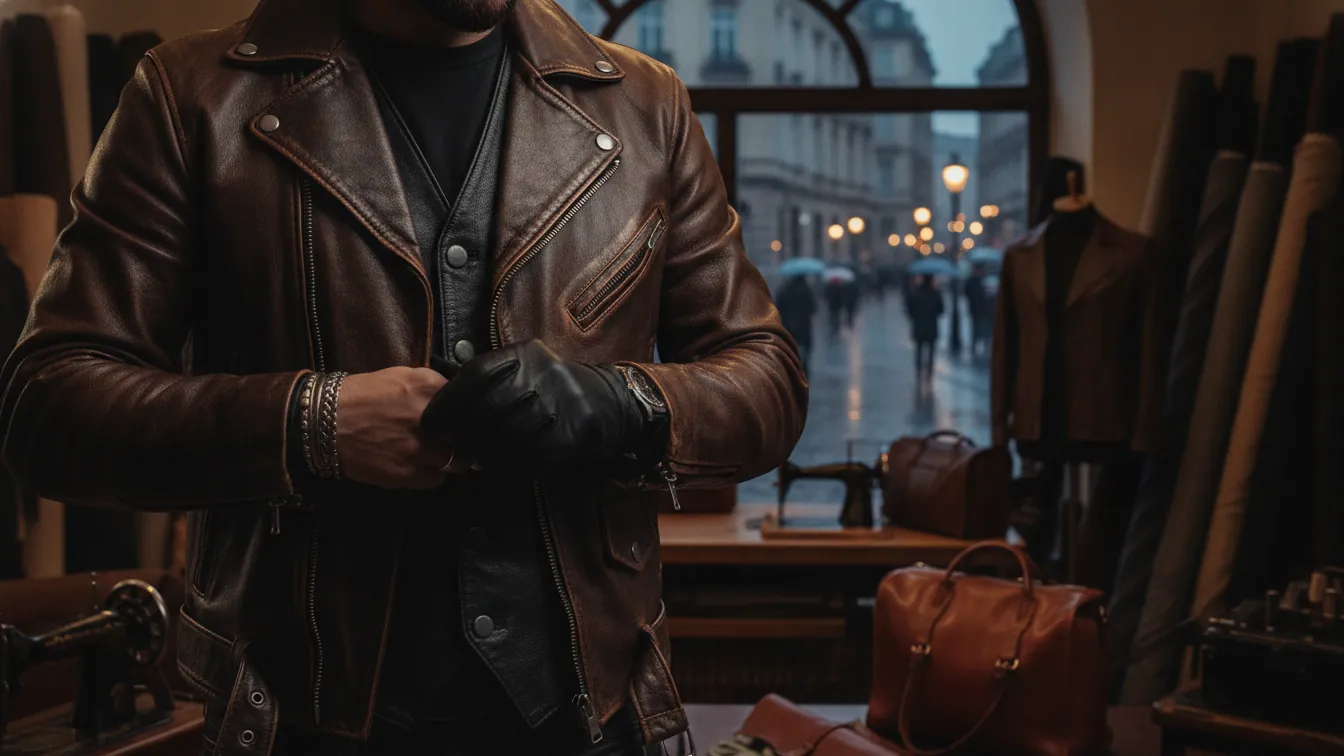
The motorcycle jacket gave leather fashion another permanent shape. As riding clothing, it needed protection, close-fitting panels, strong closures and useful pockets. The asymmetrical zipper, wide lapels, belt or waist adjuster and heavy hardware later became fashion details worn by people who had no intention of riding.
In the 1950s, film and music helped turn the black biker jacket into a symbol of independence. Punk and rock scenes later used studs, patches, painted graphics and distressed leather to communicate resistance to conventional dress. Contemporary designers continue to borrow these elements but often soften them through oversized fits, minimal hardware or refined leather.
The same process happened with trucker, western, varsity and cafe-racer jackets. Each began with a practical or subcultural identity, then moved into mainstream wardrobes.
Why Leather Trends Return in Cycles
Leather keeps returning because it can absorb new ideas without losing its visual identity.
Designers reinterpret familiar shapes
A classic bomber may return with a cropped hem, oversized shoulders, quilted lining or contrast panels. A biker jacket may become softer, more minimal or more tailored. The foundation remains recognisable, but the proportions feel current.
Consumers are rediscovering long-term clothing
Fast fashion encourages frequent replacement, while leather invites a different relationship with clothing. A well-made jacket can be repaired, conditioned and worn for many years. This does not automatically make every leather product sustainable, but longevity can reduce replacement when the garment is responsibly made and properly cared for.
Vintage references remain powerful
Archive clothing gives designers a visual vocabulary that is already familiar to the public. Military flight jackets, 1970s motorcycle pieces, 1980s oversized leather and 1990s minimalism can all be revisited without appearing completely new or artificial.
Leather works across gender and age
Leather jackets are no longer restricted to one masculine or feminine silhouette. Cropped biker jackets, oversized bombers, tailored coats, western styles and long shearling outerwear are worn across different wardrobes. This flexibility helps leather remain relevant as ideas about personal style continue to change.
What Shows Genuine Quality in a Leather Jacket?
A good-looking photograph is not enough to judge a jacket. Look at the construction.
The panels should lie flat without excessive puckering. Stitching should be even, with clean edge rows around collars, pocket openings, cuffs and zipper plackets. High-stress points such as pocket corners, strap attachments and underarm seams should have appropriate reinforcement.
Hardware should operate smoothly. A reliable zipper, secure snaps and properly attached buckles can make a larger difference to daily use than decorative branding. The lining should be securely attached and compatible with the intended season. On shearling garments, the wool should feel naturally dense rather than unnaturally uniform.
Leather should also match the purpose. Soft lambskin may be excellent for a lightweight fashion jacket but unsuitable for someone seeking heavy abrasion resistance. A thick cowhide may provide structure but require more break-in time. Accurate product information about hide type, thickness, tanning and lining helps the wearer make a realistic decision.
How to Keep Leather Clothing Looking Good
Leather rewards consistent but gentle care.
Keep jackets away from prolonged soaking and direct heat. If leather becomes damp, allow it to dry naturally at room temperature. Smooth leather can usually be wiped with a soft cloth, while suede and nubuck should be brushed with an appropriate brush. Shearling wool should be handled carefully and never scrubbed aggressively.
Conditioning should be occasional rather than automatic. Use a product designed for the specific finish and test it on a hidden area first. Waxed, suede, nubuck and vegetable-tanned leathers may react badly to unsuitable oils or ordinary shoe polish.
Store jackets on broad hangers in a cool, ventilated place. Avoid plastic covers, compressed storage and overcrowded wardrobes. For serious stains, use a professional cleaner familiar with leather, suede or shearling.
The Future of Leather Fashion
Leather will continue to change as fashion, technology and consumer expectations develop. Designers are exploring traceability, lower-impact tanning, repair services, recycled components and plant-based alternatives. These developments deserve attention, but they should be assessed carefully rather than reduced to simple marketing claims.
A responsible approach asks where the hide came from, how it was tanned, how workers were treated, how long the garment is expected to last and whether it can be repaired. Material transparency is becoming as important as colour or silhouette.
Leather remains powerful because it connects function and expression. It can protect the body, carry historical meaning, develop a personal patina and adapt to new styling ideas. That combination explains why leather clothing keeps returning—not because fashion has run out of ideas, but because leather gives every new idea a durable foundation.