For a lot of women, "business casual" feels like one of the most confusing dress codes out there. It's that tricky middle ground between a formal suit and what you’d wear on a Saturday. Put simply, it’s all about looking polished and professional without being stuffy.
Think of it as elevating your smart, everyday clothes rather than just dressing down a suit. This is where you can let your personal style shine through while still looking like you mean business.
Decoding the Modern Business Casual Dress Code
Let's be honest, the term "business casual" can feel like a riddle. What does it actually mean? It's the art of looking put-together, professional, and comfortable all at once.
This style has pretty much become the go-to for most modern offices. The days of stuffy, formal uniforms being the only option are long gone. A 2023 Gallup poll actually backs this up, showing that 51% of women now wear business casual staples like blouses and smart trousers to work. In sharp contrast, only 3% are still regularly wearing formal business suits. It's a clear signal that workplaces are embracing a more flexible, yet still professional, approach to style.
To get a quick sense of where business casual fits, this table breaks down the key differences between the main dress codes.
Business Casual at a Glance
| Attire Type | Key Characteristics | Example Outfit |
|---|---|---|
| Business Professional | Highly formal, structured, and conservative. Think traditional corporate attire. | A tailored suit (pants or skirt), a crisp button-down shirt, and closed-toe heels. |
| Business Casual | Polished yet relaxed. Blends professional pieces with more comfortable elements. | Tailored trousers, a silk blouse, a blazer or cardigan, and loafers or stylish flats. |
| Casual | Relaxed and informal. What you'd typically wear on the weekend. | Jeans, a t-shirt, a denim jacket, and sneakers. |
As you can see, business casual is all about striking that perfect balance.
Finding the Sweet Spot
Mastering this dress code is really about balance. You want to look sharp and capable, but not like you’re heading to a board meeting in the 1980s. At the same time, you don't want to look so relaxed that it seems like you didn't put in any effort.
Your clothes are a form of communication, and there's real power in the psychology of dressing like you've already made it.
This visual guide really helps illustrate how business casual bridges the gap between formal and everyday wear.
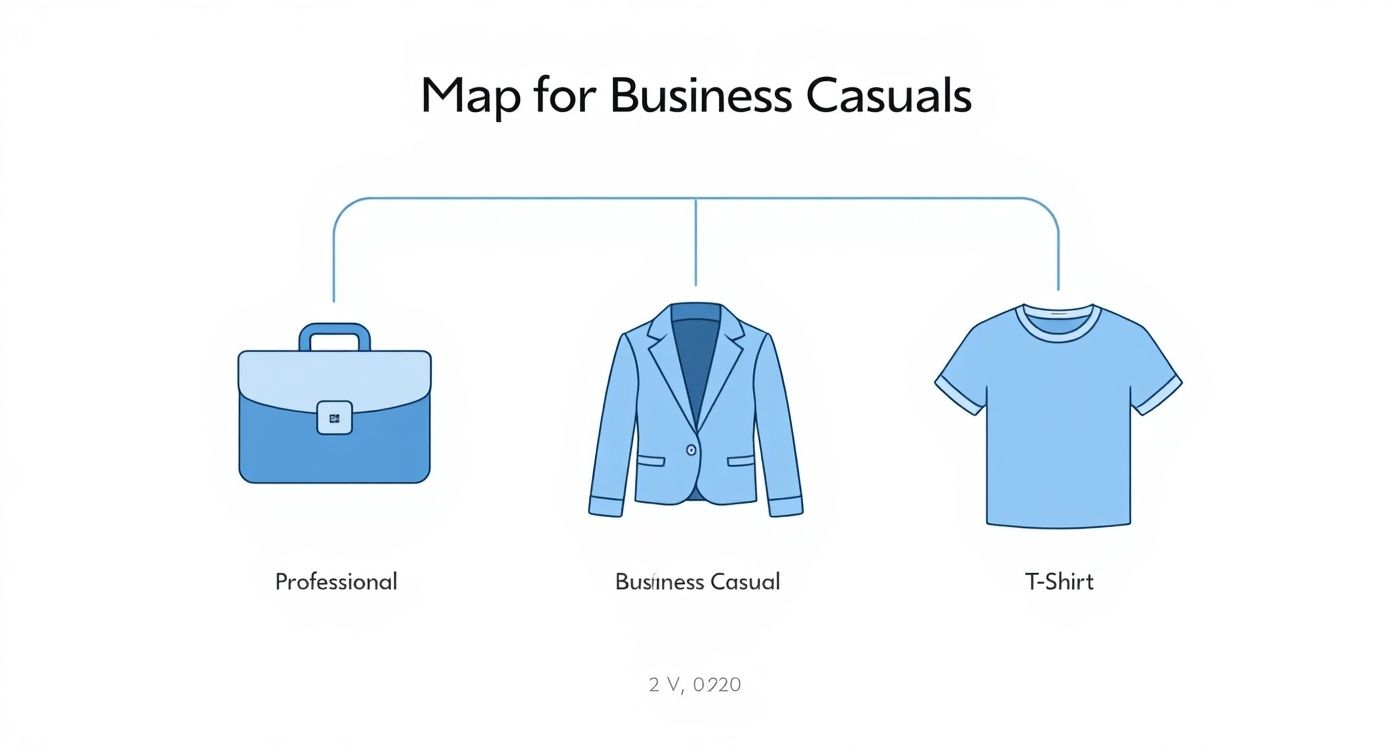
It’s all about cherry-picking the best elements from both worlds. The goal is to create outfits that feel appropriate for your workplace, let you move comfortably through your day, and make you feel confident.
Your Foundation for a Flawless Work Wardrobe
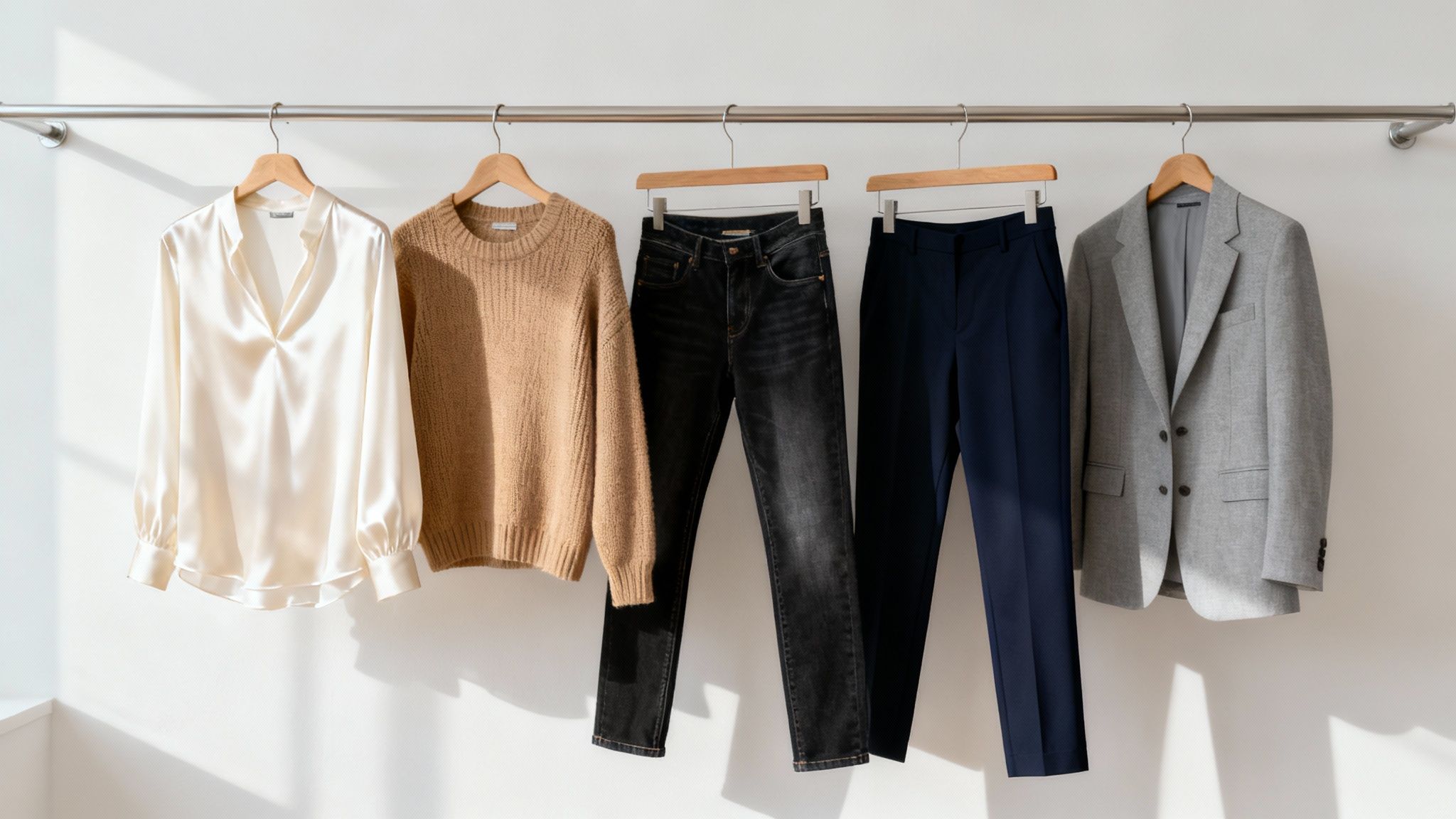
Putting together a great business casual wardrobe isn't about stuffing your closet with endless options. It's about curating the right pieces. Think of it like being a good cook—you don’t need every spice on the rack, just a handful of high-quality, versatile ingredients that play well together.
This approach saves you time, money, and that all-too-familiar morning panic of having nothing to wear. Learning how to build a versatile capsule wardrobe is a total game-changer, letting you create dozens of outfits from a limited selection. Let’s get into the essential building blocks that form the core of any smart, professional closet.
Essential Business Casual Tops
Your tops are often the focal point of an outfit, so it’s worth choosing pieces that are both professional and genuinely comfortable. These are the absolute workhorses of your closet.
- Silk or Satin Blouses: These bring an instant touch of elegance. A beautifully draped blouse in a solid color like ivory, navy, or a rich emerald green can be paired with anything from tailored trousers to a pencil skirt.
- Fine-Knit Sweaters: A cashmere or merino wool sweater is a forever classic. They’re perfect for layering over a collared shirt or just wearing on their own. Crewnecks, V-necks, and turtlenecks are all fantastic choices.
- High-Quality Button-Down Shirts: Look beyond the standard white oxford. A crisp button-down in a softer fabric or a subtle pattern gives you a polished look that feels less stuffy than its starchy cousin.
These tops create a solid foundation. Just remember, it’s the quality of the fabric and the precision of the fit that elevate these simple items from "just okay" to business-appropriate.
The Best Bottoms for the Office
The right pair of pants or a well-chosen skirt grounds your entire look, perfectly blending comfort with a professional silhouette. Versatility is everything here; you want bottoms that can match almost any top you own.
A great rule of thumb is to aim for a 3:1 ratio of tops to bottoms. Honestly, people are way more likely to notice your blouse than the fact you’ve worn the same classic black pants twice in one week.
A polished bottom half creates a streamlined silhouette, which is the secret to looking put-together. For a seamless look under fitted skirts or trousers, some women find that a dress with built-in support can be a game-changer. You can learn more about what a premium built-in shapewear dress is and how it creates a smooth foundation.
Here are the non-negotiable staples for your wardrobe:
- Tailored Trousers: Invest in a few pairs of well-fitting trousers in neutral colors like black, navy, charcoal, and beige. Styles like straight-leg, wide-leg, or modern cigarette pants are all incredibly professional.
- Dark-Wash Denim: In many modern offices, dark-wash jeans with no rips or heavy distressing are perfectly acceptable. Stick with a classic cut like a straight-leg or bootcut for a more polished feel.
- Midi or Knee-Length Skirts: A sleek pencil skirt or a flowy A-line skirt that hits at or just below the knee is always a sophisticated choice. They offer a fantastic alternative to trousers and can be styled in countless ways.
Layering Pieces to Complete Your Look
Layering pieces are what truly pull an outfit together, adding that extra bit of structure and polish. They’re the final touch that takes a simple top-and-bottoms combo and makes it look intentional and chic.
Think of a blazer or cardigan as the frame for your outfit—it adds definition and finishes the picture.
- The Classic Blazer: A well-fitted blazer is probably the single most important piece in a business casual attire for women collection. It instantly makes even a simple knit top and jeans look more authoritative. Start with a classic black or navy, then maybe add one in a lighter neutral like beige or a subtle pinstripe.
- Elegant Cardigans: A longline or waist-length cardigan in a quality material is a softer, more approachable alternative to a blazer. It’s perfect for adding warmth and a pop of color. Just look for styles without bulky pockets or distracting buttons.
Navigating the Unwritten Rules of Office Style
Let's be honest: "business casual" can feel like a riddle. It’s not a strict uniform, but a set of unspoken rules that change from one office to another. The whole point is to find that sweet spot between looking professional and feeling comfortable enough to actually get your work done.
If you're ever standing in front of your closet feeling completely stumped, just remember this one golden rule: it’s always better to be a little overdressed than even slightly underdressed. Think of the following tips less as a rigid dress code and more as a trusted framework for building outfits that make you feel confident and capable.
The Do’s of Business Casual
Nailing business casual often comes down to the little things. Paying attention to fit, fabric, and finish is what separates a good outfit from a great one.
- Do Prioritize an Excellent Fit: This is non-negotiable. Clothes that are tailored to your body—trousers that don't bunch up at your ankles or a blazer that sits just right on your shoulders—instantly create a sharper, more powerful silhouette.
- Do Choose Quality Fabrics: Reach for materials that hold their shape and look inherently polished. Think wool, structured cottons, silk blends, and high-quality knits. They not only look better but also last longer, making them a smart investment for your career wardrobe.
- Do Opt for Modest Necklines and Hemlines: This is a simple way to keep your look universally office-appropriate. Aim for necklines that aren't too deep and make sure your skirts and dresses hit around the knee or just below it.
- Do Wear Polished, Closed-Toe Shoes: Your shoes can make or break your entire look. A great pair of loafers, classic ballet flats, sophisticated block heels, or sharp ankle boots are all fantastic choices that blend style with all-day comfort.
The Don’ts of Business Casual
Knowing what not to wear is just as important. Some items just scream "weekend," and it’s best to keep them out of your weekday rotation.
- Don’t Wear Ripped or Distressed Denim: Even if your office has a "jeans are okay" policy, stick to clean, dark-wash styles without any rips, heavy fading, or frayed edges. Save the distressed look for your days off.
- Don’t Choose Sportswear or Athleisure: This one’s a biggie. Leggings, hoodies, athletic sneakers, and sweatshirts are for the gym or lounging at home. They simply don’t project the professional image you’re aiming for at work.
- Don’t Select Anything Overly Revealing: Steer clear of sheer fabrics that aren't properly layered, super-short hemlines, and plunging necklines. Professionalism and modesty go hand-in-hand in a business setting.
- Don’t Overlook Wrinkles or Stains: A clean, pressed appearance is fundamental. Even the most perfectly styled outfit will look sloppy if it's wrinkled or has a small stain. Taking a few minutes to steam or iron your clothes makes a world of difference.
Key Business Casual Guidelines
Sometimes, seeing the choices side-by-side makes everything click. Here’s a quick-glance table to help you make smart decisions when you’re getting dressed.
| Do | Don't |
|---|---|
| Tailored trousers, blouses, and blazers | Leggings, graphic t-shirts, and hoodies |
| Dark-wash, clean-cut jeans (if allowed) | Ripped, faded, or distressed denim |
| Knee-length skirts and dresses | Mini skirts and anything too revealing |
| Loafers, flats, and block heels | Flip-flops, running shoes, and stilettos |
| Clean, ironed, and well-maintained clothing | Wrinkled, stained, or damaged items |
These guidelines are all designed to help you project an image of competence and polish. Your clothing is one of the first things people notice, and you want it to support your professional reputation, not undermine it.
Keeping these simple do's and don'ts in mind will help you easily decode business casual attire for women. Soon enough, you'll be building a work wardrobe that feels both authentic to you and perfectly appropriate for any professional challenge that comes your way.
How to Elevate Your Look with Accessories
Think of accessories as your secret weapon. They're what transform a simple outfit, like a pair of trousers and a blouse, from just "office-appropriate" into something that feels intentional and polished. Your clothes are the canvas; accessories are the final brushstrokes that add personality and sophistication.
When it comes to business casual attire for women, the right accessories are all about striking the perfect balance. The goal is to enhance your look, not overpower it. Often, one standout piece makes a much bigger impact than a handful of competing items. It's this curated approach that makes you look confident and put-together.
Choosing Your Signature Pieces
Accessorizing doesn't have to be complicated. By focusing on a few key areas, you can make getting ready in the morning a breeze. The trick is to pick pieces that are as functional as they are stylish.
- The Right Bag: A structured tote or a classic satchel is a non-negotiable. Look for one in a neutral leather—think black, tan, or navy—that’s big enough for your essentials but still looks sleek and professional.
- Polished Footwear: Your shoes really do ground your entire outfit. You can't go wrong with classic loafers, chic ballet flats, or comfortable low block heels. When the weather cools down, a pair of sharp ankle boots in leather or suede adds an instant touch of class.
- Subtle Jewelry: In a professional setting, less is almost always more. Stick to understated pieces that add just a hint of polish. For more ideas on building a great foundation, check out our guide on timeless jewellery essentials that complete every woman’s look.
The Art of Balance
Creating a truly harmonious look is all about making smart pairings. For example, if you decide to wear a bold statement necklace, keep your earrings simple—classic studs are perfect. On the flip side, if you're wearing more prominent earrings, a delicate chain (or no necklace at all) keeps your neckline looking clean and uncluttered. It’s all about making sure your accessories feel purposeful.
Your accessories are an extension of your professional brand. They should communicate attention to detail and personal flair without causing a distraction. A classic watch, for example, is both functional and a symbol of timeless elegance.
Ultimately, every accessory you choose should serve a purpose, whether it's practical, aesthetic, or a bit of both. And to put the final touch on your personal brand, consider how an elegant fragrance can complement your style. You can explore a curated guide to the best Arabic perfumes for women to find a scent that perfectly matches your professional image.
Real-Life Outfit Ideas for Any Office Vibe
Theory is great, but seeing how it all comes together is what really makes business casual click. So, let's move past the individual pieces and start building some complete, head-to-toe outfits you can actually wear.
Think of these as reliable formulas you can adapt. Every office has a slightly different feel, so we'll break down two distinct looks: one for a more traditional, corporate setting and another for a relaxed, creative workplace.
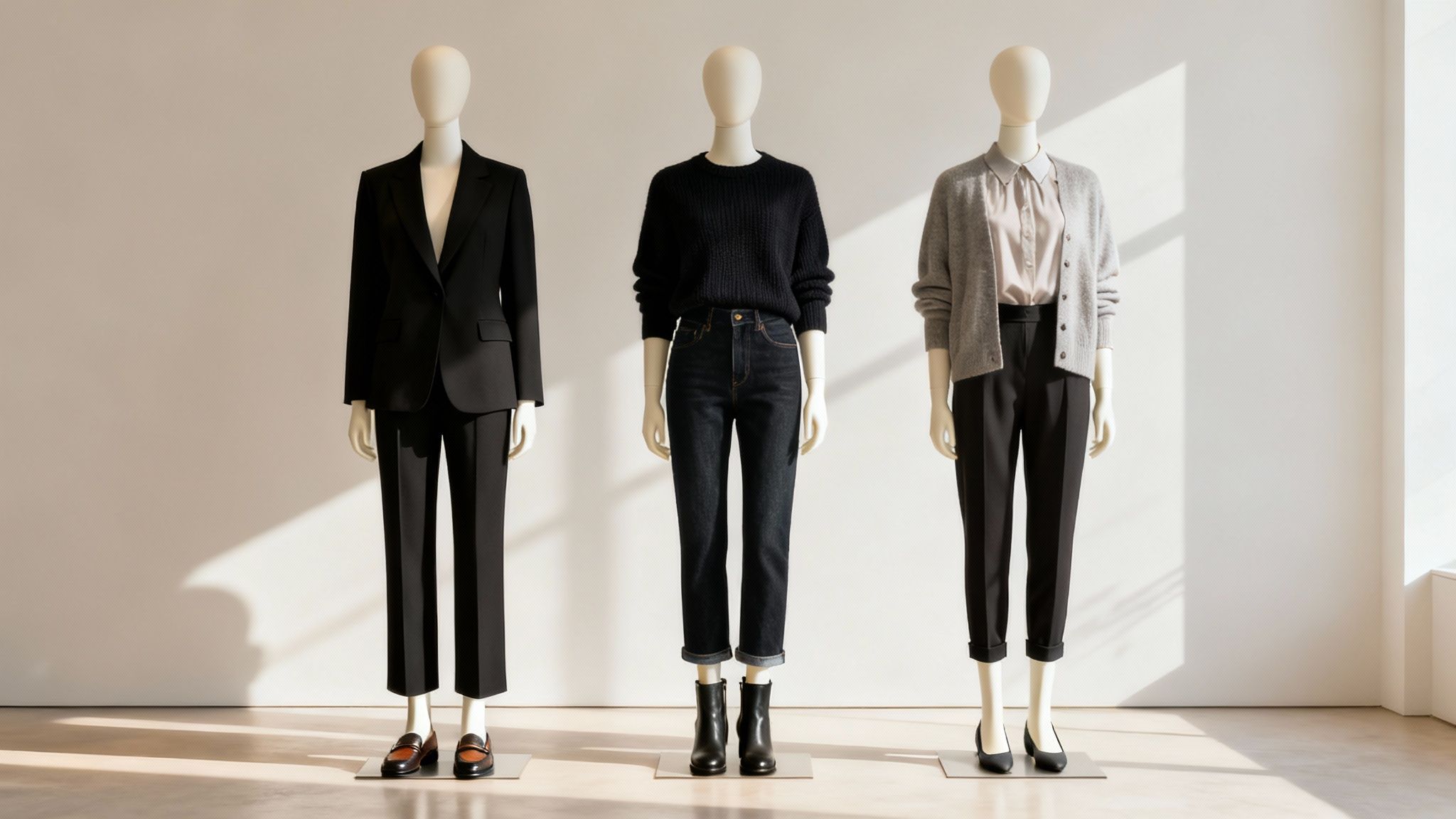
Outfit 1: The "Corporate Polish" Look
When your office leans more "business" than "casual," your outfit needs to project confidence and a sharp eye for detail. This look is all about clean lines and structured pieces. It’s powerful, but not stuffy.
Here’s a simple formula to follow:
- The Base: Start with a pair of high-waisted, straight-leg trousers in a classic neutral like charcoal or navy. The fit is what matters most here—they should skim your body without being restrictive.
- The Top: Tuck in an elegant silk-blend shell or a simple, fine-gauge knit. Choosing a light, complementary color like ivory or a soft blush creates a nice contrast that keeps the outfit from feeling too heavy.
- The Third Piece: A well-tailored blazer is the hero of this look. A single-button style in a matching or slightly lighter neutral sharpens the entire silhouette.
- The Accessories: Finish it off with pointed-toe leather loafers and a structured tote bag that means business. Keep jewelry minimal—think small gold hoops and a delicate watch.
This combination just works. It’s built on timeless shapes and quality fabrics that create a cohesive, authoritative look perfect for client meetings or big presentations.
Outfit 2: The "Creative Casual" Vibe
In a more laid-back environment—think a tech startup or a design agency—you have a lot more room to play with color, texture, and personality. The goal is to look put-together and approachable, blending comfort with a creative flair. This is where the business casual attire for women guidelines really let you shine.
Here’s how to build the look:
- The Base: A great pair of dark-wash, straight-leg jeans is your starting point. Make sure they have a clean finish—no rips, no fading, no fuss. A higher rise helps keep things looking polished.
- The Top: Instead of a simple shell, try a stylish knit top with an interesting detail, like a ribbed texture or a subtle puff sleeve. A rich, earthy tone like olive green or terracotta adds an instant pop of personality.
- The Third Piece: Ditch the formal blazer for a longline cardigan in a cozy-but-chic material, like a merino wool blend. It adds warmth and drapes beautifully, giving the outfit a softer feel.
- The Accessories: Suede ankle boots with a low block heel are perfect for this aesthetic. Add a leather crossbody bag and maybe some slightly bolder jewelry, like a set of layered necklaces.
This trend toward personalization is becoming a huge part of modern workwear. Fashion experts predict that even traditionally formal pieces are getting a casual, individualistic makeover. As noted by The Forage, even the classic dark suit is expected to return with modern twists—paired with colorful sweaters or even stylish sneakers—signaling a much more expressive take on what it means to dress for work.
Still Have Questions About Business Casual? Let's Clear Things Up.
Even with the best guides, figuring out business casual can feel like trying to hit a moving target. What works in one office might not fly in another. Let's tackle some of the most common questions head-on so you can walk into work feeling confident, not confused.
The whole idea of business casual attire for women has come a long way, especially since the tech boom of the 90s. Back then, a power suit was practically a uniform for professional women. Today? Things are a lot more relaxed. A recent Monster Jobs survey actually found that 43% of workers say their office has no formal dress code at all. That’s a huge shift. You can dig into more of those stats in the full report on dressing for work.
So, Can I Really Wear Jeans to the Office?
Absolutely—in most modern offices, jeans are a staple. The trick isn't if you can wear them, but how you wear them. It’s all about picking the right pair.
- Go for dark washes. A classic indigo or black denim just looks sharper and more put-together.
- Keep it clean. This is non-negotiable. Steer clear of any rips, heavy fading, distressed details, or frayed ends.
- Stick to classic cuts. Think straight-leg, bootcut, or a subtle flare. These silhouettes maintain a professional vibe that skinny or overly trendy styles might not.
The key is to balance the denim. Pair your jeans with something more formal on top—like a silk blouse or a quality knit sweater—and throw on a blazer. Instantly, the whole look is elevated.
The secret to making jeans work-appropriate is to ensure the rest of your outfit leans more "business" than "casual." Think polished footwear, a structured top, and intentional accessories.
What About Shoes? What Are the Best Options?
Shoes can completely change the tone of your outfit, so this is where you want to be intentional. Comfort is key, but so is style.
You can't go wrong with classic loafers, chic ballet flats, a sophisticated block heel, or a sleek ankle boot. Whatever you choose, just make sure they're clean and well-maintained. As a general rule, it's best to save things like flip-flops, running shoes (unless your office is super casual), and towering stilettos for the weekend.
How Do I Adjust My Wardrobe for the Seasons?
Seasonal shifts don't have to mean a complete wardrobe overhaul. It's really just a matter of smart fabrics and clever layering.
When it gets warm, think light and breathable. Materials like cotton, linen blends, and rayon are your best friends. This is the time for sleeveless tops, lighter-colored pants, and professional-looking skirts.
Once the temperature drops, layering is everything. Bring in your merino wool sweaters, turtlenecks, and blazers made from warmer fabrics like tweed. A good pair of tights lets you keep wearing your favorite skirts, and a stylish leather boot is both practical and perfectly polished for the office.